Two illuminated white colonial-style houses with wrap-around porches, flanked by oak trees draped in Spanish moss, photographed at night.

Heat Pump Installation in Saluda, SC

Tell us about the job

Takes about a minute. No obligation.

New system or replacementHeat PumpSaluda County, SC
Step 1 of 2

What ZIP code is the job in?

Weather here is hard on outdoor equipment

Saluda County logged 103 severe weather events between 2015 and 2024, with damaging wind the most common by far. The outdoor unit sits outside through all of it, so where it goes and how it's mounted and shielded matters.


Outages are worth planning for

Nearly half of South Carolina households went at least 24 hours without power in 2024. A heat pump needs power to heat or cool the house, so it's worth asking an installer about backup options before the system goes in.

5 months
November through March, your system heats
5 months
May through September, it cools
35°F
the average winter night it heats against
91°F
the average summer afternoon it cools against
Isometric line illustration of a cutaway single-story house showing interior rooms, ceiling ductwork connected to an indoor air handler, and refrigerant lines running to an outdoor condenser unit on a pad.
Your system heats November through March and cools May through September.

NOAA nClimDiv, 1991–2020 normals

South Carolina power runs 14.23 cents a kilowatt-hour, below the national average.

A Saluda heat pump still has to earn its keep through wind and outages, not just low bills.

Cooling starts in May and heat starts in November, so October is when to put a heat pump in

Cooling runs May through September
Heat runs November through March
Power costs 14.23 cents a kWh statewide

Electricity heats 72.2% of homes in Saluda County, more than gas and propane combined. A heat pump runs on electricity for both heating and cooling, so a home already wired for an electric furnace or electric baseboard usually has what it needs for a heat pump to take over. Gas heats 8.8% of homes here and propane another 13.3%, so most installers in the area are used to all-electric setups. Replacing an existing electric system with a heat pump is usually the more straightforward job, since the fuel source isn't changing, just the equipment.

A correctly sized heat pump is all this county asks for

A standard size and a standard efficiency rating cover this job here. Saluda homes split evenly, built in 1987 or earlier and 1987 or later, which just means sizing follows the house in front of it, not some countywide pattern. Get that sizing right and the rest of the install is routine.

Find a contractor
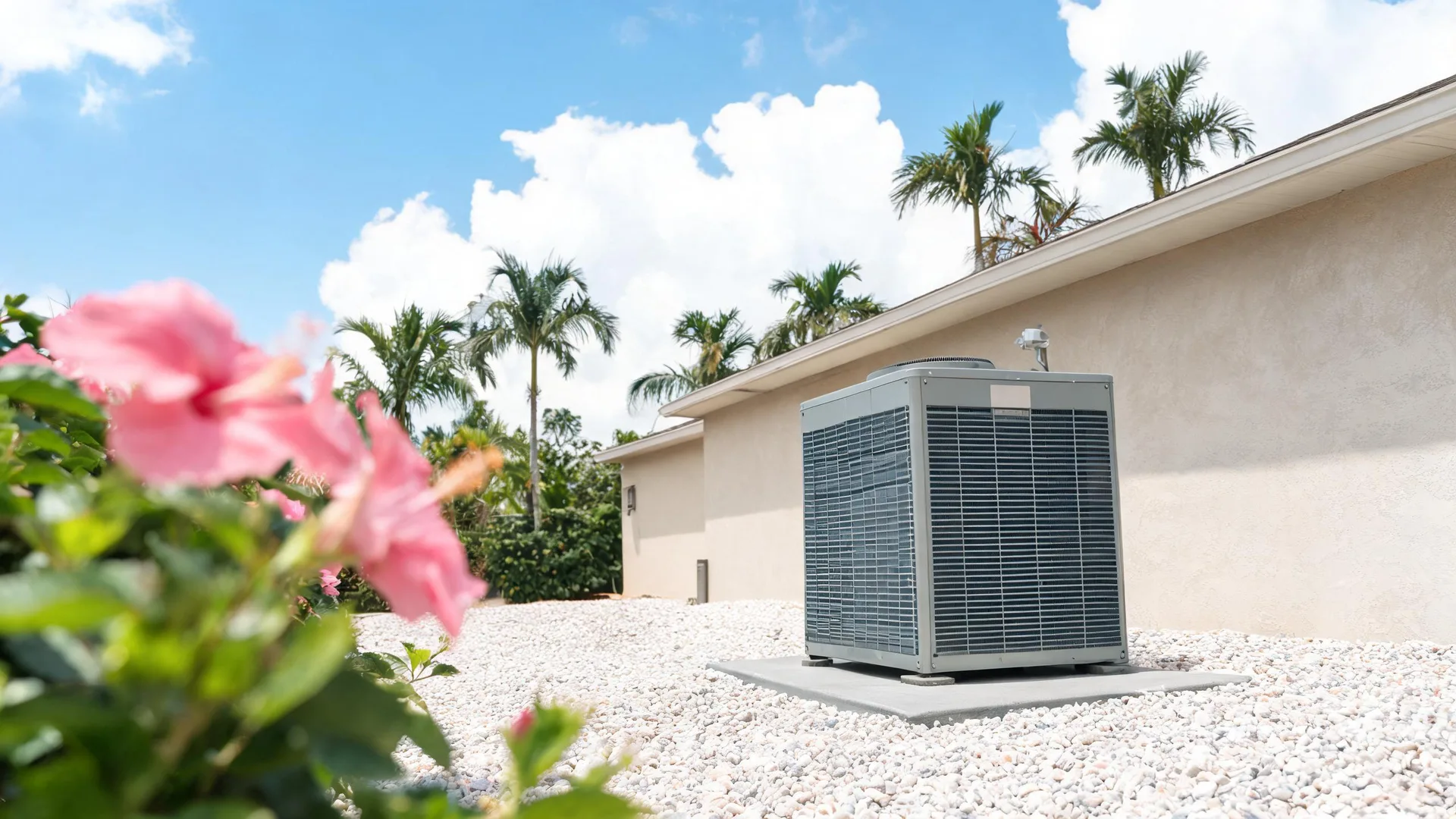
A dark gray heat pump unit mounted on a concrete pad next to a house with gray siding and a stone veneer wall.

The questions that matter outlast the sales pitch

Ask how the installer sized the system. It should come from a load calculation on the house, the windows, the insulation, the layout, not just a match to whatever unit is sitting outside now. Too big and it short cycles, turning on and off instead of running a long steady stretch, which wears the compressor and leaves some rooms warm and others cold. Too small and it runs constantly in the hardest weather and still falls behind. Ask about the compressor too. A single speed unit runs on or off at full output. A variable speed one ramps up and down to match what the house needs, which tends to mean steadier temperatures and less cycling. Every heat pump loses some heating capacity as it gets colder outside, so ask what backup heat is there for the coldest stretches and when it switches on. That backup is part of the system, not an afterthought, and it is worth understanding before installation, not during the first cold snap.

The old system has to come out first

Disconnecting a furnace or straight AC and pulling the outdoor unit takes real time, especially if the old equipment is tucked into a closet or crawlspace that was built around it. If the home is switching from gas or propane to a heat pump, the old fuel line needs to be capped off safely, not just left in place.

What happens to it after that is worth asking about

Refrigerant in the old outdoor unit has to be recovered properly, not vented, and that takes the right equipment and a license to do it. Beyond that, old furnaces and condensers are mostly metal, which scrap yards take, so ask whether the installer hauls it off as part of the job or leaves that to the homeowner.

Sizing a heat pump starts with the house, not the catalog. A contractor works out how much heat escapes through the walls, windows, and roof on the coldest day, and how much heat builds up inside on the hottest one, then picks equipment to match that load. Skip that step and guess instead, and the system fights the house every day it runs. Too large a unit blasts the place to temperature fast, shuts off, and starts again a few minutes later, which never gives it the long steady runtime it needs to also pull humidity out of the air. Too small a unit runs nearly nonstop in the worst weather and still can't keep up. Either way, the compressor wears faster than it should, and the comfort a new system is supposed to bring never quite shows up.

Installation day starts with the old equipment coming out, then the new parts go in roughly the reverse order. The outdoor unit gets set on a pad or mounted bracket, level and with clearance on all sides for airflow. Refrigerant lines run between the outdoor unit and the indoor coil, and those joints get brazed, pressure tested, then pulled down to a vacuum to clear out air and moisture before any refrigerant goes in. The indoor coil usually sits above or beside the furnace or air handler, and if that part is being swapped too, the ductwork connecting to it needs to seal properly or the system loses capacity before it ever reaches a room. Electrical work ties in the outdoor unit and any backup heat strips, and that circuit gets checked against what the equipment actually draws. Once everything's connected, the system gets run through its paces, checking refrigerant charge, airflow, and that the thermostat is actually controlling what it's supposed to control.