







Single-story houses with covered porches sit behind a mowed lawn and a long trimmed hedge, framed by oak branches draped with Spanish moss.

Heat Pump Installation in Manning, SC

Tell us about the job

Takes about a minute. No obligation.

New system or replacementHeat PumpClarendon County, SC
Step 1 of 2

What ZIP code is the job in?

The size of the heat pump matters more than people expect. A unit too big for the house will short cycle, turning on and off before it ever settles into a steady run, and that wears on the compressor. One too small will run constantly and still struggle on the coldest days. Getting the size right means someone has to look at the house itself, the windows, the insulation, the ductwork if it already exists. Where the ductwork stands also drives the job. If it's in good shape and sized right, the installer can connect to it. If it's old, leaky, or undersized for a heat pump's airflow, that's its own project before the new system ever gets set. The outdoor unit's placement matters too, since it needs clear airflow on all sides and a spot that drains well. And going from a furnace to a heat pump, or adding one alongside existing ductwork, is a different job than swapping out a unit that's already there.

5 months
November through March, your system heats
5 months
May through September, it cools
37°F
the average winter night it heats against
91°F
the average summer afternoon it cools against
Isometric cutaway illustration of a gray house showing interior rooms, a central air handler with ducts in the attic, and refrigerant lines running to an outdoor condenser unit beside the building.
Your system heats November through March and cools May through September.

NOAA nClimDiv, 1991–2020 normals

Electricity in South Carolina runs 14.23 cents per kilowatt-hour, below the national average.

A lower power rate means the priciest, most efficient heat pump takes longer to pay for itself, so picking the right size and fit matters more than chasing the highest efficiency number.

Nearly every home in Clarendon County already runs on electricity

89.6% of homes heat with electricity
98 damaging wind events from 2015 to 2024
Power costs 14.23 cents a kWh statewide
A standard heat pump does the job hereHalf the homes in Clarendon County were built in 1990 or earlier, half in 1990 or later, and that spread is no reason to size up.

With power this cheap, don't let a salesman talk you into the highest SEER2 unit on the lot. The extra cost takes longer to earn back when the electric bill is already low. Ask instead why they picked this size for your house, and how it handles the coldest mornings of the year. A correctly sized heat pump will outlast and outperform an oversized one with a higher rating, because it actually runs the way the lab tested it. Put the money toward a unit matched to your ductwork and your load calculation, not the biggest number on the spec sheet.

A new system here starts at 14.3 SEER2, and a federal credit can offset it

Any heat pump installed in Clarendon County now has to hit 14.3 SEER2 and 7.5 HSPF2 at minimum, and a central air system has to meet that same 14.3 SEER2 if it's under 45,000 Btu/h. That's the floor here, not a feature to compare between quotes. A federal tax credit is available on top of that for qualifying equipment. Start the form above to get a system sized for this place, built to meet the standard and ready for what the power grid here puts it through.

Find a contractor
A man in a cap, dark jacket and tan work pants carries a canvas tote bag as he steps up concrete stairs toward a blue front door, with a potted shrub beside him.
A dark gray heat pump unit mounted on a concrete pad next to a house with gray siding and a stone veneer wall.

Put it in before October or April, not after

Heat pump here works two jobs. Cooling from May through September, heat from November through March. October and April are the gaps between them, and they're the time to get a new system in. Put it in before October and it's already proven out by the time heat season starts. Put it in before April and the same goes for cooling. Installed mid-season instead, it's carrying a full load from day one, with no room to catch a sizing or setup problem before the weather is asking everything of it.

Ask for the load calculation, not just a quote

Any installer worth hiring runs a room-by-room load calculation before naming a size. Ask to see it. A number pulled from the old system's size or a rule of thumb isn't the same thing, and it's how homes end up with equipment that short cycles or can't keep up.
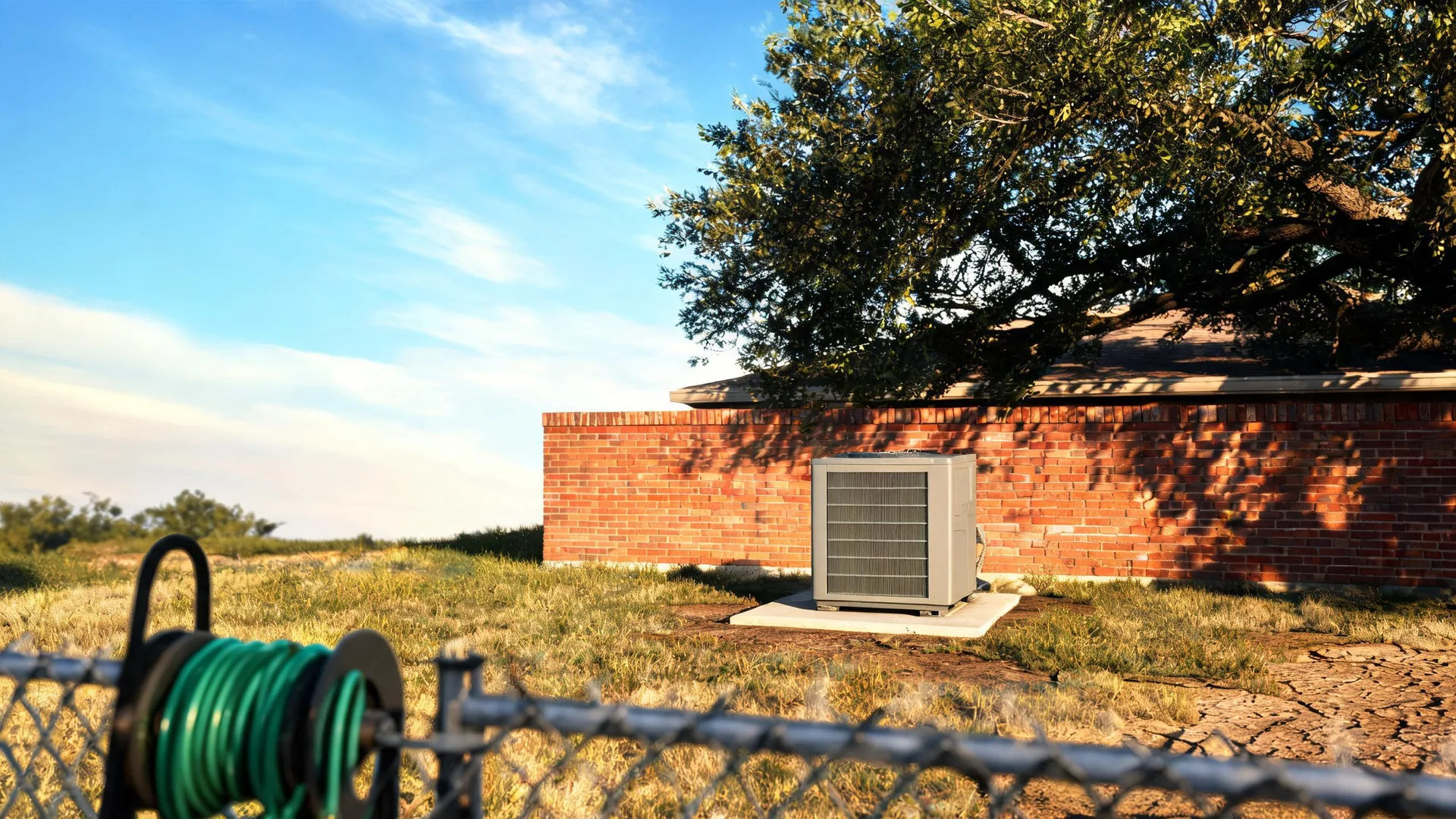
Ask what happens at the lowest temperature the system will see

Every heat pump loses capacity as it gets colder outside, and each model has a point where it needs backup heat to keep up. Ask what that point is for the unit being quoted, and what kind of backup heat kicks in when it's reached. That answer tells you more about comfort than the efficiency rating does.

The load calculation looks at more than square footage. It weighs how many windows a room has and which direction they face, how much attic insulation sits overhead, how high the ceilings run, and how air moves between rooms once the vents are closed. Houses the same size can need different sized equipment because of those details alone. This is also where the ductwork gets measured, not just inspected. A heat pump moves a different volume of air than a furnace did, and ducts sized for one don't always suit the other. If the calculation skips that step, the number it hands you is a guess dressed up as math.

That SEER2 and HSPF2 number is a ceiling, not a guarantee. It's measured in a lab, with a unit matched to the right ductwork and the right charge of refrigerant, running under conditions a real attic or crawlspace rarely matches exactly. A correctly sized system running at a lower rating will often cost less to run than an oversized one with a higher rating, because the oversized unit never settles into the steady run where that rating applies. Installation is what decides whether the number on the label shows up on the power bill. Low refrigerant charge, undersized ducts, or a unit that's too big for the space all pull the real efficiency down below what's printed. So the rating tells you what the equipment is capable of, not what you'll get. What you'll get depends on whether it's sized and installed to actually reach that number.