







An outdoor heat pump unit mounted on a concrete pad in front of a two-story suburban house.

Heat Pump Installation in Lexington, SC

Tell us about the job

Takes about a minute. No obligation.

New system or replacementHeat PumpLexington County, SC
Step 1 of 2

What ZIP code is the job in?

Ask what the unit is rated to do in cold weather, not just how it runs in mild conditions. Every heat pump loses capacity as the temperature drops, but the point where it starts leaning hard on backup heat varies a lot between models. Ask what size the contractor is proposing and why, since bigger is not automatically better. An oversized unit short cycles, turning on and off more than it should, which wears on the compressor and leaves rooms feeling clammy. Ask about the backup heat source and how the system decides when to use it, because that setting affects comfort on the coldest days. Ask what sound level to expect from the outdoor unit, especially if it sits near a bedroom window or a neighbor's property line.

5 months
November through March, your system heats
5 months
May through September, it cools
36°F
the average winter night it heats against
91°F
the average summer afternoon it cools against
Isometric cutaway illustration of a single-story house showing interior ductwork, an indoor air handler and furnace unit, and an outdoor condenser connected by a line, on a white background.
Your system heats November through March and cools May through September.

NOAA nClimDiv, 1991–2020 normals

Most of Lexington County heats with electricity already, 69.3% of occupied homes.

A heat pump fits the power this place already runs on, so the wiring and setup match what's there.

Power here runs 14.23 cents a kilowatt-hour, so a heat pump earns its keep on comfort and backup heat, not on shaving pennies off the bill

Power costs 14.23 cents a kWh statewide
325 damaging wind events from 2015 to 2024
74 hail events from 2015 to 2024
Pick it for the cold snap, not the billSouth Carolina electricity ran 14.23 cents a kilowatt-hour in 2024

October is worth marking on the calendar. Heat here doesn't start until November, so the month before gives you room to get a heat pump installed without rushing the decision. Systems put in during the cold snap tend to be whatever's in stock, sized to get the house warm that week rather than sized right for the house. A fall install also means the contractor can test the heating side while it's still mild enough to fix anything that needs fixing, instead of finding a problem on the first hard freeze. The same unit will carry the cooling load starting in May, so this is really a once-a-year window to get both sides of the system right.

Any new system here starts at 14.3 SEER2

Lexington County is zone 3A, and any heat pump installed here now has to hit 14.3 SEER2 and 7.5 HSPF2 at minimum. That's the federal floor for equipment made since the start of 2023, so it's not a feature to shop for, it's just what qualifies. A federal tax credit is available on top of that for equipment that meets efficiency requirements, worth checking into before you settle on a model.

Find a contractor
A man in a cap, gray long-sleeve shirt and brown pants carries a canvas tool bag up porch steps toward a dark front door, beside a potted shrub.
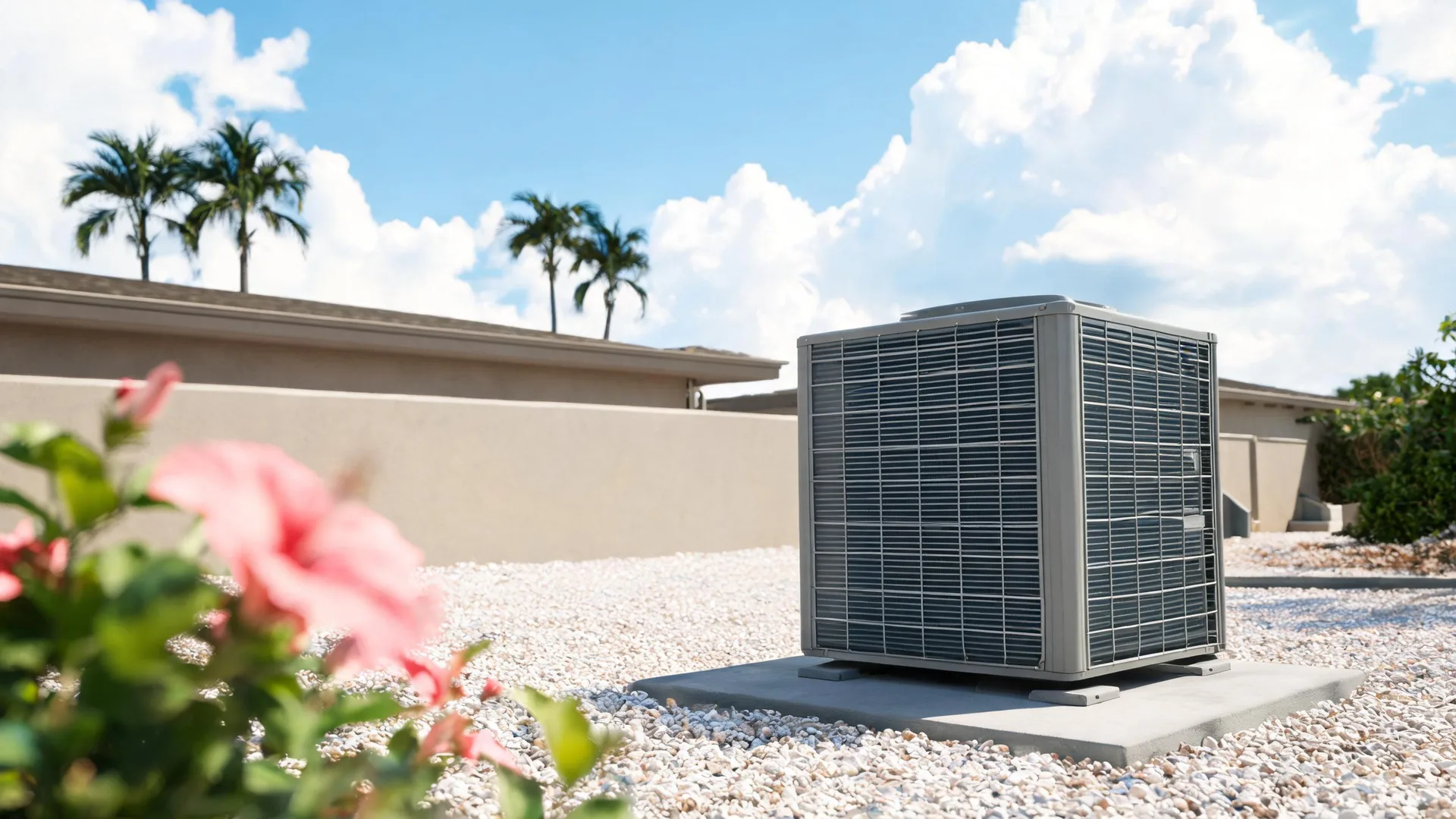
A gray heat pump outdoor unit mounted on a concrete pad next to the stone-accented exterior wall of a house.

What happens to the old system

The old system doesn't need to be broken to be worth pulling out. A furnace or AC that's run for a couple decades has put a lot of hours on its compressor or heat exchanger, and age alone changes the math on repair versus replace. When a heat pump goes in, the installer disconnects the old equipment, recovers any refrigerant left in the lines, and typically pulls the indoor and outdoor units both since a heat pump uses a different line set and coil than a straight AC or furnace setup. If the old ductwork gets reused, it gets checked for leaks and the right size before the new system ties into it, since a heat pump is less forgiving of duct problems than some furnaces are. Old refrigerant has to be handled by a licensed contractor and recovered properly, it can't just be vented. Whatever gets hauled away, the goal is a clean changeover, nothing left tied into the new system that doesn't belong there.

The unit size and the ductwork it ties into

A heat pump has to be matched to the house, room by room, not picked off a chart by square footage alone. That means a load calculation, and it means someone actually looking at the ductwork to see if it can carry what the new system needs to move. Ducts that were fine for the old equipment sometimes need rework, a new return, or a resized trunk line before a heat pump can do its job. That inspection and any duct changes are part of what gets priced, not an extra surprise.
What has to change beyond the outdoor unit

Swapping in a heat pump usually means new line sets and a new indoor coil, since a heat pump doesn't reuse the same ones as a straight AC or furnace setup. If the electrical panel doesn't have the right capacity or disconnect for the new equipment, that gets addressed too. The backup heat source, whether it ties into existing electric heat strips or something else, factors into the installation as well. None of this is optional add-on work. It's what makes the system actually function as installed.

SEER2 tells you how the system performs over a whole season of cooling, averaged across mild days and hot ones, not the peak output on the worst afternoon. HSPF2 is the same idea for heating. Neither number tells you what happens to capacity when the temperature drops hard, which is a separate spec worth asking about on its own. A higher rated unit costs more up front, and it earns that back through lower running costs over years, not months, so the payoff depends on how long the system stays in the house. The rating also assumes correct sizing and a duct system that can actually move the air the unit is built to move. A well-matched unit at a lower rating can end up running cheaper and quieter than a high-rated one forced into a house it doesn't fit.

Sizing starts with a load calculation, not a tape measure. A contractor works out how much heat a house loses in winter and gains in summer by looking at wall and ceiling insulation, window area, and air leakage, then matches the equipment to that. Square footage alone leaves out too much. Houses the same size can need different sized systems if one has more windows or leakier ductwork than the other. Undersized equipment runs constantly and still struggles on the coldest or hottest days. Oversized equipment cycles on and off too fast, so it never runs long enough to pull moisture out of the air, and the house ends up feeling damp even when the temperature reads fine. The right size is the one that runs long, steady cycles and keeps up without strain.