






Night view of illuminated white Southern-style houses with wraparound porches beneath Spanish moss-draped oak trees.

Heat Pump Installation in Laurens, SC

Tell us about the job

Takes about a minute. No obligation.

New system or replacementHeat PumpLaurens County, SC
Step 1 of 2

What ZIP code is the job in?

Laurens County saw 84 severe weather events between 2015 and 2024, most of them damaging wind. A heat pump's outdoor unit sits outside year round. A contractor can place it away from falling limbs and fence lines where debris collects, on a pad that won't flood. South Carolina also sees long power outages, and a heat pump won't run without electricity. If that worries you, ask about backup options before the install, not after.

5 months
November through March, your system heats
5 months
May through September, it cools
34°F
the average winter night it heats against
89°F
the average summer afternoon it cools against
Isometric cutaway illustration of a house showing interior ductwork, an indoor air handler, and beds, with an outdoor condenser unit connected by lines outside the wall.
Your system heats November through March and cools May through September.

NOAA nClimDiv, 1991–2020 normals

Electricity already heats almost two-thirds of the homes in Laurens County.

A heat pump runs on electricity, so a home already wired for electric heat needs no new fuel line or tank.

October to April, before the heat or the cold needs it

Cooling runs May through September
Heat runs November through March
Climate zone 3A
A standard heat pump fits this county fineHalf the homes here were built in 1985 or earlier, half in 1985 or later. Neither age calls for anything special.

South Carolina electricity ran 14.23 cents per kilowatt-hour in 2024, cheap compared to most of the country. A high-efficiency heat pump still uses less power than a standard one, but at that rate it takes longer to earn back what it costs up front. That changes what's worth paying for here. Picking a system that holds up through wind and outages matters more than squeezing out another point of efficiency.

A standard heat pump suits this climate. Plan for the wind instead.

Zone 3A means a long run of warm months and a winter that stays mild. A standard heat pump, sized the normal way, handles that without trouble. Nothing about this climate calls for a bigger unit or a pricier one. Wind is what's worth planning for here, not tonnage or efficiency rating.

Find a contractor
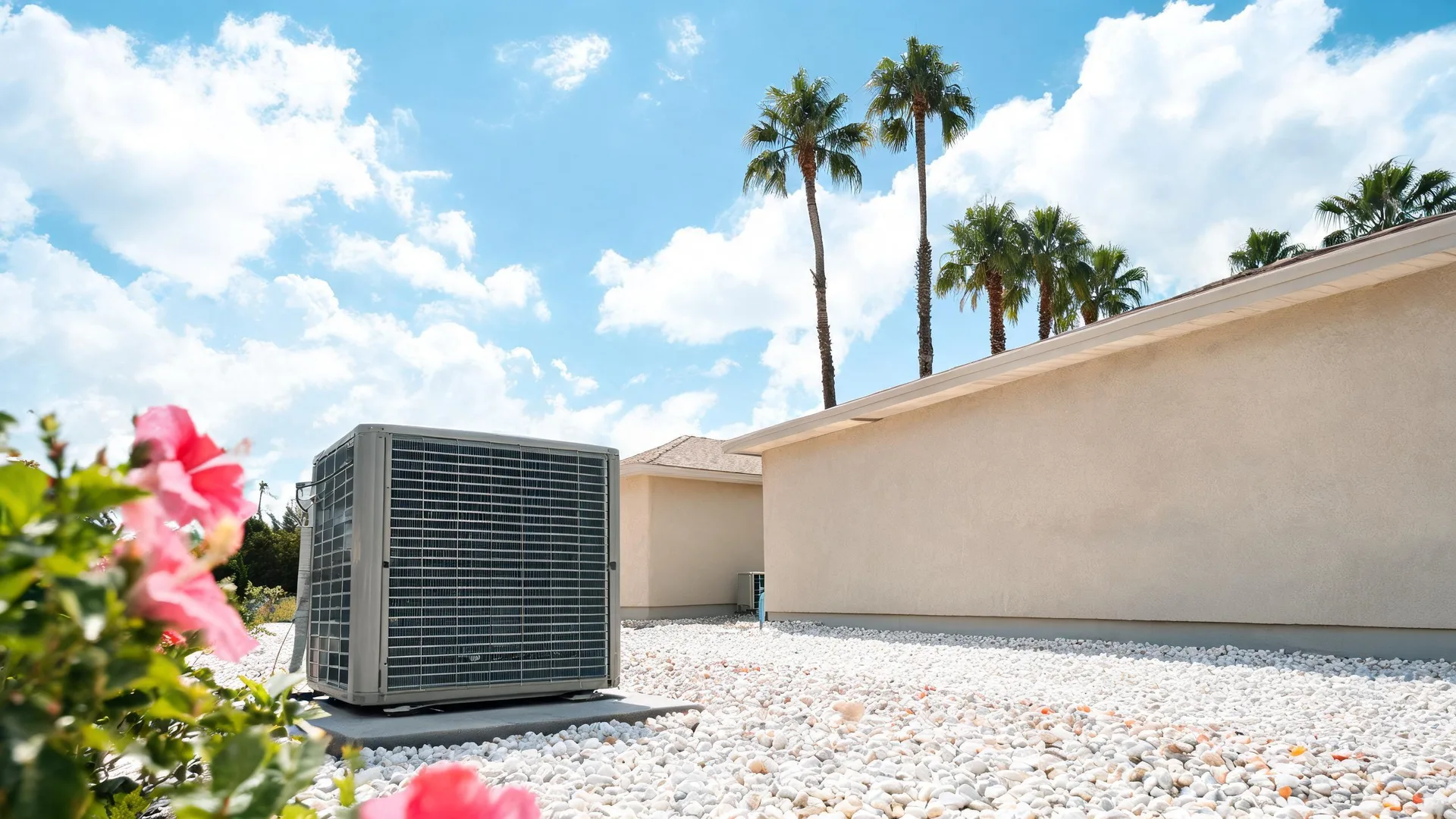
A gray heat pump outdoor unit mounted on a concrete pad next to the stone-accented exterior wall of a house.

The old unit doesn't just get unplugged

Whoever installs the new system still has to deal with the old one. A heat pump doesn't get hauled off in one piece. The outdoor unit holds refrigerant, and that has to be recovered properly before anything gets disconnected or cut apart, not vented into the air. Once that's done the unit and the indoor coil can come out. If the ductwork and electrical are being reused, a contractor checks that the old connections match what the new system needs, since heat pumps don't always wire up the same way the old furnace or AC did. None of this is optional work tacked on at the end. It's part of taking out a system that ran for years and putting in one that has to run for years more.

The rating measures heat moved, not heat made

A heat pump's efficiency rating compares the heat it moves indoors or outdoors against the electricity it uses to move it. That's different from a furnace burning fuel. A higher rating means the compressor and coils are doing more work per unit of power, nothing more.
A higher number costs more and pays back slower when power is cheap

The rating on the label tells you how the equipment is built, not what it will cost to run in any particular house. Where electricity rates are low, the gap between a standard and a high-efficiency unit takes longer to close. Weigh that against what the higher-rated equipment costs to install before deciding it's worth it.

Ask each contractor for the load calculation they used to size the equipment, not just a quote. A unit sized by square footage alone can short cycle or run constantly, and either one wears parts out early. Ask what line set and indoor coil they're pairing with the outdoor unit. Mismatched components can void the warranty even when both pieces are good on their own. Ask how they're handling the ductwork if it's being reused, since a heat pump moves air differently than a furnace did. Ask what the warranty covers, parts or labor or both, and who stands behind it if something fails.

The crew shows up with the new equipment already sized and the old system still running, usually. Power gets shut off first, then refrigerant comes out of the old outdoor unit before anything gets disconnected. Once that's clear, the indoor coil and air handler come out, and whatever line set isn't being reused comes out with them. Setting the new outdoor unit is its own step, since it needs a level pad and clearance on all sides to pull air through the coil. Inside, the new coil goes in and gets connected to the line set, then the whole system gets charged with refrigerant and checked against what the manufacturer specs for that unit. Before anyone leaves, it should run through a full cycle, heat and cool both, so any problem shows up that day instead of the first cold night.