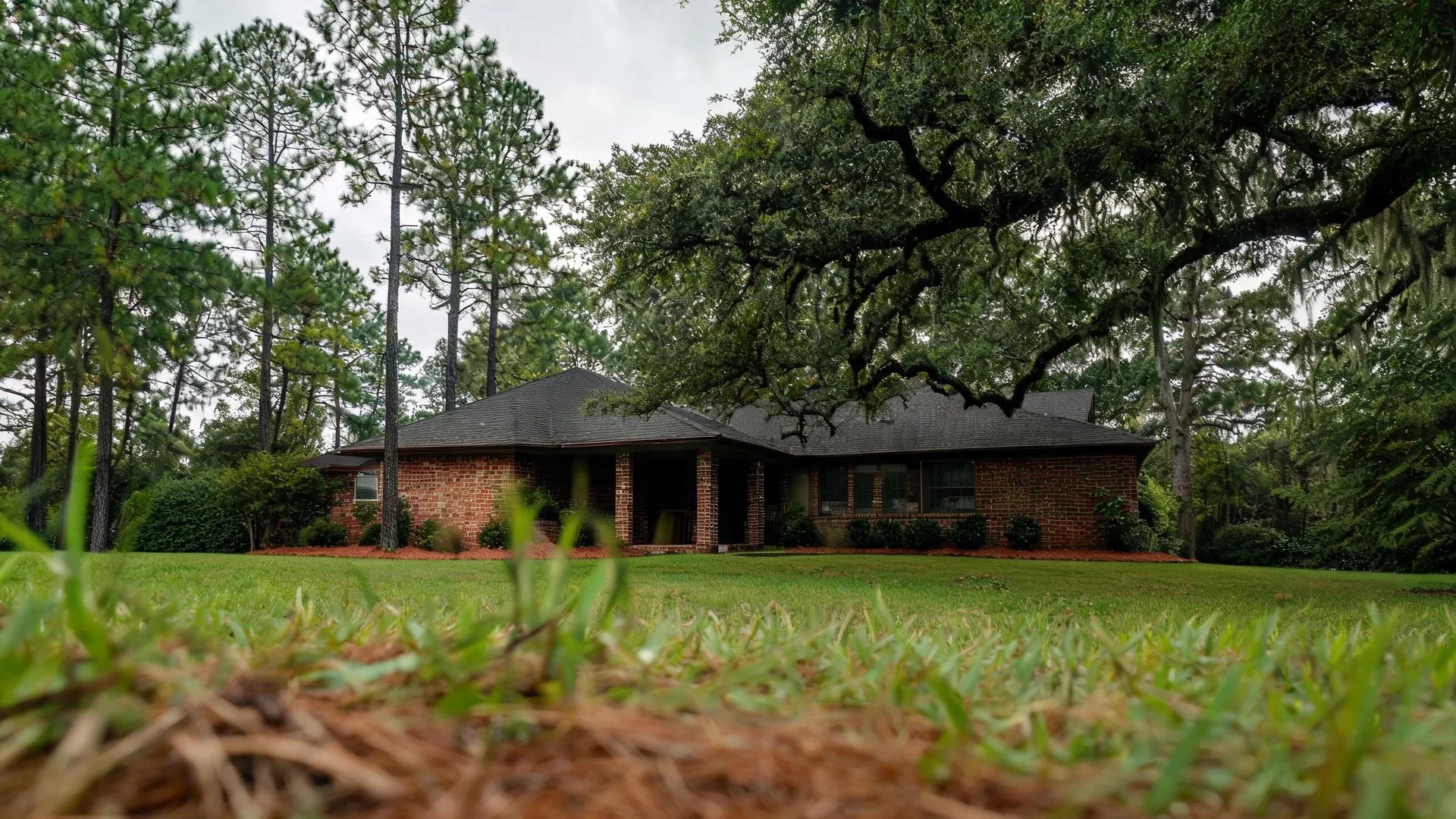





A single-story brick house with a dark shingled roof set behind a lawn, framed by pine trees and a large spreading oak, photographed from a low angle with blurred grass in the foreground.

Heat Pump Installation in Florence, SC

Tell us about the job

Takes about a minute. No obligation.

New system or replacementHeat PumpFlorence County, SC
Step 1 of 2

What ZIP code is the job in?

Ask what the unit is rated to do in both directions, since a heat pump has to move heat out in summer and pull it in from outside air in winter. Ask what happens below freezing, and whether the system leans on backup heat strips or holds its own longer before switching over. Get the size explained to you in plain terms, tied to your house, not just the equipment the contractor has on hand. A unit too big will cycle on and off and never run long enough to pull moisture out of the air. One too small will run constantly and still fall short on the coldest nights. Ask about the outdoor unit's defrost cycle too, since that's what keeps the coil from icing over in winter, and how often it's expected to kick in.

5 months
November through March, your system heats
5 months
May through September, it cools
36°F
the average winter night it heats against
90°F
the average summer afternoon it cools against
Isometric grayscale illustration of a cutaway house showing interior rooms, ceiling ductwork connected to an indoor air handler, and an outdoor condenser unit beside the exterior wall.
Your system heats November through March and cools May through September.

NOAA nClimDiv, 1991–2020 normals

Electricity already heats 83.3% of homes in Florence County.

A heat pump installed here fits into wiring and ductwork already built for electric heat.

Storms knock out the power here more than most places, so this system has to hold up on its own

97 damaging wind events from 2015 to 2024
Power costs 14.23 cents a kWh statewide
Climate zone 3A

Any heat pump installed here now has to meet 14.3 SEER2 for cooling and 7.5 HSPF2 for heating, the federal minimum since January 2023. Florence County sits in zone 3A, warm and humid with a short mild winter, so the cooling side of that rating matters more here than the heating side does. A unit built to spec should hold up to what this area asks of it in both directions anyway. Ask the contractor for the SEER2 and HSPF2 numbers on the specific unit they're proposing, not just a model name. A federal tax credit is available for qualifying equipment, so ask whether the system under discussion meets it.

Pick the heat pump that will hold up, not the one with the lowest running cost

Electricity in South Carolina runs 14.23 cents per kilowatthour, cheaper than most of the country. That changes the math on a new system. A higher-efficiency model still costs more up front, and here it takes longer to earn that back in lower bills. Put the weight on sizing, on how the unit handles a hard freeze, and on how it holds up when the power is out more than it usually is. Get that right first.

Find a contractor
A gray outdoor HVAC unit mounted on a concrete pad beside a house with gray lap siding and a stone foundation.

This runs most of the year, so get it in before it has to

Heat pumps here run almost year round, cooling from May through September and heat from November through March. That's most of the calendar. Installing before April gives the contractor time to size the unit right and get it in before the cooling load hits. Wait until the first hot week in May and you're choosing from whatever's in stock, installed in a rush. Same story in October, before the first cold snap asks the unit to switch over and lean on its defrost cycle for the first time.

The old equipment gets hauled away and disposed of properly

A heat pump holds refrigerant, and that refrigerant has to be recovered before the unit comes apart, not vented into the air. A licensed contractor handles that step along with the teardown. The indoor coil, the outdoor unit, and the old line set if it's being swapped out all leave with them. You shouldn't be left with a dead unit sitting beside the house.
The thermostat wiring and ductwork carry over, or they don't

A new heat pump often reuses the thermostat wire and the duct runs already in place. Ask the contractor to check that the wiring matches what the new system needs, since heat pumps control staging differently than a furnace does. Ask about the ductwork too. Ducts sized for the old equipment can choke airflow to a new unit, even one that's sized right for the house.

Sizing a heat pump starts with a load calculation, not a tape measure around the old unit. A contractor works out how much heat the house loses in winter and gains in summer by looking at wall and ceiling insulation, window area and orientation, and how much air leaks in and out. That number, not the size of the equipment being replaced, is what the new unit gets matched to. Skip that step and you're just guessing based on what was there before, and what was there before may never have been sized right either. A manual load calculation takes into account things a square footage estimate never will, like how much glass faces west or whether the attic is well sealed. Ask to see the calculation, not just the result.

Installation day starts with the outdoor unit and indoor coil going in, then the line set connecting them gets brazed, pressure tested, and checked for leaks before anything is charged with refrigerant. The system gets pulled down to a vacuum first, to clear out moisture and air that would otherwise ruin the compressor. Only after that holds does the refrigerant go in, and it gets weighed in to the amount the manufacturer specifies for that unit and that line length, not just run until the pressure looks right. The electrical hookup is its own step, since a heat pump needs a dedicated circuit sized to the compressor and any backup heat strips. Once it's powered up, a tech runs it in both directions, cooling and heat, and checks airflow at the vents, the temperature split across the indoor coil, and that the outdoor unit's defrost cycle is triggering the way it should. None of that gets skipped just because the old system worked fine until it didn't.