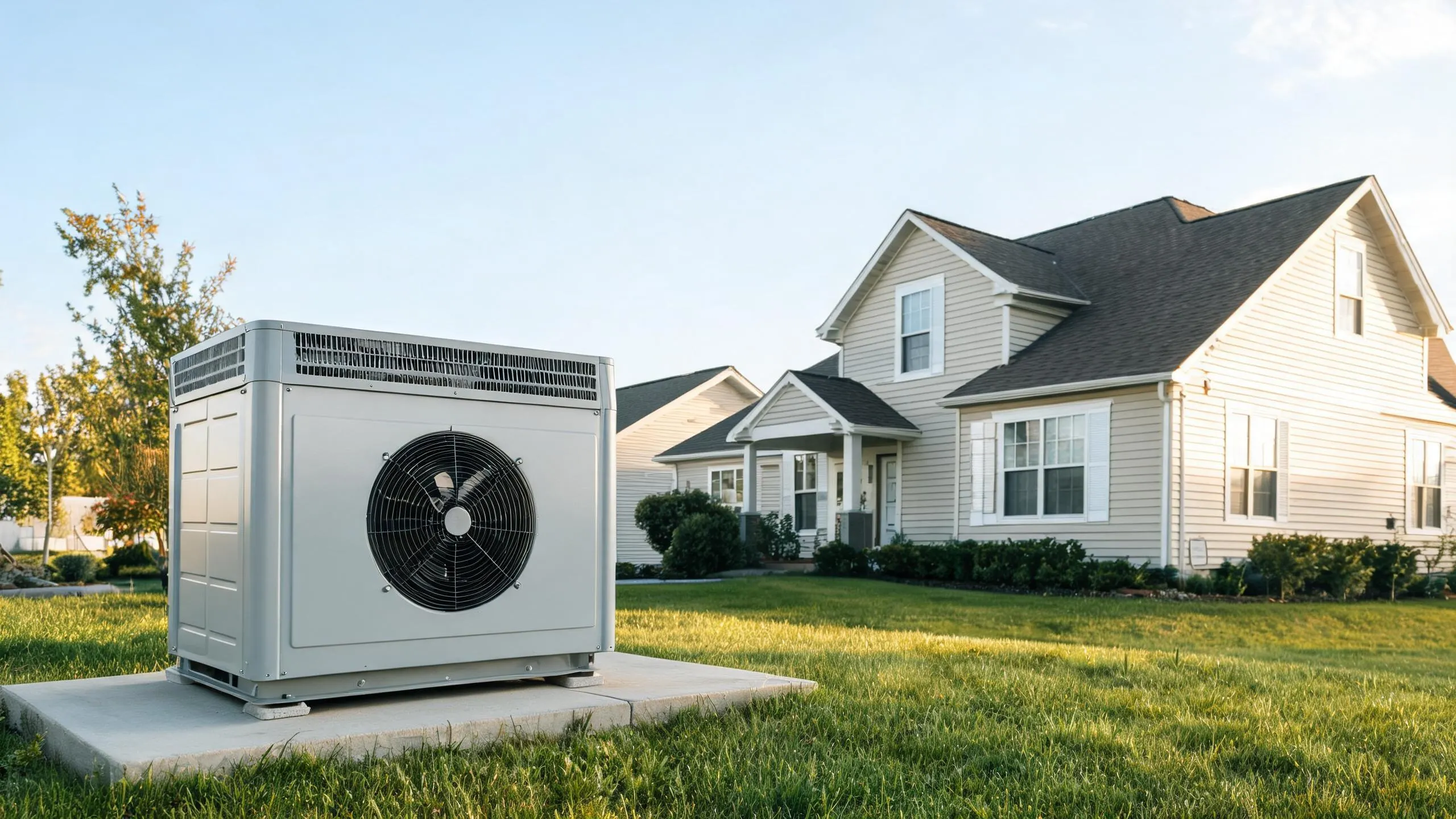







An outdoor heat pump unit mounted on a concrete pad in the front yard of a gray suburban house.

Heat Pump Installation in Edgefield, SC

Tell us about the job

Takes about a minute. No obligation.

New system or replacementHeat PumpEdgefield County, SC
Step 1 of 2

What ZIP code is the job in?

Ask what size unit they're proposing and how they got that number. It should come from a load calculation on this house, not a guess based on square footage or whatever the old system was. Ask about the compressor stage, whether it runs at one fixed speed or varies with demand, since that affects how evenly it heats and cools and how it handles mild days versus extreme ones. Ask what happens below freezing, because every heat pump leans on backup heat at some point, and you want to know what that backup is and when it kicks in. Ask about the ductwork too. A new heat pump moved through old, leaky, or undersized ducts won't perform the way the brochure says it will.

5 months
November through March, your system heats
5 months
May through September, it cools
36°F
the average winter night it heats against
91°F
the average summer afternoon it cools against
Isometric cutaway illustration of a single-story house showing interior rooms, attic ductwork and an air handler, with an outdoor condenser unit connected by lines along the exterior wall.
Your system heats November through March and cools May through September.

NOAA nClimDiv, 1991–2020 normals

October is the month before heat season starts here.

Get the heat pump installed in October and it's broken in and proven before that first cold night in November.

Power here runs 14.23 cents a kilowatt-hour, so the payoff on the priciest model takes longer. Pick for reliability first.

Power costs 14.23 cents a kWh statewide
Climate zone 3A
Cooling runs May through September
Most homes here already run on electricity73.2% of homes in Edgefield County heat with electricity, a heat pump's fuel.

Edgefield County has a long, humid summer and a short winter, which puts it in climate zone 3A. Any split-system heat pump installed here has to hit 14.3 SEER2 for cooling and 7.5 HSPF2 for heating at minimum. That's a federal floor, not a local add-on, so it limits which models a contractor can legally put in. A federal tax credit is available on qualifying equipment, worth checking against whatever system gets proposed. Ask where the unit you're quoted falls against that 14.3 number. A system sitting right at the minimum will run differently than one built above it.

A standard heat pump fits most homes in Edgefield County

Half the homes in this county were built in 1988 or earlier, half in 1988 or later, and a standard size and efficiency rating fits both. Nothing about the housing stock here calls for upsizing or for paying more than the federal minimum buys. Get the load calculation done on your house and confirm the numbers against what's quoted.

Find a contractor
A man in a cap, dark shirt and tan work pants walks up porch steps toward a dark blue paneled front door, carrying a canvas tool bag, with a potted shrub beside the entry.
A residential heat pump outdoor unit mounted on a concrete pad next to a house with gray vinyl siding.

The label number is a starting point, not a running total

That SEER2 and HSPF2 number on the label is a lab result, not a promise. It gets measured under set conditions, one speed, one temperature, nothing pulling on the system the way a real summer or winter does. Run the unit for years in actual weather, cycling on and off, pushing through a heat wave or a cold snap, and the number drifts from what's printed. A unit near the top of its efficiency range still beats one near the bottom, but neither will match the label exactly once it's logged real hours. What keeps it close to that number over time is steady upkeep, clean coils, good airflow, refrigerant charge where it belongs. Skip that and even a high rated system drifts toward a low one.

The equipment is one line item among several

The outdoor unit and air handler are only part of what gets quoted. Labor to set the new unit, run or modify refrigerant lines, and tie into the electrical panel all add to the job. If the install needs a new disconnect, a larger breaker, or a dedicated circuit, that's work beyond the equipment itself, and it shows up on the price whether or not a contractor spells it out.
What's already there decides how much gets rebuilt

A heat pump going in where ductwork, a line set, or an electrical whip already exist costs less to install than one starting from nothing. Old ducts that leak or were sized for a different system may need sealing, resizing, or replacing before the new unit can perform the way it's rated to. The condition of what's already in the house drives a good part of what the installation runs.

The old system doesn't need to be working for the swap to happen. A contractor can pull a dead compressor or a cracked heat exchanger same as a running one. What matters more is what gets left behind. If the old unit used a different refrigerant, the line set usually has to come out rather than get reused, since mixing refrigerants ruins a new compressor fast. The old outdoor pad, electrical whip, and disconnect get inspected too, and get reused if they still meet code for the new equipment. A straight swap, same location, same ducts, goes quick. Anything that needs a new pad, new wiring, or a relocated unit adds steps before the new system goes in.

Installation day starts with the outdoor unit and air handler already on site, because a contractor orders equipment ahead rather than showing up to figure it out. The old outdoor unit comes out first, then the line set gets disconnected and the refrigerant recovered, never vented, that's a legal requirement, not a courtesy. Indoors, the air handler or coil gets swapped and tied into the existing ducts, or new ducts if that's part of the job. New line sets get run, brazed, then pressure tested before anything gets charged with refrigerant, since a leak found after charging means doing the recovery all over again. The electrical hookup comes next, disconnect, whip, breaker, whatever the new unit calls for. Once it's all connected, the system gets charged to the weight the manufacturer specifies, not just run until it feels cold, and then tested through a full heating and cooling cycle before anyone calls it done.