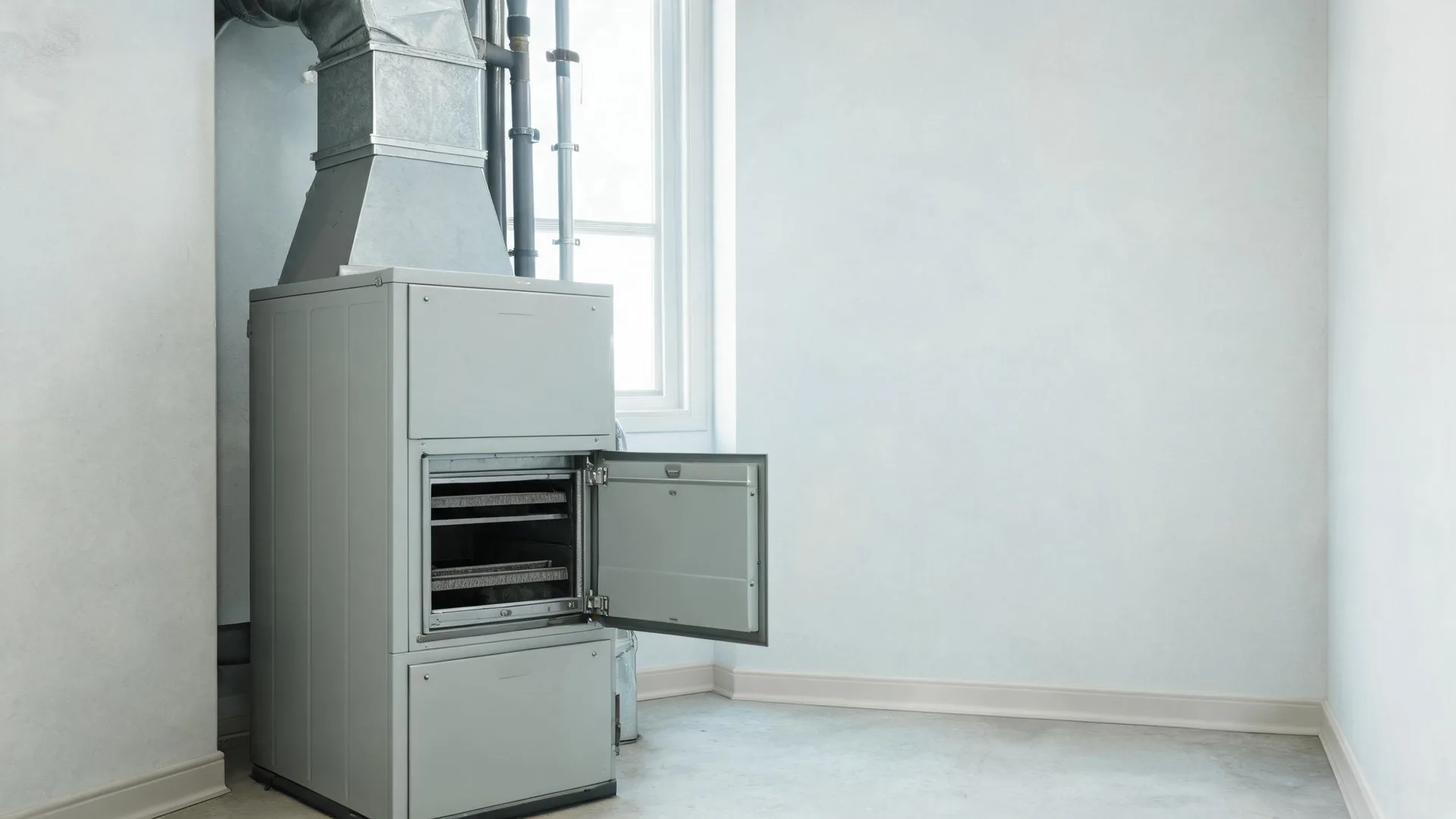
A gray forced-air furnace with ductwork stands in an unfinished concrete basement surrounded by storage items and clutter.

Furnace Repair in Winnsboro, SC

Tell us about the job

Takes about a minute. No obligation.

RepairFurnace or heatingFairfield County, SC
Step 1 of 2

What ZIP code is the job in?

The tech watches it run first

A furnace diagnosis starts with watching it try to start. Maybe it tries to ignite and fails. Maybe the blower never kicks on. Maybe it fires up and then shuts off partway through the cycle. Each pattern points to a different likely cause before any panel comes off. Telling the tech what the furnace was doing before they arrive helps narrow it down faster.

What the tech finds next decides the job

Some causes are a quick part swap, like a new igniter or flame sensor. Others point to something bigger, like a cracked heat exchanger or a failing control board. The tech can usually tell which one it is once the furnace is open and tested. That finding is what decides whether the furnace gets repaired or whether it makes more sense to start looking at replacement, especially on an older unit.

5 months
November through March, your furnace is on duty
34°F
the average winter night it heats against
3 winter storms
in ten years, the nights a failure hurts most
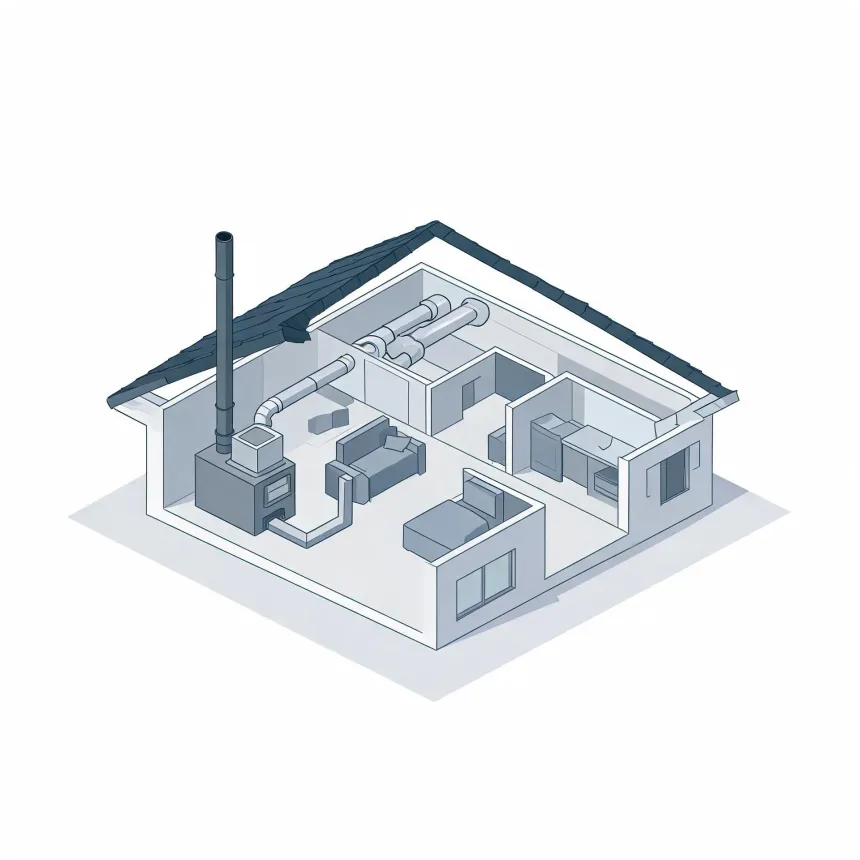
Isometric line illustration of a cutaway single-story house showing interior rooms with furniture, a furnace unit with a tall flue pipe, and connected ductwork running under the pitched roof.
Your furnace works hardest from November through March.

NOAA nClimDiv, 1991–2020 normals

Furnace here only has to run about five months a year, November through March.

A furnace that gets five months of work a year wears slower, so repair on an older unit in Winnsboro is often worth doing.

Half these furnaces are older, but that's not why yours needs a repair

Half the homes here were built by 1984
Heat runs November through March
Winter nights average 34°F
October is when a weak furnace gets foundHeat runs November through March here, and the first cold snap finds whatever was already failing.

There's nothing about Winnsboro that puts extra strain on a furnace. No wider swings in temperature, no harder water running through the humidifier, nothing in the air that eats at a heat exchanger faster than anywhere else. What usually brings a furnace down is simpler than that. An igniter wears out. A flame sensor gets a film of residue on it and stops reading the flame. A capacitor weakens. These are the same handful of failures a tech sees in any county, and most of them are a straightforward fix once the furnace is open. Electricity here ran $41.71 per million Btu in 2024, so a furnace that short-cycles or runs longer than it should is worth fixing for that reason alone, not because something unusual is going on with the unit.

It's usually worth repairing

It has an easier job here than in most places, so your furnace is often in decent shape. Repair is usually worth it.

Find a contractor
A gray residential gas furnace installed in an unfinished basement, surrounded by ductwork, a metal flue pipe, and a gas supply line.

Mild winters mean less reason to write off an older furnace

Overnight lows average 34°F through December, January and February, so the furnace isn't working against single-digit nights to keep a house warm. Mild cold on top of a short season is about as light a job as a furnace gets. That's more reason to get an older unit looked at rather than replaced when it starts acting up.

A cracked heat exchanger gets worse by running at all

Every time the burners fire, that crack flexes with the heat and opens a little more. Shutting the furnace off the moment you smell something off or see soot stops that. Leaving it running doesn't make the exchanger fail faster in terms of heat output, it makes the crack bigger each cycle.

A dirty flame sensor can turn into a cracked one

A flame sensor coated in residue starts by making the furnace shut off soon after ignition. Left alone, the burner keeps relighting and dropping out, and that repeated heat cycling is what eventually cracks the sensor rod itself. What starts as a quick cleaning job turns into a part replacement.

Most furnace trouble shows up before the burners ever fail outright. The thermostat calls for heat and nothing happens for a few seconds longer than usual. The blower runs but the air coming out feels barely warm. You hear a clicking at the start of a cycle that doesn't catch, then clicking again. Sometimes it's a smell, a dusty or slightly burnt odor in the first minute of a cycle, which is normal for the first run of the season but not if it lingers past that. A furnace that short-cycles, kicking off a few minutes after it starts, is usually telling you the flame sensor or the limit switch already has a problem. None of these are things to wait out. A furnace that struggles to start now is more likely to fail to start at all later.

Age alone doesn't answer the repair or replace question. What matters more is which part failed and what it would take to fix it. A new igniter, a new flame sensor, a new capacitor, these are small jobs on any furnace regardless of how old it is. A cracked heat exchanger is a different kind of answer, since that's not a part that gets patched, it gets replaced, and on an older unit that cost starts to compete with a new furnace outright. The control board sits somewhere in between, worth replacing on a furnace that's otherwise sound. Ask the tech what actually failed before deciding the unit is done. A furnace with one bad part and a sound heat exchanger is usually worth fixing no matter how many winters it has on it.