Two white Southern-style homes with wraparound porches lit by landscape lighting at night, flanked by live oak trees hung with Spanish moss.

Furnace Repair in Union, SC

Tell us about the job

Takes about a minute. No obligation.

RepairFurnace or heatingUnion County, SC
Step 1 of 2

What ZIP code is the job in?

A cracked heat exchanger gets worse, not better

A furnace with a cracked heat exchanger will keep running, but every cycle stresses the crack further. What starts as a hairline split can open wider, and that changes what's leaking through into the air your ducts carry.

A limping blower motor is telling you something

If the blower motor is straining, pulling more current than it should to push the same air, that extra heat has nowhere to go but back into the motor windings. Left alone, a motor in that state usually fails completely instead of easing back to normal.

5 months
November through March, your furnace is on duty
33°F
the average winter night it heats against
2 winter storms
in ten years, the nights a failure hurts most
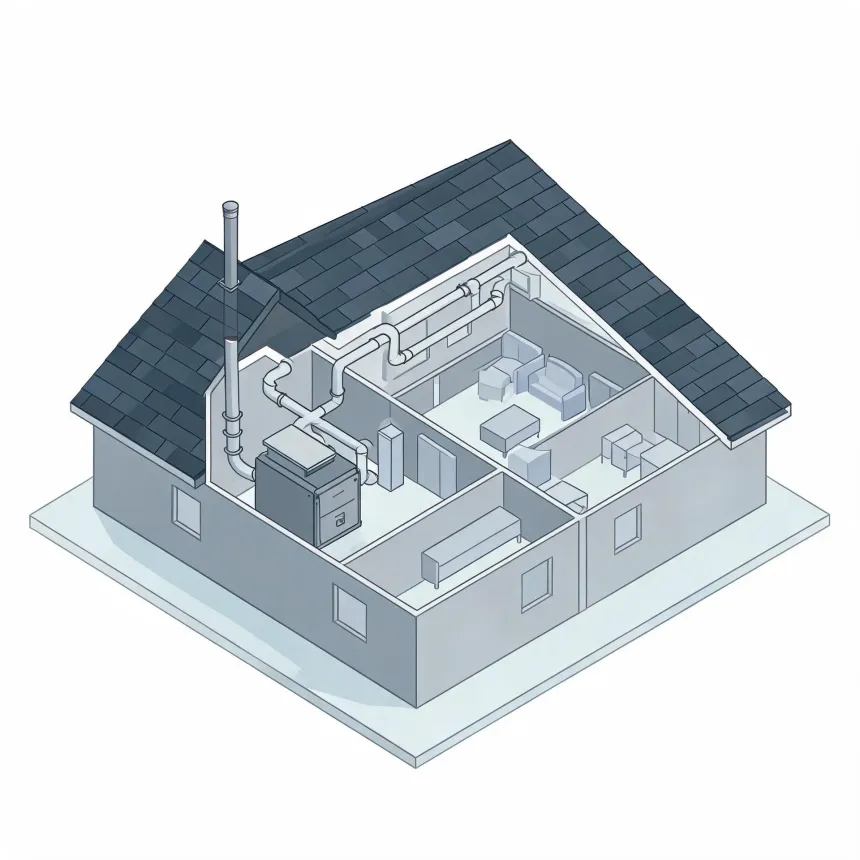
Isometric cutaway illustration of a single-story house with a dark shingled roof, showing interior rooms with furniture, ductwork, a flue pipe, and a furnace unit.
Your furnace works hardest from November through March.

NOAA nClimDiv, 1991–2020 normals

A diagnostic visit starts with the tech watching your furnace run through a full cycle, not just glancing at it.

Catching a flame that rolls wrong or a blower that kicks on late means watching the burners fire, not just checking them while they sit cold.

Half these furnaces are older than the house's middle age

Half the homes here were built by 1972
Heat runs November through March
Winter nights average 33°F
Nothing about Union is hard on a furnaceElectricity here runs $41.71 per million Btu, and most furnace trouble is the usual kind.

November is when heat first goes on here, and that's when a weak part usually shows up. A furnace that sat idle since March doesn't ease into the new season, it gets asked for full output on day one. A cracked heat exchanger that was stable all summer starts flexing again with every cycle. A blower motor with worn bearings gets loaded up right away instead of easing in. October is the month to get a furnace looked at, before the first cold night finds whatever was already wearing thin. Waiting until the house is cold means waiting in a line with everyone else whose furnace picked the same week to fail.

Ask how much life it has left

If your system came with an older house, it may be near the end of its life. Ask how much life it has left before paying for a big repair.

Find a contractor
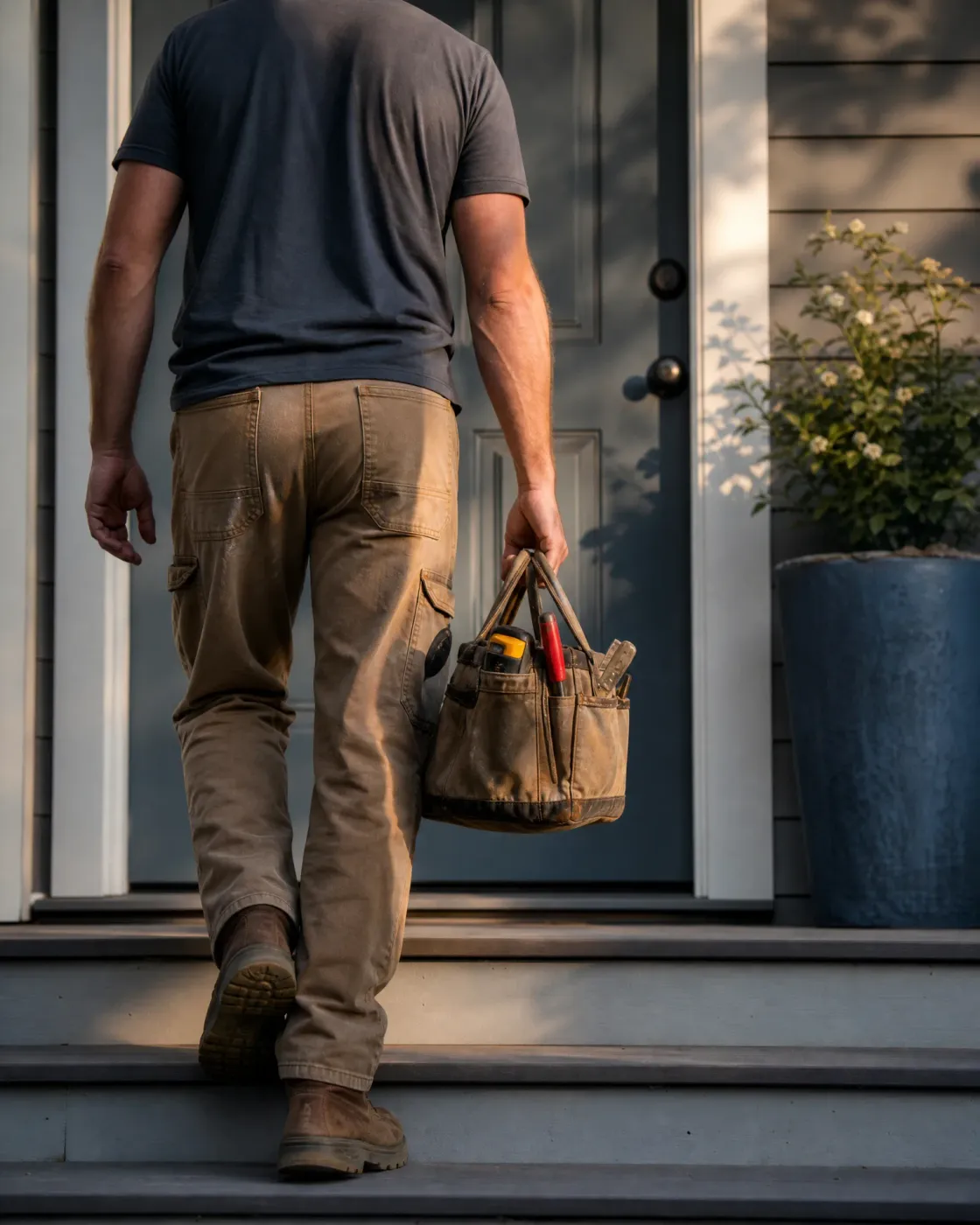
A man in a gray t-shirt, tan work pants and brown boots, seen from behind, climbs steps toward a dark front door while carrying a canvas tool bag holding a tape measure and screwdrivers, with a potted flowering shrub beside the entry.
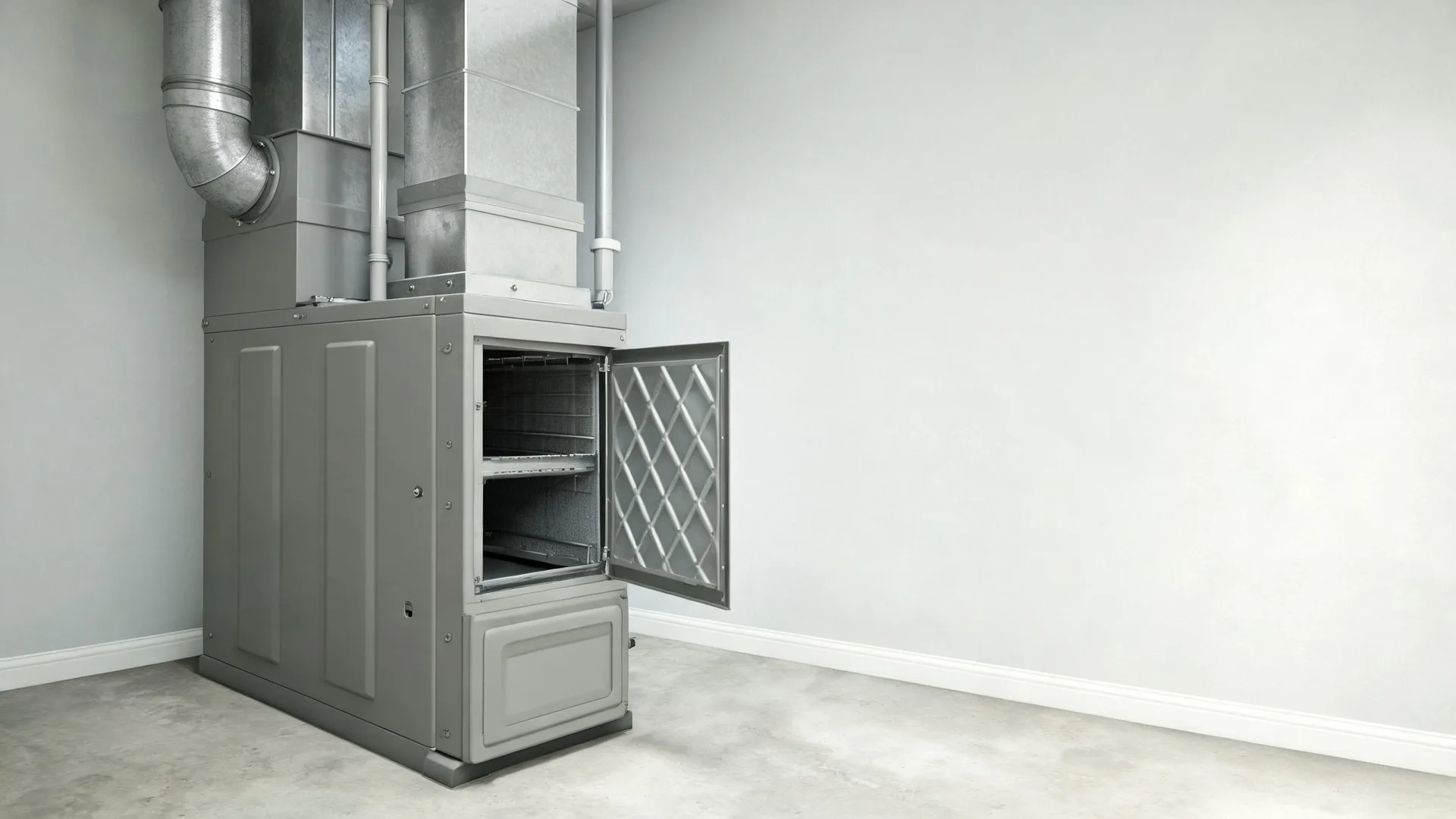
A gray residential gas furnace installed in an unfinished basement, surrounded by ductwork, a metal flue pipe, and a gas supply line.

Check these before you call anyone

Before anyone comes out, check the thermostat first. Make sure it's set to heat, not cool, and that the set point is actually above room temperature. Next check the filter. Pull it out and hold it up to a light. If you can't see light through it, that's choking off airflow and can make a furnace short cycle or blow cool air. Check that the furnace switch, the one that looks like a light switch near the unit, hasn't been bumped off. Look at the breaker too. A furnace that won't start at all sometimes just lost power. If you have a standing pilot, check whether it's lit. If your furnace vents through a wall or roof, look outside and make sure nothing is blocking the vent or intake pipe, no snow, no nest, no debris. None of this fixes a cracked heat exchanger or a bad igniter, but it rules out the simple stuff before anyone charges you for a visit.

A dirty flame sensor is the most common no-heat call

The flame sensor tells the control board a flame is lit. A thin layer of carbon or oxidation builds on it over time, and once it can't read the flame right, the board shuts the gas off a few seconds after ignition. The furnace tries, lights, then quits. It looks like a bigger problem but it's usually just a sensor that needs cleaning.

Ignition failure has a few different roots

A furnace that won't light at all could be a bad igniter, a gas valve that isn't opening, or a flame sensor so fouled it reads no flame even when one's there. Each one stops the furnace at a different point in the cycle, so the tech needs to watch it try to start before guessing which part is at fault.

Most people don't notice their furnace until it stops doing something it always did. Heat taking longer to feel warm, air coming out lukewarm instead of hot, or the blower running on after the burners shut off are all worth paying attention to. A furnace that short cycles, turning on and off in quick bursts instead of running a full cycle, is usually struggling with airflow or a limit switch tripping early. Listen for a bang at startup, a sign gas is building up before it lights instead of igniting right away. A burner flame that should burn steady and blue but instead flickers yellow or orange means it's not burning clean. None of these mean the furnace is done, but all of them mean something inside it already knows before you do.

Repairing a furnace almost always costs less up front than replacing it, so the real question is what you're paying for. A new igniter or a replaced flame sensor fixes the furnace you have and nothing else changes. But a furnace near the end of its life has other parts just as worn as the one that failed, even if they haven't quit yet. Fixing the failure in front of you doesn't touch those. Some repairs are also warning signs more than fixes. A cracked heat exchanger is one of them, since it affects what's moving through your ducts, not just whether the furnace runs. The honest way to weigh it is to ask what else on this furnace is close to the same age as the part that just failed.