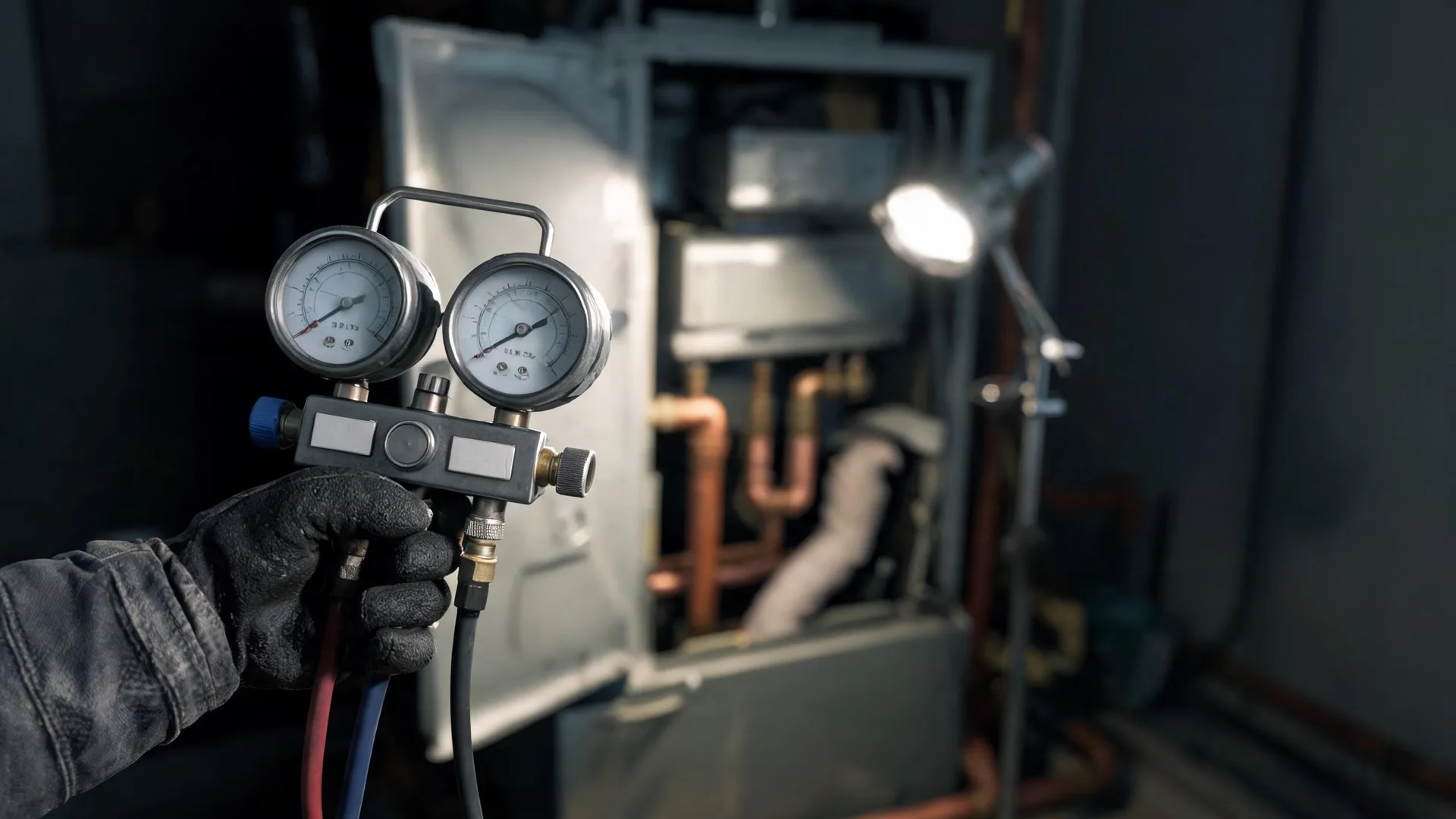
An unfinished basement containing a forced-air furnace with metal ductwork, exposed wooden ceiling joists, a hanging Edison bulb, and bare concrete floors.

Furnace Repair in Myrtle Beach, SC

Tell us about the job

Takes about a minute. No obligation.

RepairFurnace or heatingHorry County, SC
Step 1 of 2

What ZIP code is the job in?

Short cycles or won't stop running

A furnace that shuts off soon after starting usually has a dirty flame sensor or a clogged filter choking airflow. One that runs on and on without catching up to the thermostat often points to a failing blower motor or a thermostat that's lost calibration. Either pattern means the furnace is struggling, not warming up.

Noise, smell, or a flame that looks wrong

A bang at startup usually means gas is building up before it lights, often from a dirty burner. Grinding or squealing points to a motor bearing going bad. A burner flame that burns yellow instead of blue means it isn't getting the air it needs to burn clean. Any of these is worth shutting the furnace down and getting a tech out rather than waiting to see if it gets worse.

5 months
November through March, your furnace is on duty
37°F
the average winter night it heats against
2 winter storms
in ten years, the nights a failure hurts most
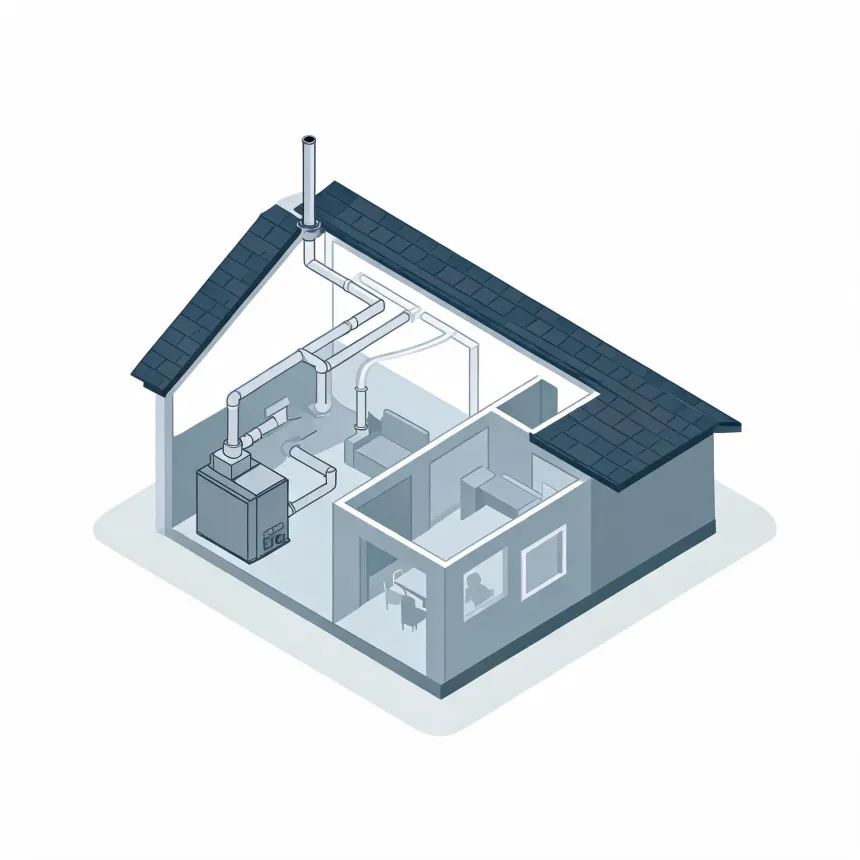
Isometric cutaway illustration of a single-story house showing interior rooms, a furnace unit with connected ductwork, and a flue pipe extending through the dark shingled roof.
Your furnace works hardest from November through March.

NOAA nClimDiv, 1991–2020 normals

A furnace in Horry County only has to work about five months a year, November through March.

A furnace with that short a season behind it usually has less wear on it, so fixing one is often the right call.

Winters here are mild. Your furnace failing isn't about the weather, it's about the part.

Heat runs November through March
Winter nights average 37°F
Climate zone 3A
The first cold snap finds the weak partFurnaces here sit idle until November, then get asked to run.

Half the houses in Horry County were built in 1999 or later. If yours is one of them, your furnace likely isn't that old either, even if it's acting up now. A furnace that age is usually still within its working life. That's worth knowing before anyone talks about replacing it instead of fixing it.

It's usually worth repairing

It has an easier job here than in most places, so your furnace is often in decent shape. Repair is usually worth it.

Find a contractor
A gray gas furnace with attached ductwork and piping installed in an unfinished concrete basement.

A newer furnace is worth a repair call

If your furnace came with the house and the house is newer, get a tech out to look at the actual part before anyone brings up replacement. A dirty flame sensor or a bad igniter is a different job than a new unit, and that's usually what's wrong on a furnace that hasn't logged many winters yet.

A small problem stays small only if it's caught

A dirty flame sensor just makes the furnace shut off early. Left alone, the burner keeps relighting and going out, and that repeated strain is what pushes an igniter toward failing too. The fix early on is a cleaning. Left running like that for weeks, it's a part replacement.

Some failures take the rest of the furnace with them

A blower motor struggling to keep up pulls more current than it should, and a motor running hot like that can burn out its windings or trip a limit switch. What started as one worn part becomes a furnace that won't run at all.

Most furnace failures trace back to one of a few parts doing the work that wears them out. The igniter lights the gas every single cycle, so it's usually the first thing to go, especially the hot surface type that glows to light the burner. The flame sensor sits right in the burner flame and builds up a film over time, until it can't tell the furnace a flame is there and shuts things down as a safety measure. Blower motor bearings wear from spinning all season, and a motor working harder than it should run hot and eventually seizes or trips its own limit switch. A dirty filter doesn't fail on its own, but it starves the system of airflow and makes everything downstream work harder than it was built to. Most of this comes down to normal wear on parts that cycle on and off all season, not some defect in the furnace itself.

A diagnostic call starts with the thermostat and works back from there. The tech checks what the furnace is actually doing, short cycling, not firing, running without heat, and that pattern narrows things down before any panel comes off. Next comes the flame sensor and igniter, since those cause most no-heat calls and take only a few minutes to check. The tech pulls the flame sensor, looks for a film of residue or corrosion on it, and tests the igniter for continuity rather than just looking at it. Airflow gets checked too, since a clogged filter or blocked return can mimic a failing blower motor. Once the actual cause is found, the tech can say whether it's a cleaning, a part, or something bigger, instead of guessing.