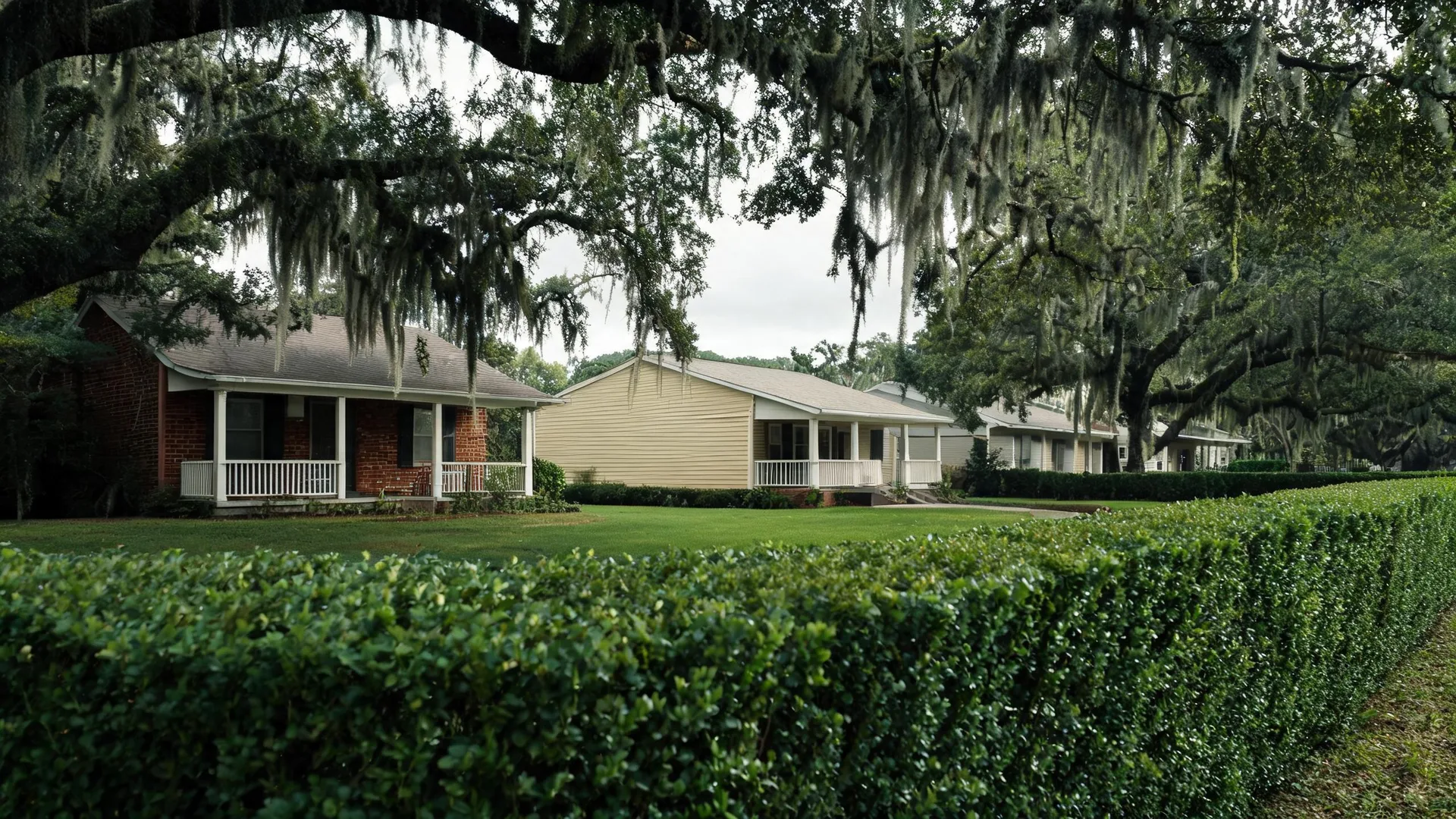





A row of single-story houses, one brick and others with pale siding and covered porches, behind a trimmed hedge and lawn, under large oak trees draped with Spanish moss.

Furnace Repair in Lexington, SC

Tell us about the job

Takes about a minute. No obligation.

RepairFurnace or heatingLexington County, SC
Step 1 of 2

What ZIP code is the job in?

Most furnace calls come down to a handful of parts. The igniter fails most often. It glows to light the burners every cycle, and that glowing wears it out over time until it cracks or won't heat up enough to catch the gas. A dirty flame sensor causes a similar no-heat problem. It can't tell the burners are lit, so the control board shuts the gas off on purpose, as a safety step. A clogged filter causes its own chain of trouble. Airflow drops, the heat exchanger runs hotter than it should, and the furnace starts shutting itself off mid-cycle to protect itself. Blower motors wear out from running long hours season after season. And a thermostat that's lost calibration or lost power can make a perfectly good furnace look broken when nothing inside it is wrong at all.

5 months
November through March, your furnace is on duty
36°F
the average winter night it heats against
1 winter storms
in ten years, the nights a failure hurts most
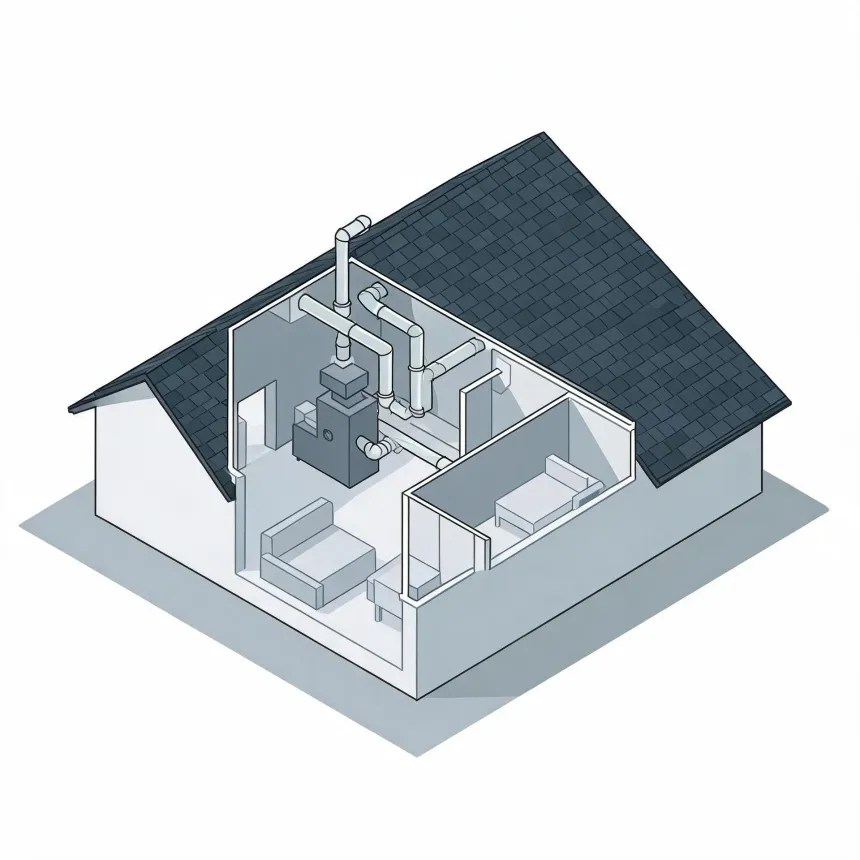
Isometric cutaway illustration of a single-story house with a dark shingled roof, showing interior rooms with furniture and a furnace connected to ductwork.
Your furnace works hardest from November through March.

NOAA nClimDiv, 1991–2020 normals

Half the houses in Lexington County were built in 1993 or later.

A furnace that age still has years in it, so a repair call makes more sense than planning a replacement.

Winters here are mild. When the furnace quits, it's a part, not the cold

Heat runs November through March
Winter nights average 36°F
Climate zone 3A
Five months of workFurnaces here run five months, November through March, with lows near 36°F.

Furnaces here sit idle for months before November, when the heat goes back on for the first time. Whatever was already weak doesn't show up until then. A cracked igniter or a dirty flame sensor tends to fail right in those first cold snaps, not in the middle of the season. October is the month to get a furnace looked at, before it's asked to run for the next five months straight. A unit that starts strong in November usually makes it through to March without trouble.

Repair it

If your system came with a newer house, it likely has plenty of life left. Repair is usually the right call.

Find a contractor
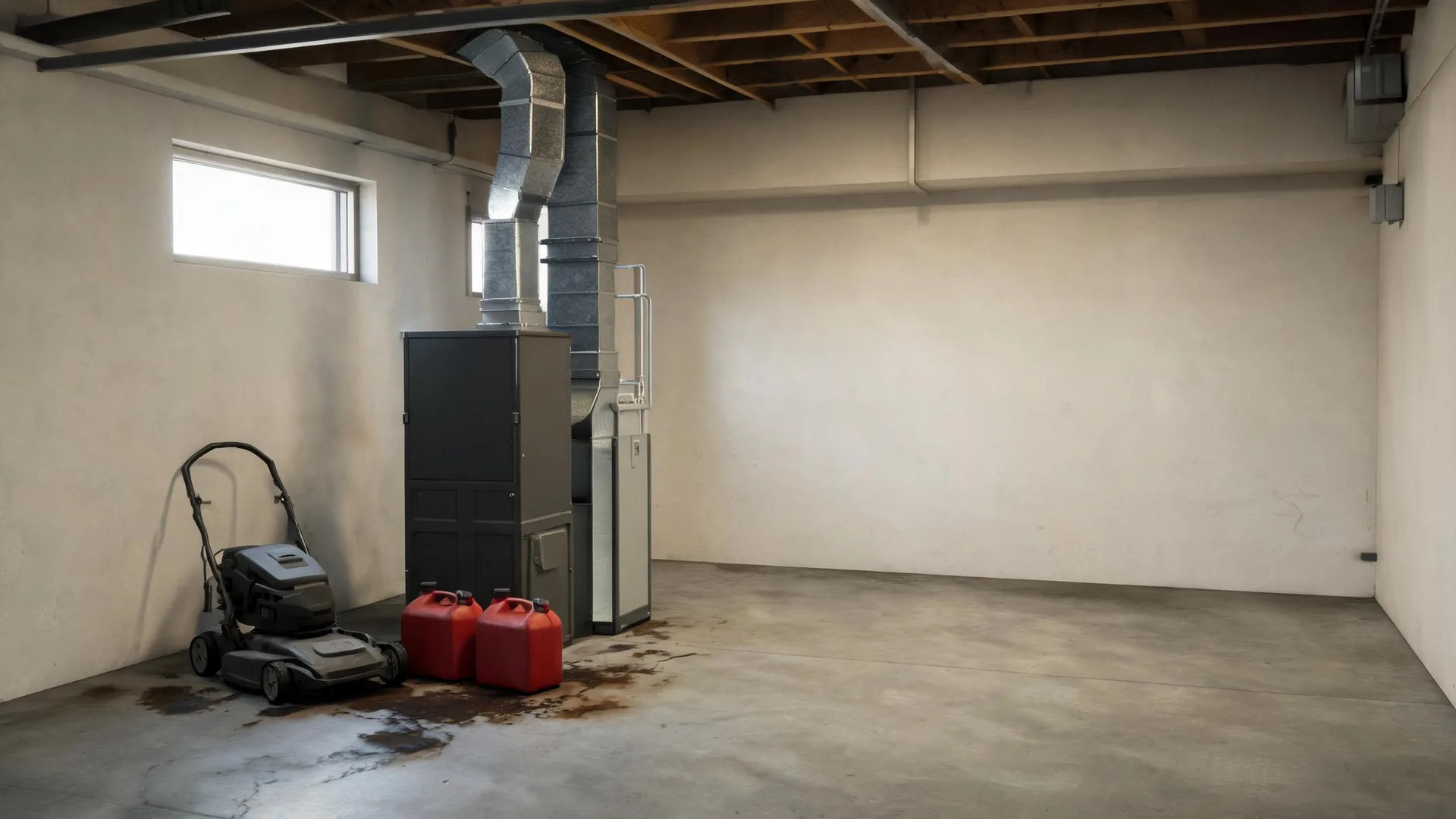
A gray high-efficiency gas furnace installed in an unfinished basement, surrounded by gas lines, a condensate drain, and sheet-metal ductwork.

A light enough job that repair makes sense

Five months a year is a light shift for a furnace, nothing like what units further north have to put out. That lighter load means a repair now has less working against it. Get the igniter or flame sensor fixed rather than putting money toward a new unit.

Check these before you call

Make sure the thermostat is set to heat and the setpoint is above room temperature, and swap the batteries if it has a blank or dim display. Check the filter and replace it if it's gray or caked with dust. Go to the furnace itself and look for a blinking light behind the small window on the control board, and check that the switch on the side of the unit, which looks like a light switch, is flipped on. Last, check the breaker it runs on and the gas valve at the furnace to confirm it's turned to open.
What those checks rule out

A thermostat issue or a dead breaker can make a working furnace look dead, and both take a minute to fix without a tool in hand. A dirty filter is worth ruling out too, since restricted airflow can trip the furnace's own safety switch and shut it down mid-cycle. If all of that checks out and the furnace still won't run, or it starts and then quits on its own, the problem is inside the unit and needs a tech to open it up.

A furnace that's struggling doesn't fix itself by staying on. A cracked heat exchanger gets worse with every cycle of heating and cooling, until it leaks exhaust into the air a blower is supposed to be moving through the house. A blower motor running on worn bearings keeps drawing power and building heat in the windings until it seizes, instead of wearing down slow and giving warning. A clogged filter left in place forces the furnace to run hotter each cycle, and that heat stresses the exchanger a little more every time the burners fire. None of these get better with runtime. Shutting the furnace off and calling someone is what keeps a cracked part from turning into a replaced unit.

Age isn't the only thing worth weighing. A furnace that's needed several repairs in as many winters is telling you something, even if each fix was small on its own. Parts failing in clusters usually means the unit is wearing out generally, not that it just had bad luck with one component. A cracked heat exchanger is the other line worth knowing. That part isn't meant to be replaced on its own, and a tech who finds one cracked is going to talk replacement, not repair, no matter how new the rest of the furnace looks. Short of that, most failures are single parts doing a single job, and swapping that part brings back a furnace that runs the same as it did before it quit.