





An unfinished basement featuring exposed ceiling joists, a metal HVAC unit with round ductwork, a hanging light bulb, and scattered boxes and debris along the left wall.

Furnace Repair in Laurens, SC

Tell us about the job

Takes about a minute. No obligation.

RepairFurnace or heatingLaurens County, SC
Step 1 of 2

What ZIP code is the job in?

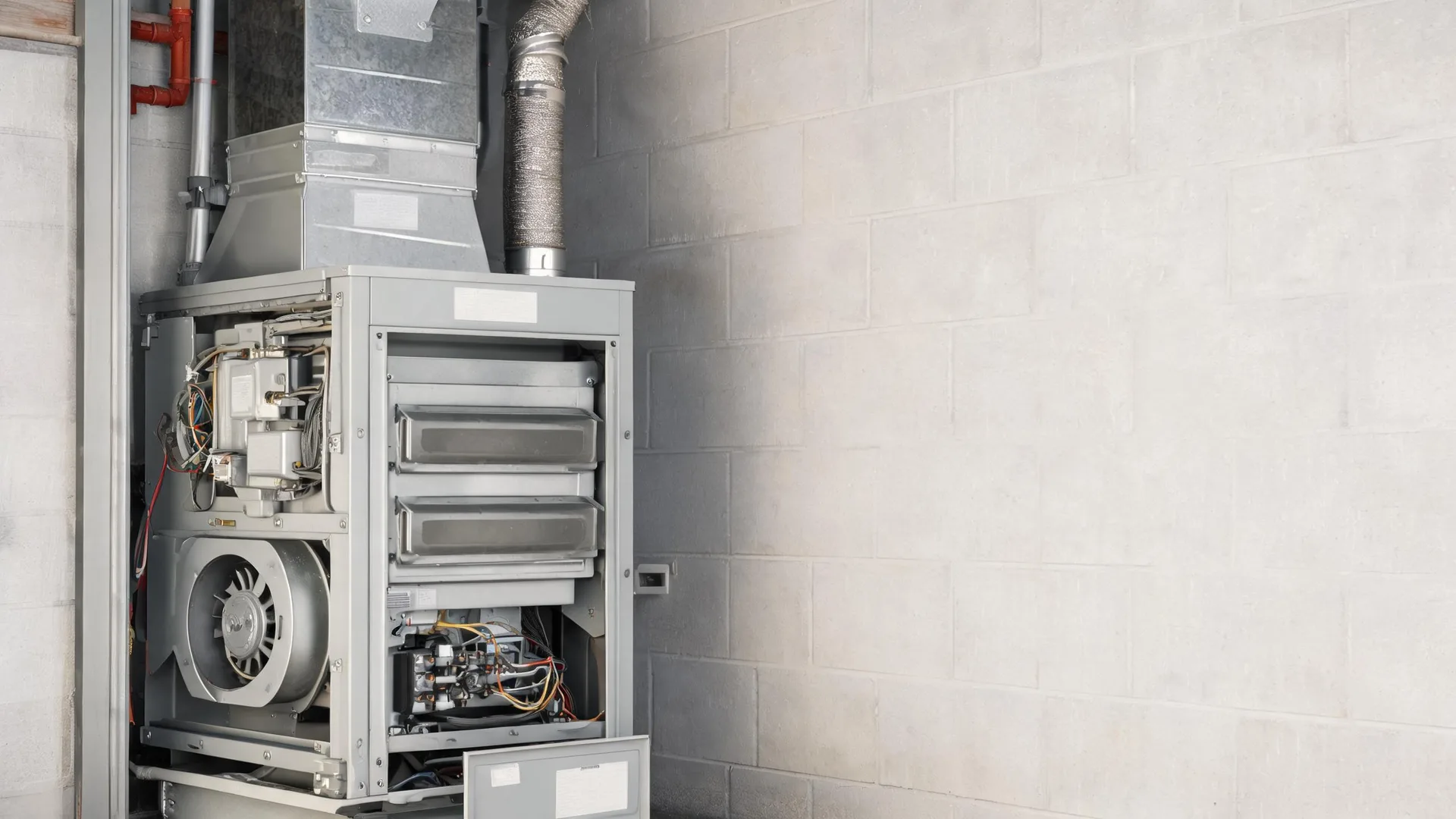
Most furnace calls come down to a handful of parts. The igniter is the one that fails most often. It glows to light the burners, and that glow wears it out over time until it cracks or stops heating up enough to catch the gas. A dirty flame sensor causes a similar complaint, the furnace starts then shuts off a few seconds later because the sensor can't tell the flame is lit. Blower motors wear out too, usually the bearings going, and you'll hear it before the furnace ever stops heating. Behind the scenes, a clogged filter forces the blower to work harder than it should, and that extra strain is what takes down motors and cracks heat exchangers well before their time. Loose or corroded wiring at the control board causes the odd stuff, a furnace that runs fine one day and won't start the next.

5 months
November through March, your furnace is on duty
34°F
the average winter night it heats against
2 winter storms
in ten years, the nights a failure hurts most
Isometric cutaway illustration of a single-story house with a dark shingled roof, showing interior rooms with furniture and a furnace connected to ductwork and a flue pipe extending above the roof.
Your furnace works hardest from November through March.

NOAA nClimDiv, 1991–2020 normals

A tech checks the igniter, the flame sensor and the blower before anything gets taken apart.

Most of what's wrong shows up in that first look, so the fix usually follows fast.

Five months of heat a year is not much to ask of a furnace

Heat runs November through March
Winter nights average 34°F
Climate zone 3A

None of this makes a Laurens furnace more failure-prone than any other. It is the same igniter, the same flame sensor, the same blower motor you would find anywhere else, wearing out the same way. What changes here is what a failure costs you. Electricity ran $41.71 per million Btu in South Carolina in 2024, and when the power goes out along with the furnace, a space heater or an electric backup is not free to run while you wait on a fix. That is the case for getting someone out quickly once something is off, not for expecting a stranger problem than usual.

Get your furnace looked at before November, not after

Heat starts running in November here. Whatever's been sitting weak in your furnace since March is about to get asked to work, and October is the month to find it before it fails on you. Once the cold settles in for the next five months, that same problem means a cold house while you wait.

Find a contractor
A gray high-efficiency gas furnace installed in an unfinished basement, surrounded by gas lines, a condensate drain, and sheet-metal ductwork.

Five months a year, then months of rest

Five months of real work a year leaves a furnace time to recover, which is why most repairs are worth doing instead of replacing the whole unit. A tech can clean a flame sensor, swap an igniter or re-seat a wire and send it back into a system that isn't worn thin everywhere else. The cases where repair stops making sense are usually age or a history of neglect, not the workload. If the furnace came with the house, or you've skipped filter changes for a while, mention that when the tech looks at it. That tells them more about what's likely wrong than how cold it got last winter.

What you'll notice first

A furnace rarely fails without warning. It gets noisy, the blower grinding or squealing where it used to run quiet. It short-cycles, kicking on and shutting off again before the house warms up. The air coming out of the vents turns lukewarm instead of hot, or a burner smell lingers longer than it should when the system starts. Any of these is the furnace telling you something's wearing out, not fixing itself.
Why waiting makes it worse

A furnace that's struggling usually isn't failing all at once. A weak igniter still lights some mornings and not others. A dirty flame sensor lets the furnace run a little longer each time before it trips. Left alone, these turn from an occasional nuisance into a furnace that won't start at all, usually on the coldest night it's asked to work hardest.

A cracked heat exchanger is the clearest case. It starts as a hairline crack, and the furnace still runs, but every cycle flexes that metal with heat and lets a little more exhaust leak where it shouldn't. Keep running it and the crack opens further until the furnace has to be shut down outright instead of repaired. A blower straining against a clogged filter does the same kind of damage to its bearings, a little more wear each cycle until the motor seizes instead of just needing a cleaning. Short-cycling wears on the control board the same way, every failed start another jolt the board didn't need. None of these fix themselves by running longer. They just get further along by the time someone looks at them.

When a tech says a furnace needs replacing instead of repairing, it usually comes down to the heat exchanger or the age of the parts failing. A cracked heat exchanger isn't a part swap, it's the core of the furnace, and once it's compromised the whole unit gets replaced rather than patched. Short of that, most failures are single parts on an otherwise sound furnace, and fixing the one part that broke is cheaper and faster than replacing everything around it. The other case for replacing is a furnace where this isn't the first call, where the igniter was new last year and the blower the year before that. At some point a furnace is just a collection of worn parts holding on until the next one goes, and a tech can tell you honestly when you've reached that point instead of chasing it one repair at a time.