






A nighttime street scene featuring a row of lit white colonial-style houses with wrap-around porches, flanked by oak trees draped in Spanish moss.

Furnace Repair in Greenwood, SC

Tell us about the job

Takes about a minute. No obligation.

RepairFurnace or heatingGreenwood County, SC
Step 1 of 2

What ZIP code is the job in?

A technician starts by asking what the furnace is doing, or not doing, before anything gets opened up. Short cycling, no heat, a burning smell, a blower that won't shut off. Each one points down a different path. From there it's a look at the flame itself, whether it lights at all and whether it stays lit. A weak flame sensor will let the burner fire and then cut out a few seconds later. That looks like the furnace is quitting on you, but it's really just a dirty sensor refusing to prove the flame is there. If the burner never lights, the igniter or the gas valve get checked next. The technician will also pull the filter and check the blower, because restricted airflow causes a lot of problems that look electrical but aren't. By the time the panel goes back on, there should be a plain answer. What part failed, why, and what it takes to fix it.

5 months
November through March, your furnace is on duty
35°F
the average winter night it heats against
2 winter storms
in ten years, the nights a failure hurts most
Isometric line illustration of a cutaway house showing interior rooms with furniture and a furnace with ducting and a flue pipe extending through the roof.
Your furnace works hardest from November through March.

NOAA nClimDiv, 1991–2020 normals

A furnace in Greenwood runs on the same gas valve and igniter as one anywhere else.

So the fix is whatever that part needs, not something special for this county.

Five months of work a year, not year-round

Heat runs November through March
Winter nights average 35°F
Climate zone 3A
Half the furnaces here are older than the other halfHalf the homes in Greenwood County were built in 1977 or earlier. If your furnace came with the house, its age is worth checking before anything else.

October is worth a call before the cold sets in. Turn the furnace on for the first time since March and whatever was already weak gets put under load right away. A cracked heat exchanger, a failing igniter, a blower motor with a bad bearing, these don't announce themselves while the furnace sits off. They show up in the first week it runs. Homes in Greenwood County start running heat in November, so a technician out in October catches the problem on a slow afternoon instead of during the first cold snap when everyone else is calling too.

Get the usual fix

Nothing about this area is especially hard on it. It's most likely the usual problem with the usual fix.

Find a contractor
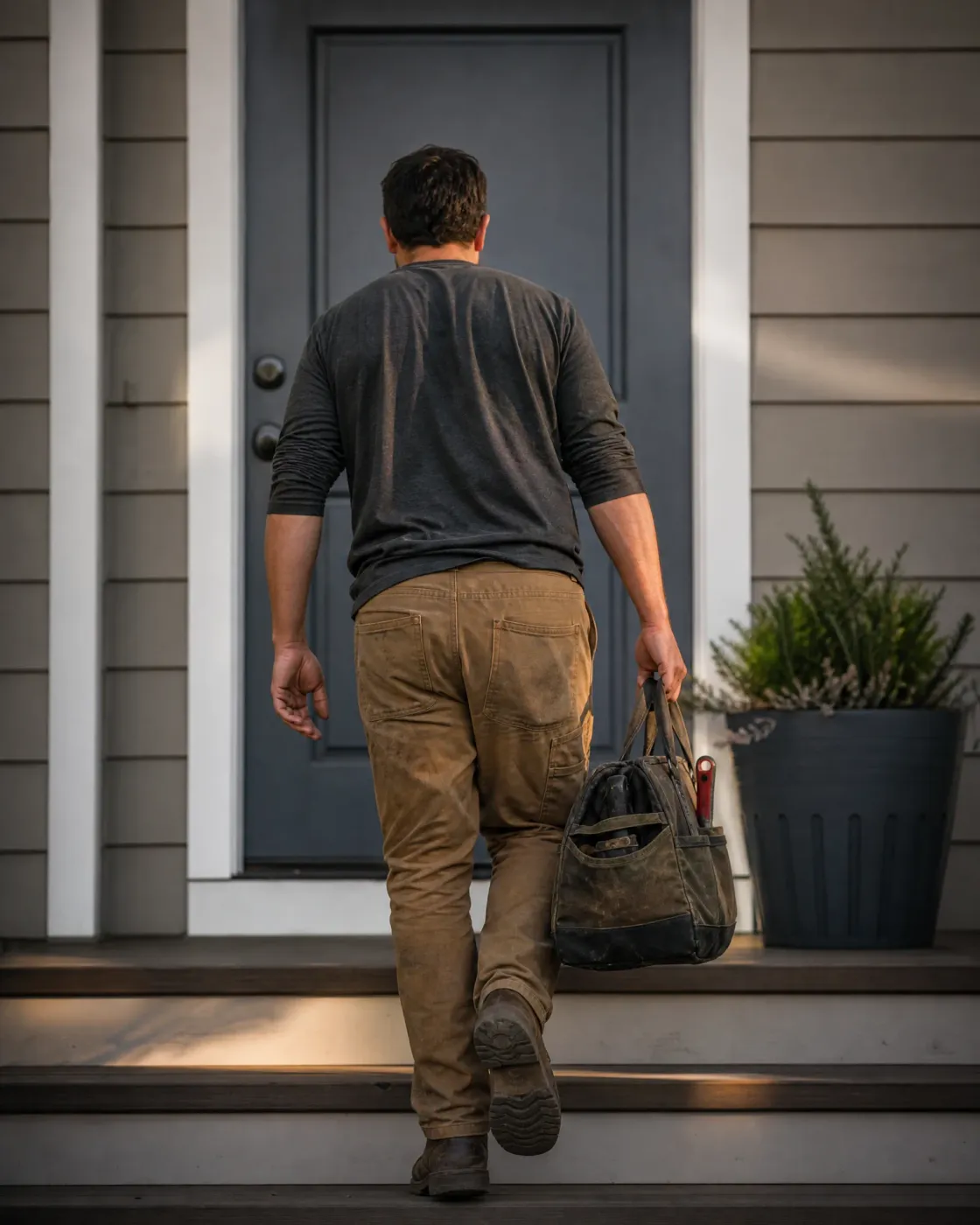
A man in a dark long-sleeve shirt and tan work pants, seen from behind, carries a canvas tool bag up porch steps toward a dark blue front door, with a potted plant beside him.
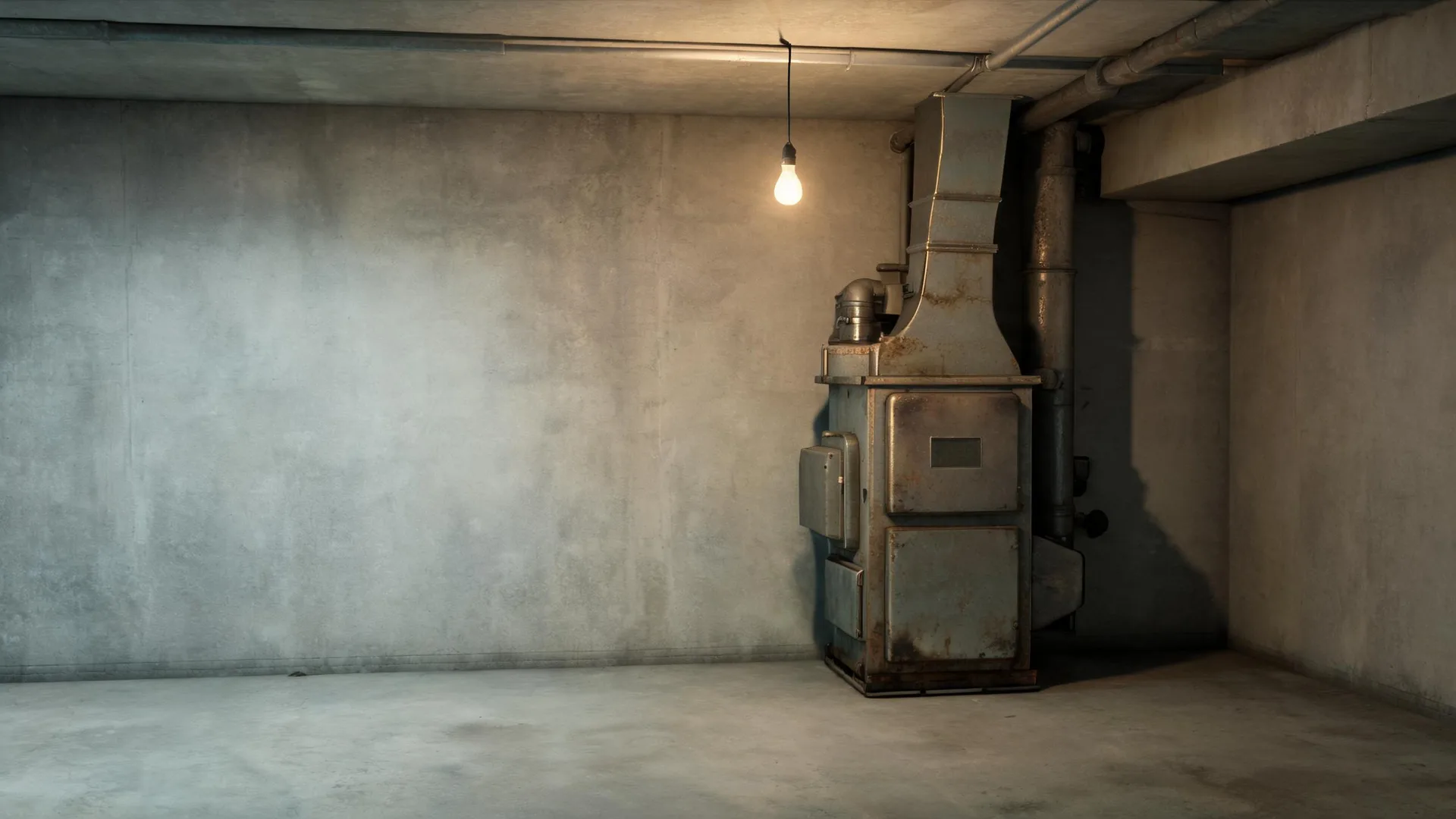
A gas furnace with attached ductwork, gas piping, and condensate lines installed in a concrete-block basement.

A furnace here is still worth repairing

Five months a year, and the lows only average 35 through December, January and February. That's not a hard freeze running night after night. A furnace built for this doesn't get pushed the way one further north does. So when a part fails here, it's usually failed on its own, not from strain. Worth fixing rather than replacing, in most cases.

What you notice before you know why

A furnace that used to run in long, steady stretches starts clicking on and off every few minutes. Or it runs but the air coming out feels cool. Or you hear the burner light with a thump instead of a quiet whoosh. None of these tell you the part by themselves, but they tell you something is already wrong, not something about to go wrong.
The ones that shouldn't wait

A burning smell that isn't the usual dusty smell of the first run of the year. Soot around the furnace door. A yellow, flickering flame instead of a steady blue one. Any of these mean stop running it and get it looked at, because they point at venting or combustion problems rather than a worn part that just needs swapping.

A cracked heat exchanger is the clearest case. Run it a little longer and the crack doesn't heal, it spreads, and what starts as a hairline failure can turn into a reason the whole furnace gets condemned instead of repaired. A blower motor with a bad bearing is the same story. It'll run loud for a while before it seizes, and a seized motor can take the control board with it if nothing shuts things down first. Short cycling does its own kind of damage. Every time the burner fires and cuts out early, it's another cycle of heating and cooling the heat exchanger, and that stress is what opens up cracks in the first place. A weak flame sensor left alone doesn't fix itself either. The furnace just keeps trying, failing, and trying again, and that's hard on the igniter too. None of this means panic over every rattle. It means the ones on the list above, the burning smell, the yellow flame, the thump at ignition, are worth shutting off for rather than running through.

A repair is usually worth it if the cabinet and the heat exchanger are sound and what failed is a part, an igniter, a sensor, a control board. Those fail on their own schedule and swapping one back out brings the furnace back to where it was. Replacement starts to make more sense when the heat exchanger itself is cracked, because that's the part that can't be patched, or when the same repair keeps coming back because something upstream keeps killing the part that gets replaced. Age matters too, not as a number but as a pattern. A furnace that's needed a handful of repairs in the last few winters is telling you something different than one that's run clean for years and just had its first failure. The other thing worth asking is whether parts for it are still easy to get. An older furnace with a discontinued control board turns a simple repair into a harder search, and that's worth knowing before you commit to fixing it.