




A row of single-story houses with porches, one brick and others with pale siding, behind a trimmed hedge and lawn, under oak branches draped with Spanish moss.

Furnace Repair in Greenville, SC

Tell us about the job

Takes about a minute. No obligation.

RepairFurnace or heatingGreenville County, SC
Step 1 of 2

What ZIP code is the job in?

A furnace that's about to need repair usually tells you before it quits outright. Short cycling is one of the first signs. It fires up, runs for a few minutes, then shuts off before the room ever warms. Strange noises matter too. A boom at startup points to delayed ignition. A grinding sound points to the blower motor or its bearings. If the air coming out of the vents is lukewarm instead of hot, the igniter or the flame sensor is often the problem. A burner flame that looks flickering or yellow instead of steady blue is worth taking seriously, since that can mean incomplete combustion. Any of these is reason enough to get it looked at before the furnace stops working altogether.

7 months
October through April, your furnace is on duty
34°F
the average winter night it heats against
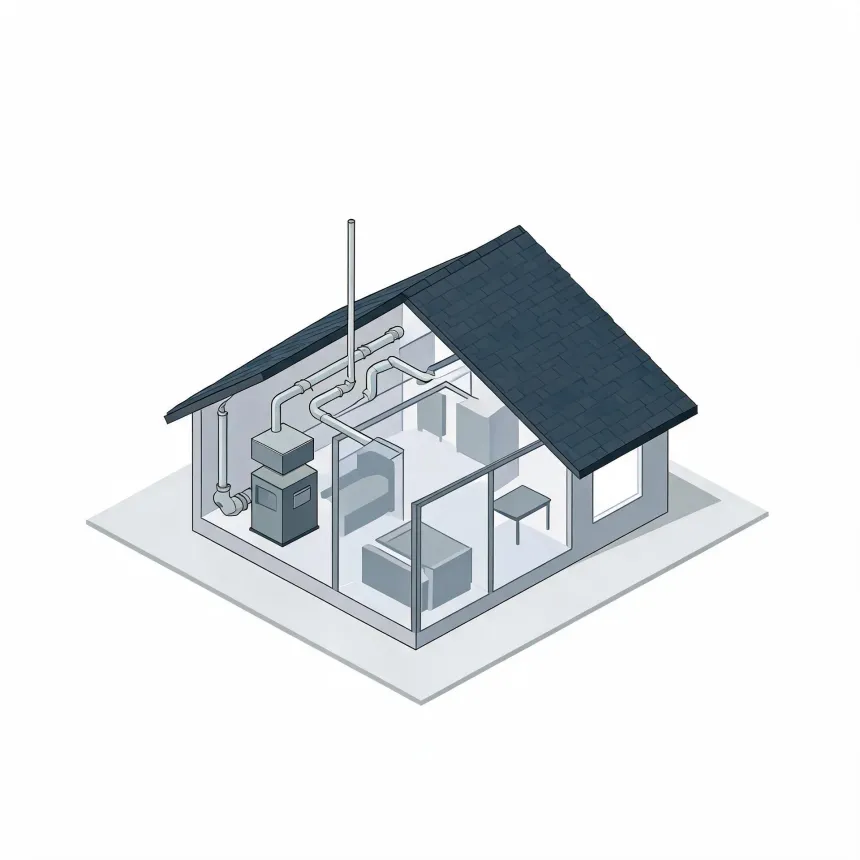
Isometric cutaway illustration of a small house with a dark shingled roof, showing an interior furnace unit, ductwork, and a flue pipe extending through the roof.
Your furnace works hardest from November through March.

NOAA nClimDiv, 1991–2020 normals

A cracked heat exchanger gets worse every time the burner fires.

Keep running a furnace with that crack and the flue gases have more chances to find their way into the air it blows.

Greenville doesn't push furnaces any harder than the rest of the country

Heat runs October through April
Winter nights average 34°F
Climate zone 3A
Greenville doesn't push furnaces any harder than the rest of the countryHalf the homes in Greenville County were built in 1992 or later.

Heat here starts in October. September is the month to get a furnace looked at if it gave any trouble last winter, before it's asked to run every day. The first cold snap is when a weak part usually gives out, because that's when the furnace runs longest and hardest since spring. Once it's running daily there's no slow week to catch a problem early, it just runs seven months straight through April. Waiting it out isn't really an option when the next seven months look like the last one did.

Get the usual fix

Nothing about this area is especially hard on it. It's most likely the usual problem with the usual fix.

Find a contractor
A man in a cap, dark long-sleeved shirt and brown work pants walks up porch steps toward a gray front door, carrying a worn canvas tool bag filled with hand tools.
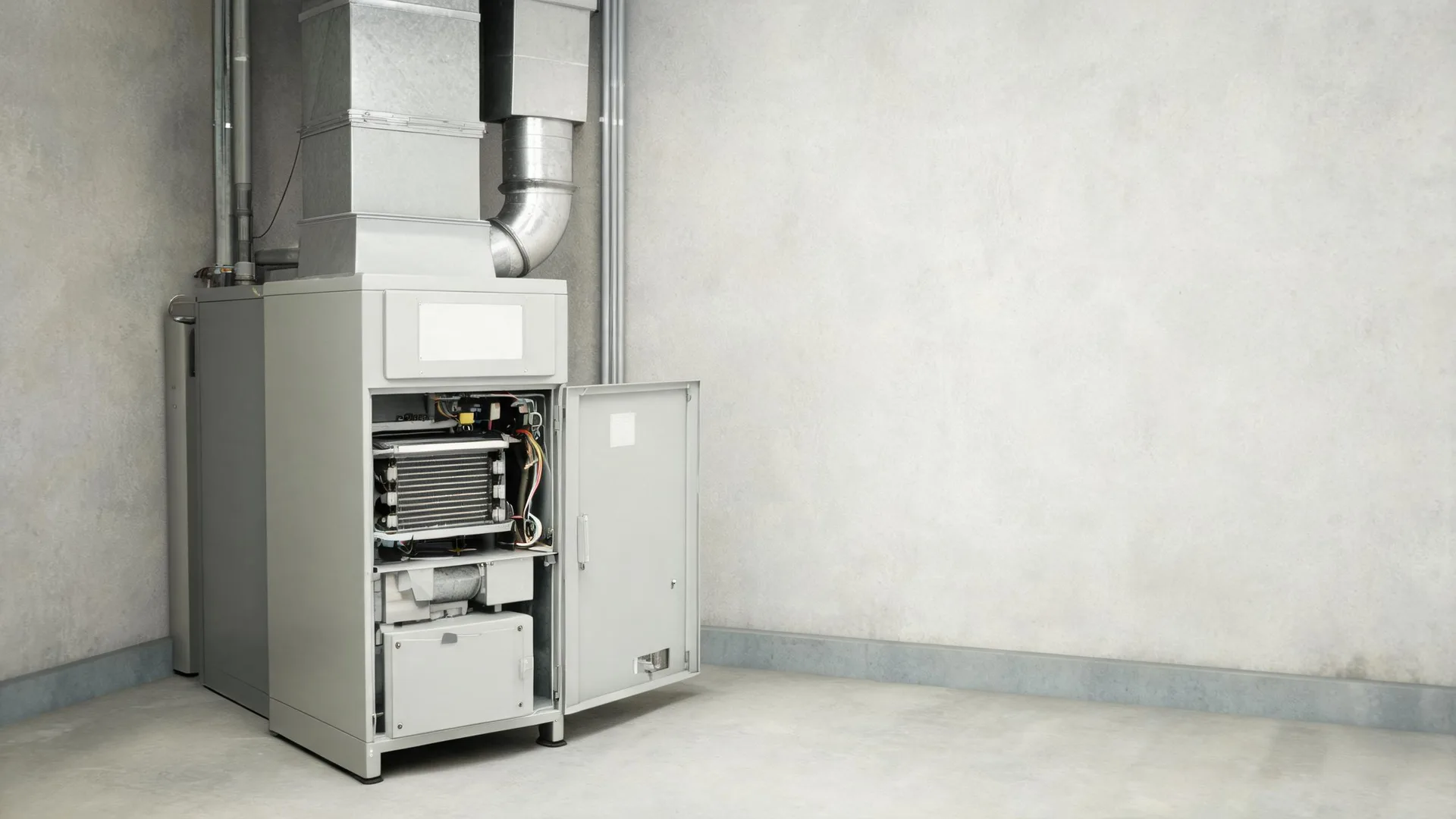
A gray high-efficiency gas furnace installed in an unfinished basement, surrounded by gas lines, a condensate drain, and sheet-metal ductwork.

A long season, not a brutal one

Seven months a year, October through April, this furnace runs. Through the coldest stretch, December to February, the overnight low here only averages 34°F. That's mild next to what furnaces in colder states deal with night after night. The long season adds up in hours run, but it's not asking the furnace to fight real cold to do it. A furnace that's held up through winters like this one usually has life left in it. Whatever's causing trouble now is more likely age or a worn part than the season wearing it down.

Check the thermostat and the power first

Make sure the thermostat is set to heat and set above room temperature, not just on. Check that the furnace switch, the one that looks like a light switch near the unit, is flipped on. Look at the breaker too. These sound too simple to matter, but they account for more dead furnaces than anything inside the cabinet.
Check the filter and the vents before you call

Pull the filter and hold it up to a light. If you can't see light through it, it's choking off airflow, and that alone can cause short cycling or a furnace that blows cool air. Walk the house and make sure no vents are closed or blocked by furniture or rugs. These are the checks worth doing yourself. Anything involving the burner, the flame or the flue is not.

Most furnace failures trace back to a handful of parts, and they tend to go in the same order. The igniter is usually first. It's a thin strip that heats up to light the burners, and like any heating element it weakens with use until one day it doesn't get hot enough. The flame sensor goes next, more often from a coating of residue than from actually failing. It's job is to prove there's a flame, and if it can't see one it shuts the gas off, even when the burners are lit fine. Flame sensors can often be cleaned rather than replaced. The draft inducer motor pulls exhaust out through the flue before the burners are allowed to fire, and once its bearings wear out the furnace won't start at all. Capacitors in the blower motor weaken slowly, so the blower starts struggling before it quits outright. None of these mean the furnace is on its way out. They're wear parts, and furnaces are built to have them replaced.

A diagnostic starts before the panel comes off. A tech will ask what the furnace was doing right before it quit and whether there was any warning, since that narrows things down fast. Then comes a visual check of the burners, looking for a flame that's steady and blue rather than flickering or yellow. Next is usually the pressure switch and the draft inducer, making sure exhaust is actually pulling through the flue the way it should. If the burners won't stay lit, the flame sensor comes out for a look, since a coating of residue there will shut the gas off even with a good flame. Testing the igniter for resistance is quick and tells you right away if it's on its way out. Only after all that does a tech reach for parts, because a part that gets replaced without being the actual problem doesn't fix anything.