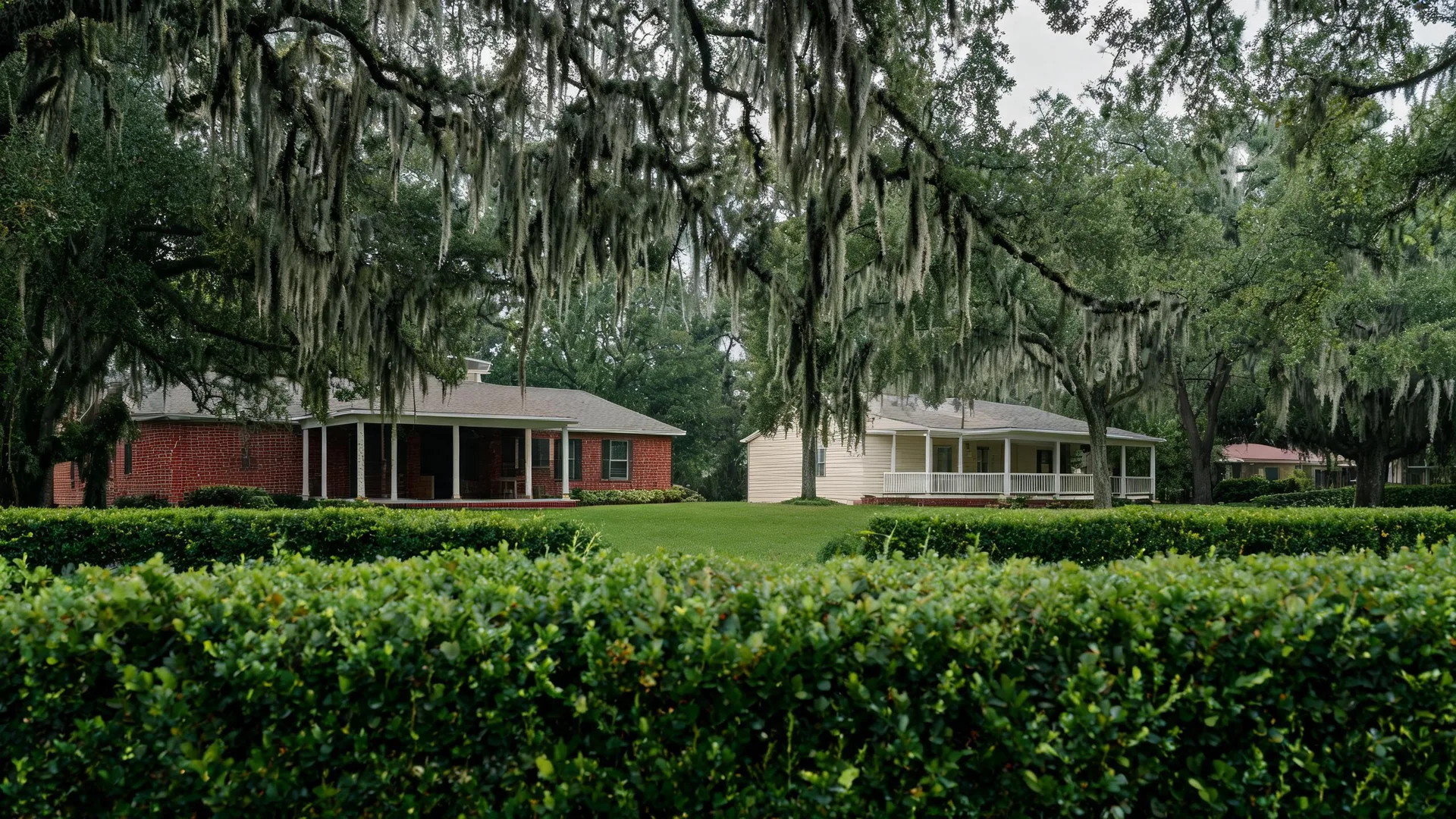





A red brick single-story house with a covered porch and a nearby cream-colored house with a wraparound porch, seen across a lawn behind a trimmed hedge, framed by large moss-draped oak branches.

Furnace Repair in Florence, SC

Tell us about the job

Takes about a minute. No obligation.

RepairFurnace or heatingFlorence County, SC
Step 1 of 2

What ZIP code is the job in?

Florence County saw 120 severe weather events between 2015 and 2024, most of it wind. Wind drives debris into an outdoor unit and bends the fins on the coil. Hail dents the cabinet and can damage the coil underneath even when the unit still runs. Tornadoes and tropical storms have hit this county too, the kind of weather that knocks out power along with everything else. If your furnace shares a circuit board or blower with an outdoor unit that took a hit, it's worth having someone look before the next cold snap.

5 months
November through March, your furnace is on duty
36°F
the average winter night it heats against
3 winter storms
in ten years, the nights a failure hurts most
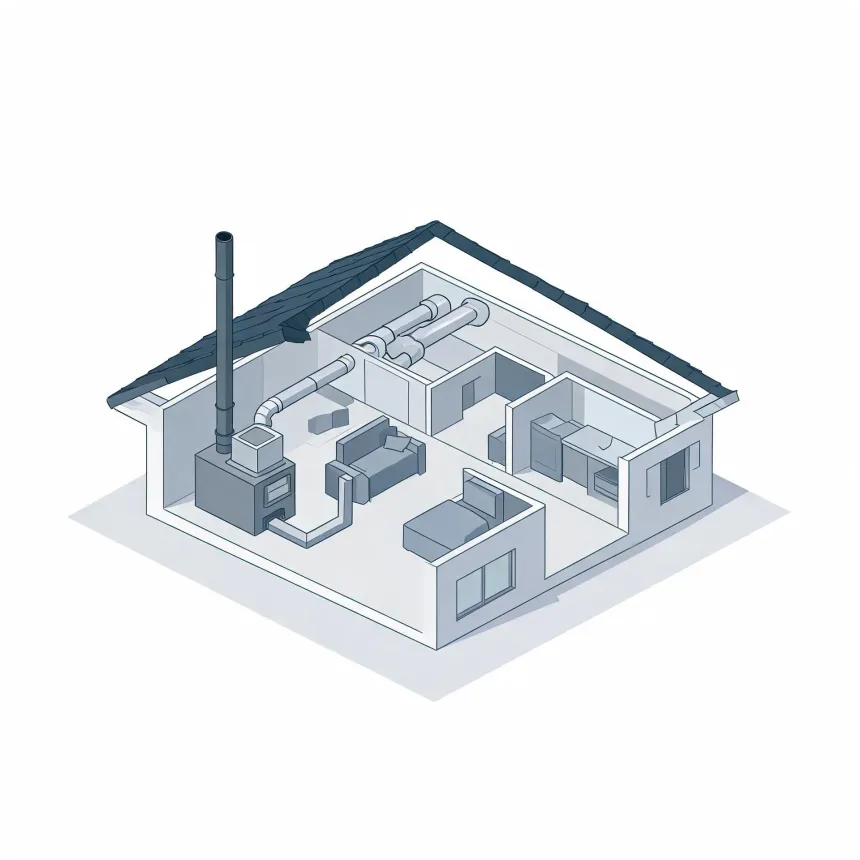
Isometric line illustration of a cutaway single-story house showing interior rooms with furniture, a furnace unit with a tall flue pipe, and connected ductwork running under the pitched roof.
Your furnace works hardest from November through March.

NOAA nClimDiv, 1991–2020 normals

Furnace trouble in Florence usually comes down to an ignition problem or a blower motor that's quit, the same things that go wrong on any furnace.

A gas furnace or heat pump here does not need some special fix. It needs the same repair a tech would make anywhere else.

Five months of heat, and November is when a weak part fails

Heat runs November through March
Winter nights average 36°F
Climate zone 3A
A mild climate, so a furnace rarely works hardWinters here average 36°F overnight, five months of furnace use and not much else

Half the homes in Florence County were built in 1986 or later. If yours is one of them, the furnace probably isn't original equipment, and a system that age still has working life ahead of it. A blower motor or an ignition problem on a newer furnace is usually a repair, not a reason to replace it. Mobile homes are a real share of the housing here, and the furnace in one can be a different setup worth mentioning to whoever comes out to look at it.

If your outdoor unit took a hit, get the furnace checked too

If hail or wind hit the outdoor unit this year, don't wait for it to fail on its own. A dented cabinet or bent fins can go with damage to the circuit board or blower your furnace shares with it. Have someone look at both before the next cold snap.

Find a contractor
A man in a dark t-shirt and tan work pants, seen from behind, carries a worn canvas and leather tool bag up concrete steps toward a dark gray front door, with a potted flowering plant to the right.
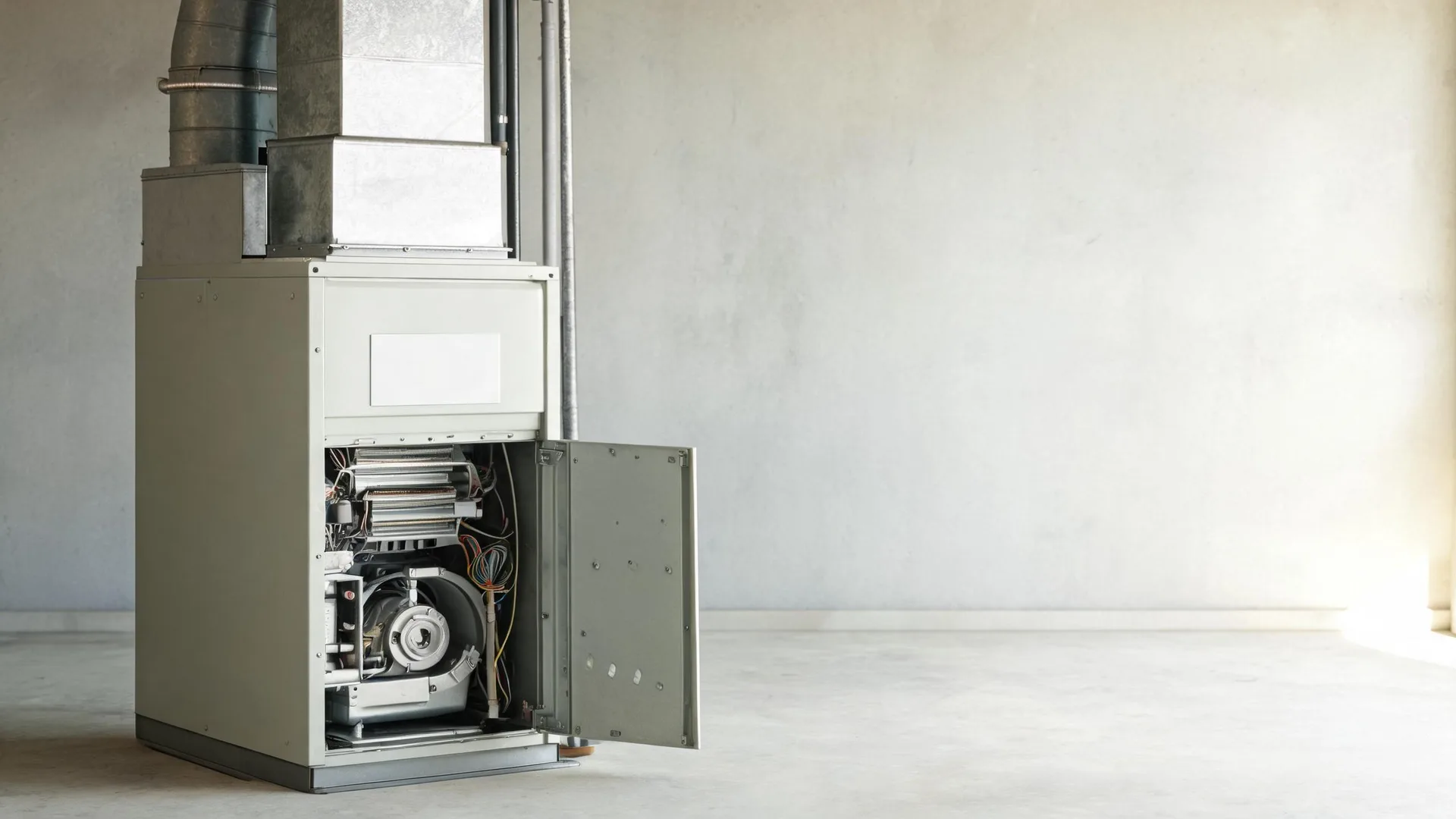
A gray residential gas furnace installed in an unfinished basement, connected to sheet-metal ductwork and PVC pipes.

A newer furnace, lightly used

Five months of heat a year is light work for a furnace. If yours was installed with a newer house, it hasn't logged the hours that wear out an igniter or a blower bearing on its own. That points toward a repair rather than a replacement when something quits. Tell the tech when the system went in, if you know it, and let that guide the call.

Most failures are the same few parts

An igniter wears out and stops glowing hot enough to light the gas. A flame sensor coats with residue and can no longer tell the furnace a flame is burning, so the system shuts itself down as a safety check. A draft inducer motor seizes or its wheel cracks, and the furnace won't start a cycle at all. These parts fail on their own schedule, not because of anything the homeowner did.
What that means for the fix

A dead igniter or dirty flame sensor is a straightforward swap or cleaning, usually done in one visit. A failed inducer motor or a cracked heat exchanger is a bigger job, and a heat exchanger crack means the furnace needs to stay off until it's replaced. Telling the tech exactly what the furnace is doing, whether it tries to start, how far it gets, whether it shuts off after a few minutes, narrows down which of these it is before they even open the cabinet.

A furnace usually tells you something is wrong before it quits for good. It might take a few tries to light, or you'll hear the blower kick on and off more than it used to. A burning smell the first time it runs after sitting all summer is normal and should clear in a few minutes. One that lingers, or smells like gas, is not. Cold air out of the vents when it should be warm often means a failed ignition, not a thermostat problem. A furnace that's gotten loud, with a rattle or a screech it didn't have before, is usually a motor or blower wheel worth checking before it leaves you without heat on a cold night.

A diagnostic visit starts before the panel comes off. The tech asks what the furnace was doing. Did it try to light and fail. Did it run a few minutes and then shut off. Was there a smell or a noise that wasn't there before. Then they watch it go through a cycle themselves, because what it does with the cover off often points straight at the part. They check for a spark or glow at the igniter, pull and look at the flame sensor, listen to the inducer motor spin up. If the furnace shuts off mid-cycle, they're figuring out whether a safety switch did its job or a part failed partway through. Most of this gets sorted out by watching one full cycle, not by swapping parts to see what helps.