





An unfinished basement interior featuring a large metal furnace unit, exposed ceiling joists, concrete walls, and scattered boxes and cables on the floor.

Furnace Repair in Edgefield, SC

Tell us about the job

Takes about a minute. No obligation.

RepairFurnace or heatingEdgefield County, SC
Step 1 of 2

What ZIP code is the job in?

Before you call anyone, check the thermostat first. Make sure it's set to heat and the set temperature is above room temperature. Next, go to the breaker box and look for a tripped switch, since furnaces run on electricity even when the burners are gas. If you can get to the furnace itself, check the air filter. A filter packed with dust chokes off airflow and can shut the whole system down as a safety measure. Also look for a reset button on the unit, usually red, and press it once. If it trips again right after, stop and leave it for a tech. Last, check that the vent hood outside hasn't been blocked by debris, since a blocked exhaust will shut the furnace down too.

5 months
November through March, your furnace is on duty
36°F
the average winter night it heats against
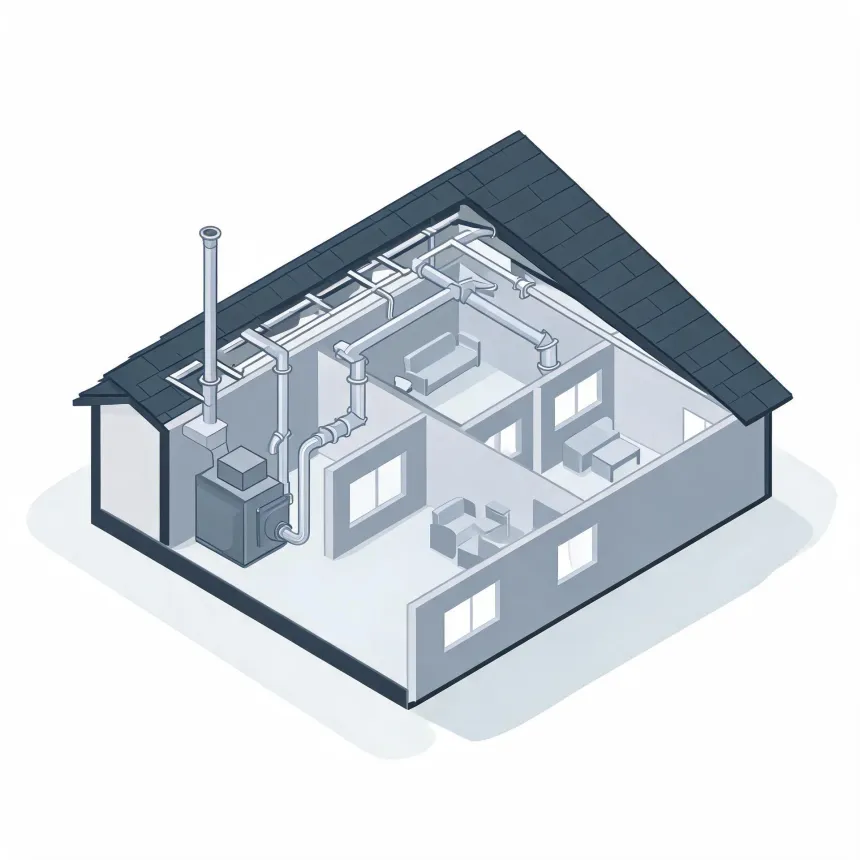
Isometric cutaway illustration of a single-story house showing interior rooms, a furnace unit with flue pipe, and branching ductwork running through the ceiling space under a dark shingled roof.
Your furnace works hardest from November through March.

NOAA nClimDiv, 1991–2020 normals

Furnaces in Edgefield County sit unused through October.

November is when a weak igniter or a bad flame sensor finally gets found out.

Five months of heat and 36°F nights don't ask much of a furnace

Heat runs November through March
Winter nights average 36°F
Climate zone 3A
A furnace built for an Edgefield winterHalf the homes here were built in 1988 or earlier, and old or new, the furnace inside still needs a clear vent and a clean filter.

Most furnace problems in Edgefield are ordinary wear, not storm damage. An igniter cracks after enough cycles. A flame sensor coats with residue until it can't detect the flame anymore. A blower motor bearing wears down. These are the same failures a tech finds in any county, and they get fixed the same way everywhere, with a part swap and a test run. Electricity here runs $41.71 per million Btu, so an electric furnace costs more to run than the national average, but that's a cost question, not a reason for more breakdowns. The fix is rarely unusual. Getting it done before the next cold snap is what matters.

Get it looked at early

Problems tend to show up in the first weeks of the season, when the load hits a part that was already weak.

Find a contractor
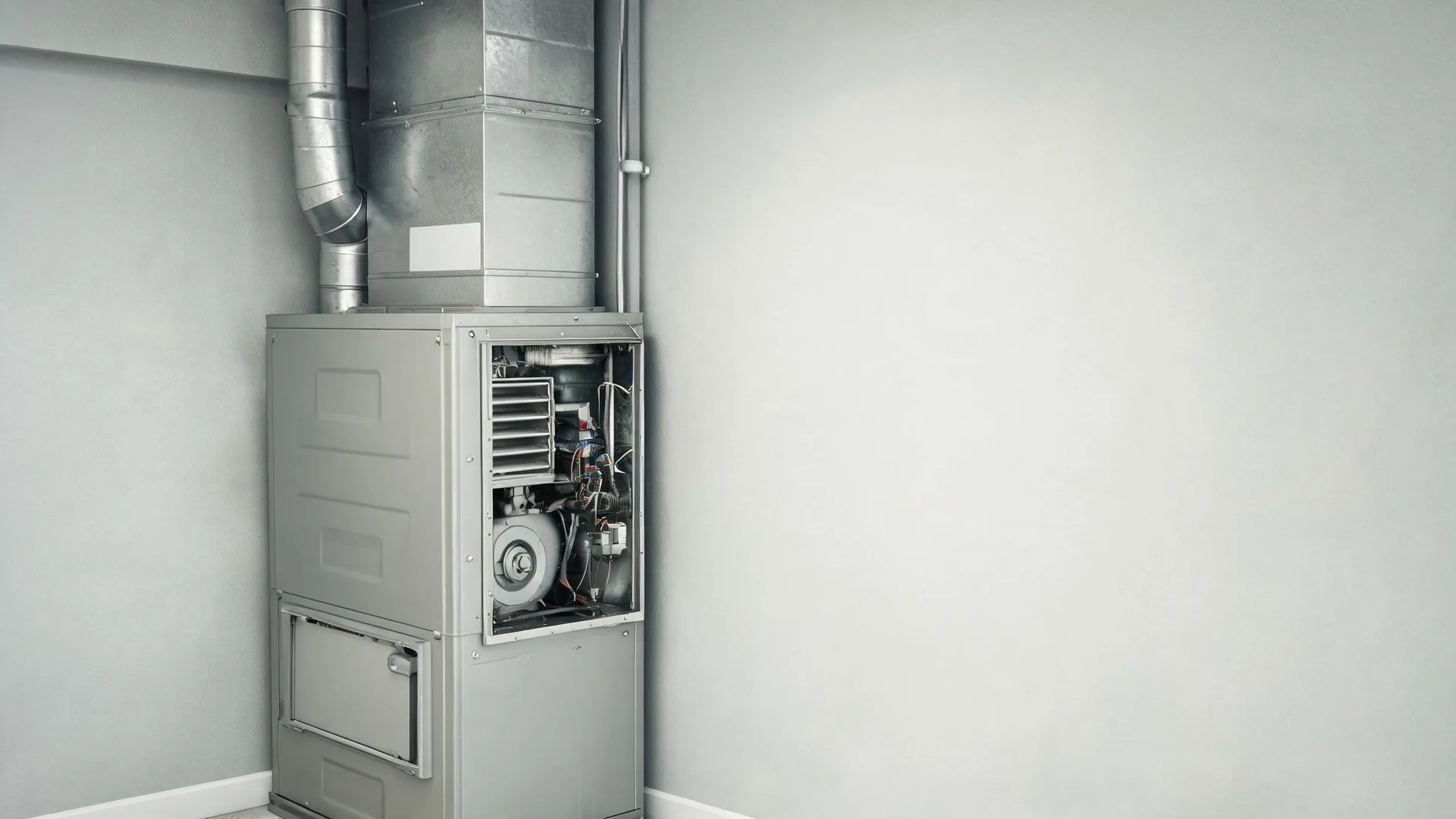
A gray residential gas furnace installed in an unfinished basement, surrounded by ductwork, a metal flue pipe, and a gas supply line.

A light workload means repair is usually the right call

A furnace that only works five months a year, and gently at that, usually still has good parts left in it even after it breaks. That's worth knowing before you decide whether to repair or replace. A cracked igniter or a dirty flame sensor doesn't mean the rest of the unit is worn out, it means one part failed. Have the tech confirm what's actually bad before you talk about a new system.

Ignition parts wear out from use, not age on the calendar

An igniter heats up every time the furnace starts a cycle, and that heating and cooling eventually cracks it. A flame sensor sits right in the burner flame and slowly collects a coating that keeps it from reading the flame at all. Both are normal wear parts. Neither failing means anything else is wrong.
A dirty filter causes problems that look like something else

When airflow gets choked off, the heat exchanger can overheat and trip a limit switch, shutting the furnace down the same way a bad control board would. A tech checks the filter and the airflow before replacing anything electrical, because a clogged filter and a failed board can cause the exact same shutdown.

A furnace that's struggling still tries to do its job, and that's the problem. A cracked heat exchanger left alone can run long enough to pour exhaust into the air it's heating, instead of shutting down clean. A blower motor losing its bearings keeps turning until it seizes, and a seized motor is a bigger repair than a worn one. Weak airflow from a dirty filter makes the heat exchanger run hotter than it should, and that heat stresses metal that doesn't go back to normal once it's cracked. None of this means every noise or short cycle is an emergency. It means a furnace that's acting up is telling you something now, while the fix is still small.

A diagnostic visit starts before any panel comes off. A tech asks what the furnace was doing. Short cycling, blowing cold, tripping the breaker, making noise, and when it started. Then the furnace gets opened up and watched through a full cycle, because some failures only show up partway through. A flame sensor can read fine cold and fail once it heats up. Meters come out for the electrical side. Voltage at the control board, continuity on the igniter, the flame sensor's microamp signal rather than just a look at it. Airflow gets checked too, since a weak return or a choked filter can mimic a bad blower motor or trip a limit switch that looks electrical but isn't. A tech pulls codes off the control board if it keeps a fault history, and that usually narrows things down before a single part gets replaced. The goal is to find the one thing actually failing, not to start swapping parts and see what helps.