A nighttime street scene featuring a row of lit white colonial-style houses with wrap-around porches, flanked by oak trees draped in Spanish moss.

Furnace Repair in Easley, SC

Tell us about the job

Takes about a minute. No obligation.

RepairFurnace or heatingPickens County, SC
Step 1 of 2

What ZIP code is the job in?

What the repair history tells you

A furnace that keeps needing attention, a new part one season and another the next, is wearing out as a system. That's different from a single clean failure, like a cracked flame sensor or a bad igniter, on a furnace that's otherwise been reliable. One is worth fixing. A pattern of breakdowns is the furnace telling you it's done.


What the heat exchanger decides

Most furnace parts can be swapped on their own without touching the rest of the unit. The heat exchanger is different. A cracked one means the whole furnace gets replaced, not repaired, because it can't be patched safely. If a technician brings up the heat exchanger, that's the one to ask about directly.

7 months
October through April, your furnace is on duty
33°F
the average winter night it heats against
Isometric cutaway illustration of a single-story house showing interior rooms with furniture, a furnace unit with connected ductwork and a tall vertical flue pipe extending above the dark shingled roof.
Your furnace works hardest from November through March.

NOAA nClimDiv, 1991–2020 normals

Furnaces in Pickens County run about seven months a year, October through April.

A furnace here sits idle more of the year than it works, so a repair is often fixing a part, not a worn-out machine.

A furnace running badly costs more here every month it stays that way

Heat runs October through April
Winter nights average 33°F
Climate zone 3A

Half the homes in Pickens County were built in 1989 or later. If yours is one of them, there's a good chance the furnace inside it is newer too, especially if it's original to the house or was swapped out since. A furnace that age acting up once isn't a sign it's worn out. Worth checking when your system went in, if you know. That one detail tells you a lot about whether a repair is the right call here.

Get it checked before October asks something of it

September is the month to get a furnace looked at here. Once it's running through October, whatever was already weak gets found fast. A part that was borderline in April won't announce itself until the first cold morning asks something of it.

Find a contractor
A gray residential gas furnace installed in an unfinished basement, surrounded by ductwork, a metal flue pipe, and a gas supply line.

Check the age before you decide

If your furnace is original to the house or close to it, a repair now is likely money spent keeping a young system running, not patching up something near the end. Ask whoever installed it, or whoever you call, how old the unit is before you decide anything. That answer matters more than the symptom.

What actually wears out

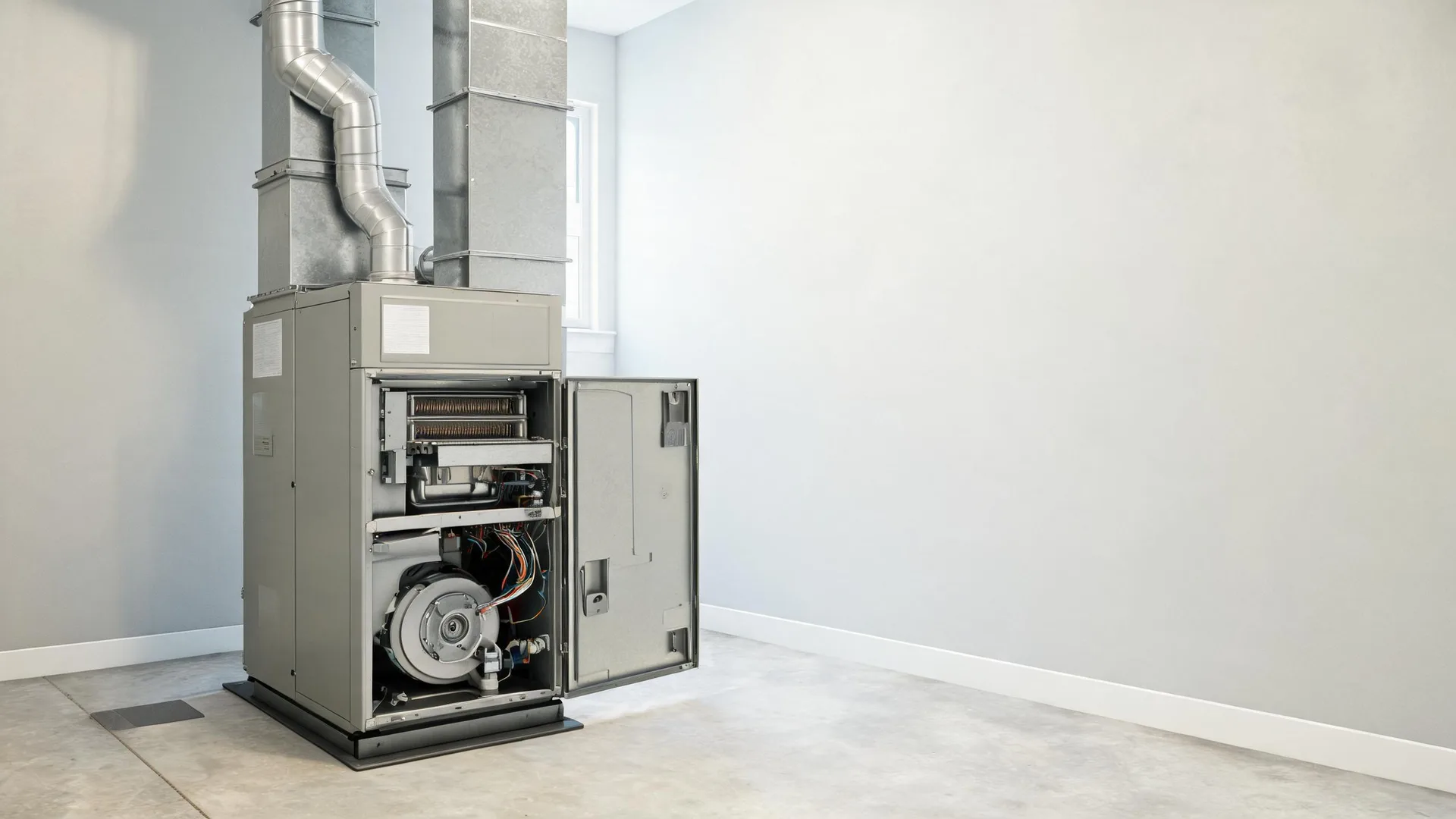
The igniter and flame sensor take the most abuse because they sit right in the flame path every time the furnace runs. The blower motor fails from years of bearing wear. Pressure switches fail when the tubing to them cracks or the port gets dirty. Each of these can be replaced on its own, and doing so brings the furnace back to normal.

What a clogged filter leads to

A dirty filter starves the furnace of airflow. The blower has to work harder, and the heat exchanger runs hotter than it should because less air is moving past it to carry the heat away. Left long enough, that heat can warp the exchanger or trip the limit switch that shuts the furnace off as a safety measure. A filter is the cheapest thing to check before assuming a part has failed.

Short cycling is the one most people notice first. The furnace fires up, runs for a few minutes, then shuts off before the house warms up, and starts again soon after. That's usually the limit switch telling the furnace it's running hotter than it should, or a flame sensor too coated to hold a signal. A furnace that won't stay lit, or takes several tries to catch, points to the igniter or the flame sensor losing their edge. Listen for a scrape or squeal from the blower when it starts up, that's bearing wear, not dirt you can clean out. Uneven heat, one room warm and another cold, usually isn't the furnace at all. And if the furnace blows cool air before it blows warm, or never seems to catch up, don't wait that out, get it looked at.

A diagnostic visit starts before any panel comes off. A technician asks what the furnace is doing, when it started, and whether anything changed around the same time. Then the cover comes off and the furnace gets watched through a full cycle, not just glanced at while it's off. That means watching it try to ignite, checking the flame itself (steady and blue, not weak or yellow), and listening to the blower from startup through shutdown. Pressure switches and the limit switch get checked against what they're reading, not just whether they're tripped. Most of the real diagnosis happens in that cycle. A part that looks fine sitting still can still be the one failing under load.