Night view of illuminated white Southern-style houses with wraparound porches beneath Spanish moss-draped oak trees.

Furnace Repair in Chester, SC

Tell us about the job

Takes about a minute. No obligation.

RepairFurnace or heatingChester County, SC
Step 1 of 2

What ZIP code is the job in?

The furnace is telling you something

A furnace that short cycles, blows cool air before warming up, or trips its breaker is already past the point of ignoring. A burning smell on first run and then clear is normal dust burning off the heat exchanger, but a smell that lingers means something is overheating. Banging or scraping when the blower starts usually means a loose part or a motor bearing going bad, not something that fixes itself.


Waiting makes the job bigger

A furnace struggling to ignite is forcing its igniter or flame sensor to work harder on every cycle, and a part worked that way fails sooner rather than later. A cracked heat exchanger starts out as a strange smell or an odd flame color and ends as a safety shutdown. Calling someone out at the first odd noise or smell is almost always a smaller repair than calling after the furnace stops running altogether.

5 months
November through March, your furnace is on duty
33°F
the average winter night it heats against
2 winter storms
in ten years, the nights a failure hurts most
Isometric cutaway illustration of a small house showing a furnace unit connected to ductwork running through the interior and attic, with a chimney on the shingled roof and simple furniture in the rooms.
Your furnace works hardest from November through March.

NOAA nClimDiv, 1991–2020 normals

Furnaces here start running in November.

October is when a weak igniter or a bad limit switch gets found before the first cold morning, not after it.

Five months of work a year is not much to ask of a furnace

Heat runs November through March
Winter nights average 33°F
Climate zone 3A
Chester, SC is no harder on a furnace than anywhere elseHalf the homes here were built in 1980 or earlier, half later. Age isn't what breaks a furnace.

Nothing about Chester makes a furnace work harder than it would anywhere else. It fails for the usual reasons. An igniter wears out. A flame sensor gets coated and stops reading the flame. A limit switch trips and won't reset. A furnace needs electricity for its igniter and blower even though the burners run on gas, and that power costs $41.71 per million Btu here in South Carolina. Most furnaces come back on by themselves once power returns after an outage. If yours doesn't, that's worth a call rather than a reset and a guess.

Get it looked at early

Problems tend to show up in the first weeks of the season, when the load hits a part that was already weak.

Find a contractor
A man in a cap, dark shirt and tan work pants walks up porch steps toward a dark blue paneled front door, carrying a canvas tool bag, with a potted shrub beside the entry.
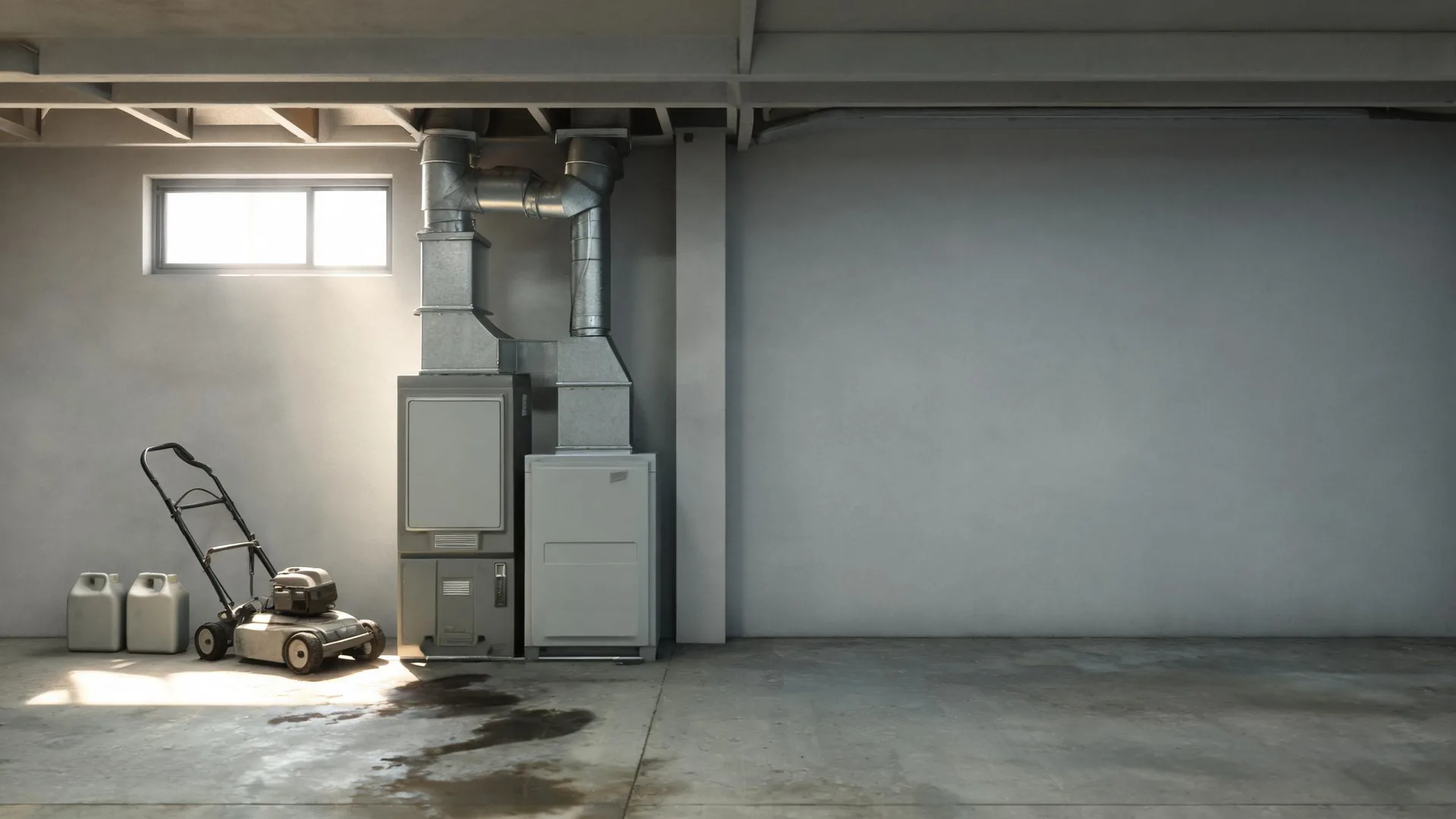
A gas furnace with attached ductwork, gas piping, and condensate lines installed in a concrete-block basement.

A light load means repair is usually the right call

Five months a year, with overnight lows averaging 33°F in December and January, is a light enough load that most furnace problems are something worth fixing rather than something that ends in a replacement. If yours is short cycling or struggling to light, get a repair quote before you assume the worst. A tech can usually tell within a few minutes whether it's a part or the whole unit.

What you can check before anyone shows up

Check that the thermostat is set to heat and the setting is above room temperature. Check the breaker for the furnace, and separately the switch that looks like a light switch near the unit or at the top of the basement stairs, since it can get bumped off. Check that the filter isn't packed with dust. A filter that's blocked chokes off airflow and can cause the furnace to overheat and shut itself down.

What to leave alone

Don't open the burner compartment or go near the flame sensor or igniter. These are small, specific parts and handling them wrong can bend or foul them, turning a simple repair into a bigger one. If the furnace trips its breaker more than once, leave it off and don't keep resetting it. A repeated trip means something is pulling too much power, and running it again won't tell you anything except whether it trips again.

A furnace that's struggling doesn't fail quietly. Running it while it short cycles or ignites late just means more cycles on a part that's already failing, and each one brings it closer to not starting at all. A flame sensor coated with a thin film reads the flame weakly before it stops reading it at all, so the furnace locks out more often the longer you wait. An overheating furnace will trip its limit switch to protect the heat exchanger, and resetting it over and over doesn't fix what made it overheat in the first place. The part doing the struggling is the part that ends up broken. Catching it while the furnace is still limping along, rather than after it quits, is usually what keeps the job small.

A diagnostic starts before any panel comes off. A tech checks the thermostat call, the power switch, and the breaker first, because those rule out the simple stuff fast. Next comes watching the furnace try to run, since how it fails tells most of the story. A furnace that clicks but doesn't light points to the igniter or the flame sensor. One that lights, then shuts off a few seconds later usually means the flame sensor is coated and can't confirm the flame is still burning. One that trips its limit switch mid-cycle is overheating somewhere, often from a dirty filter or a blower that isn't moving enough air. A tech will pull the igniter or flame sensor to look at it directly rather than guess, since both show wear you can see. From there it's usually a single part causing the trouble, not the whole system, and the visit ends with that part named and a straight answer on whether it's worth fixing.