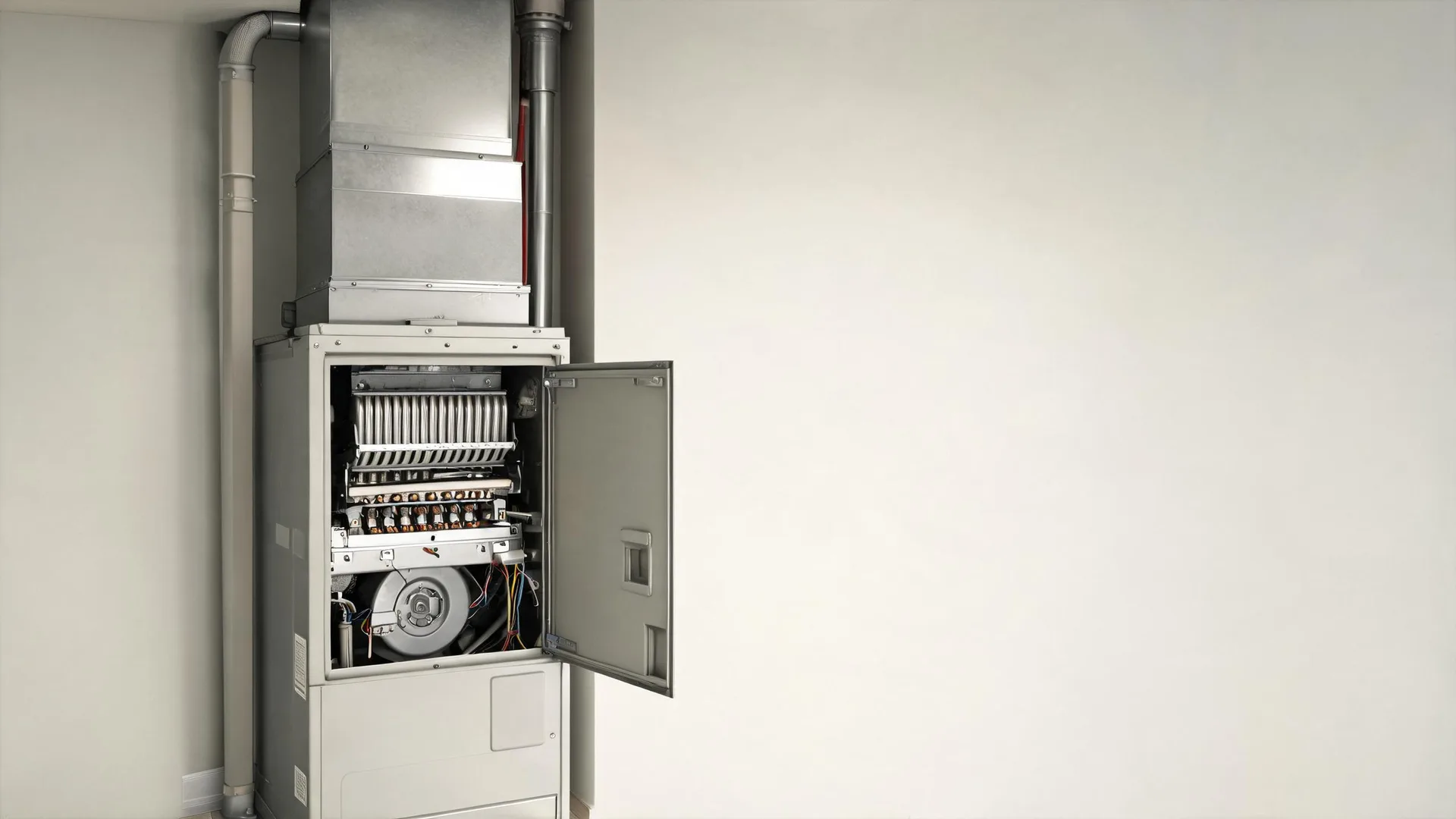
A gray forced-air furnace with ductwork stands in an unfinished concrete basement surrounded by storage items and clutter.

Furnace Repair in Anderson, SC

Tell us about the job

Takes about a minute. No obligation.

RepairFurnace or heatingAnderson County, SC
Step 1 of 2

What ZIP code is the job in?

The igniter wears out from daily cycling

A hot surface igniter takes a hard jolt of electricity every time your furnace starts, and over seasons that stresses the material until it cracks. When it fails, the furnace runs through its startup sequence and then shuts down without ever producing heat. It is one of the most common reasons a furnace stops working, and it rarely gives warning first.

A dirty flame sensor reads as no flame at all

The flame sensor checks that gas is actually burning once the valve opens, and a thin layer of soot on the rod is enough to throw off that reading. The furnace responds the only way it can, by cutting gas to the burners to protect itself. This one is often a simple cleaning rather than a part that needs replacing, which is worth knowing before you assume the worst.

5 months
November through March, your furnace is on duty
34°F
the average winter night it heats against
2 winter storms
in ten years, the nights a failure hurts most
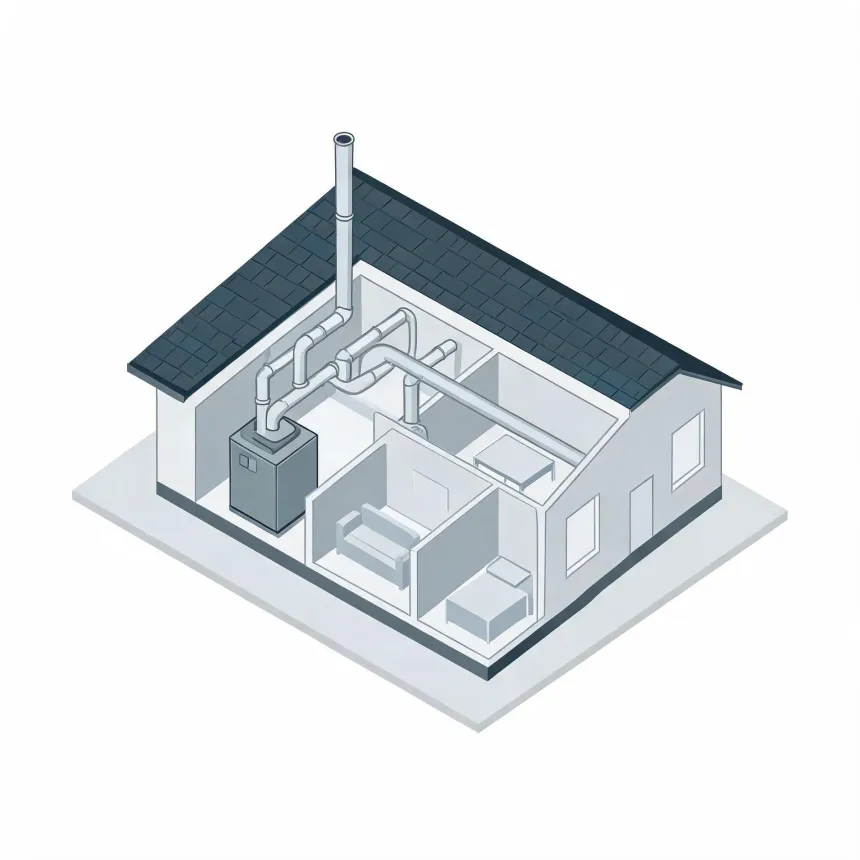
Isometric cutaway illustration of a single-story house showing a gray furnace connected to white ductwork and a flue pipe extending through the shingled roof, with simplified furniture in the interior rooms.
Your furnace works hardest from November through March.

NOAA nClimDiv, 1991–2020 normals

Check your thermostat batteries and your breaker panel before anything else.

A furnace that won't start at all is sometimes just waiting on power it isn't getting.

Anderson winters are ordinary. Furnace trouble here is usually ordinary too.

Heat runs November through March
Winter nights average 34°F
Climate zone 3A

Half the homes in Anderson County were built in 1988 or later. If yours is one of them, your furnace is probably newer than you'd guess from the house's age alone. A newer furnace that stops working usually has one bad part, not a worn-out system. The igniter cracks. The flame sensor gets a layer of soot on it. A control board fails. None of that means the furnace is finished. Repair is almost always the right call before replacement is even worth considering.

Have your furnace checked before November asks more of it

Furnace season starts here in November. The first cold snap puts a full load on parts that have sat untouched since March, and a weak igniter or a sensor coated in soot tends to show itself right away. Getting a furnace looked at in October, before it has to carry that load, is what catches it early.

Find a contractor
A man in a dark shirt and khaki pants, seen from behind, carries a worn leather bag as he climbs wooden porch steps toward a dark front door, with a potted shrub beside the entry.
A gray gas furnace with attached ductwork and piping installed in an unfinished concrete basement.

Five months a year, and not the hardest five

Five months of heat, November through March. Overnight lows average 34 degrees across December, January and February, which is cold enough to run a furnace but not the kind of deep freeze that pushes one to its limit night after night. A machine that works this schedule tends to have most of its parts left when one of them fails. That is usually a reason to fix what broke, not replace the whole thing.

Short cycling means something is cutting the furnace off early

A furnace that fires up, runs briefly, then shuts off before the house warms is usually hitting a limit switch meant to protect it. A clogged filter restricting airflow, a cracked heat exchanger, or a blower motor on its way out can all cause this. It is not something to wait out, since the part forcing those shutoffs is wearing with every cycle.

Strange sounds and smells tell you where to look

A squeal usually points to the blower motor or its belt if it has one. A bang when the furnace starts often means gas is building up for a moment before it ignites, which is a burner problem worth having checked soon. A burning dust smell in the first run of the season is normal and fades on its own. A smell that lingers, or anything like rotten eggs, means stop running the furnace and get it looked at.

A furnace with a bad part doesn't fail all at once. It fails a little worse each time it runs. A cracked igniter that still sparks weak will keep trying and keep falling short, and each attempt puts the same hard jolt through material that's already damaged. A dirty flame sensor left alone collects more soot, not less, until a sensor that used to work on the second try stops working at all. Airflow problems compound too. A restricted filter makes the blower work harder and the heat exchanger run hotter, and that heat has to go somewhere. Left running, it stresses metal that was fine under normal load. None of this is a reason to shut the furnace off and wait. It's a reason to get the actual part looked at before it takes something else down with it.

A tech starts by asking what the furnace was doing right before it quit. A bang, a short cycle, and a dead start each point somewhere different, so that answer shapes where the checks begin. Power and gas get confirmed first, since there's no reason to open the cabinet if the furnace isn't getting one or the other. After that, a tech watches a startup happen step by step. Does the igniter glow. Does the gas valve open. Does the flame sensor pick up a flame and let the burners keep running. Wherever that sequence stops is usually where the problem is. Airflow gets checked too, since a weak blower or a clogged filter can look like a different part failing. Most visits end with one part identified, not a list of maybes.