





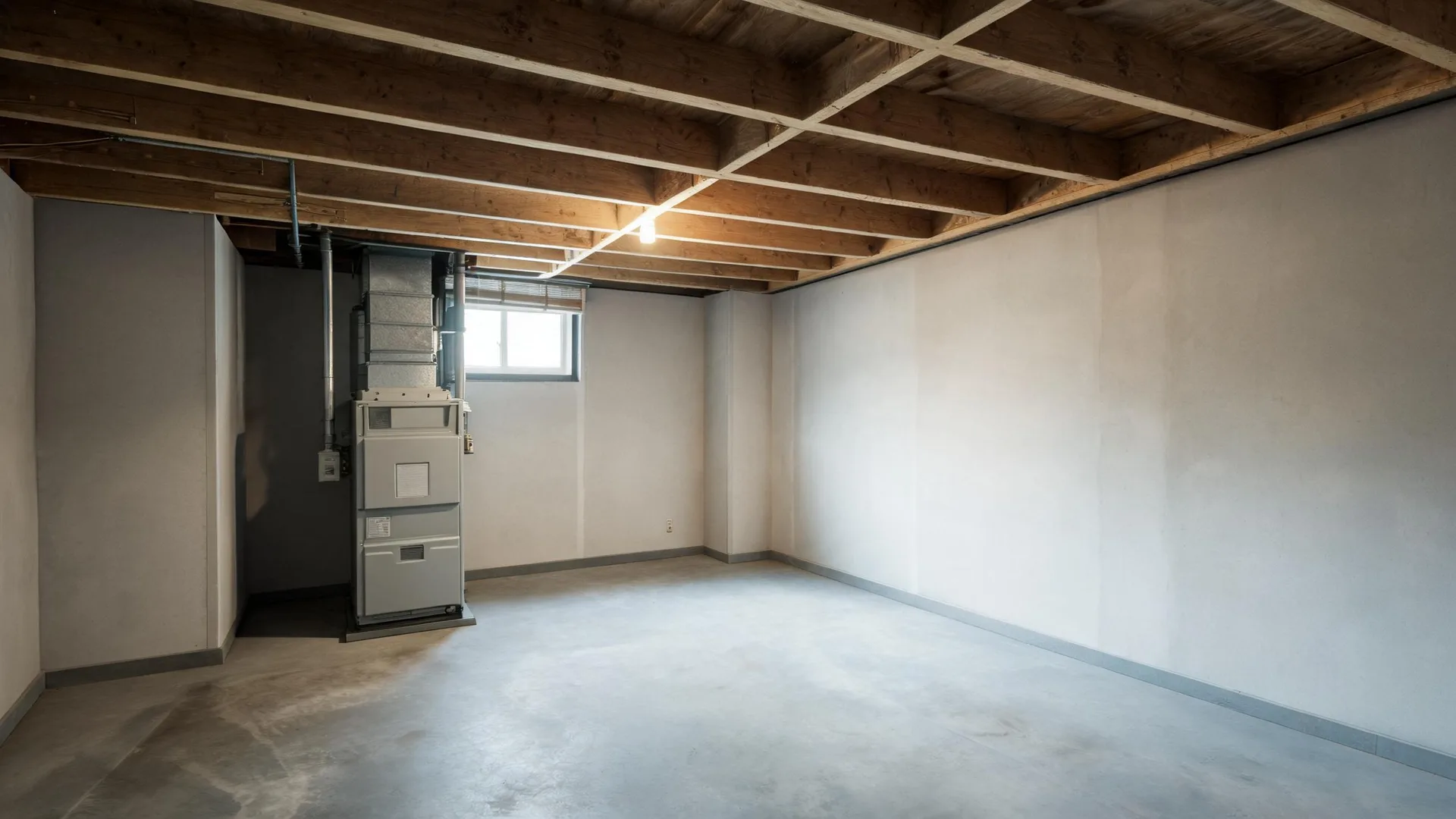
An unfinished basement featuring concrete block walls, exposed floor joists, and a metal forced-air furnace with ductwork near a central pillar.

Furnace Installation in Summerville, SC

Tell us about the job

Takes about a minute. No obligation.

New system or replacementFurnace or heatingDorchester County, SC
Step 1 of 2

What ZIP code is the job in?

A furnace that's too big for the house will short cycle, kicking on, blasting heat, and shutting off before it ever runs a full cycle. That sounds harmless but it isn't. The house ends up with warm spots and cold spots because the air never circulates long enough to even out, and the constant starting and stopping wears on the ignition system and the blower motor faster than steady operation would. Too small, and the furnace runs nearly nonstop on the coldest days, struggling to keep up and still leaving the place feeling chilly. Getting the size right isn't about the square footage alone. A contractor works out the heat loss of the house itself, factoring in the windows, the insulation, the ceiling height, and how much of the house is exposed to outside walls, then matches a furnace to that number rather than to a rule of thumb.

5 months
November through March, your furnace is on duty
38°F
the average winter night it heats against
80% AFUE
the federal minimum any new unit must meet
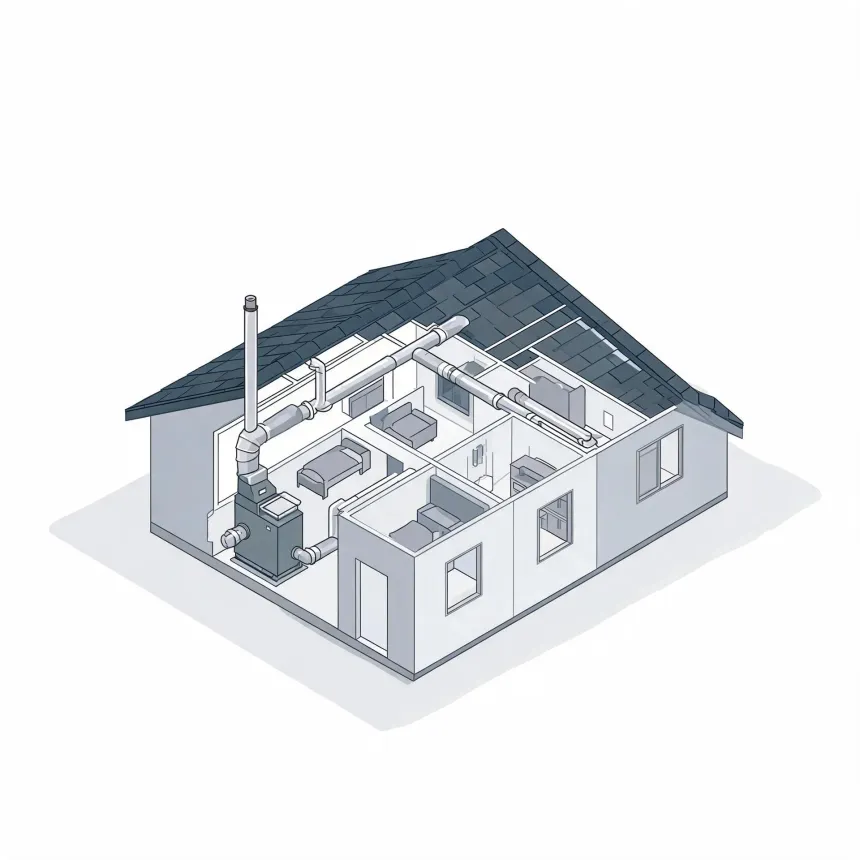
Isometric cutaway illustration of a single-story house showing interior rooms with furniture, ceiling ductwork, a furnace unit with a tall flue pipe, and a dark shingled roof.
Your furnace works hardest from November through March.

NOAA nClimDiv, 1991–2020 normals

Electricity here runs $41.71 per million Btu, in line with the rest of South Carolina.

A standard size and efficiency furnace covers a Summerville home without any local reason to pay for more.

Five months of mild winters means this furnace won't work hard

Heat runs November through March
Winter nights average 38°F
Climate zone 3A
Get it done before NovemberHeat season in Dorchester County runs November through March, so October is the time to install.

Ask what size furnace they're proposing and whether they ran a heat loss calculation to get there, or just matched what's already in the house. Ask about the AFUE rating and what that means for the flue, a mid-efficiency furnace vents through metal, a high-efficiency one vents through PVC, and that affects where it can go and what it costs to run the pipe. Ask what happens to the existing ductwork, whether it was sized for this furnace's blower or whether it's being reused as is. Ask what the warranty covers on the heat exchanger versus the rest of the parts, since those are often different lengths and different terms. Ask who pulls the permit and who does the final inspection, because that's what confirms the work was done to code rather than just done.

Go with the standard fit

A standard size and efficiency fit fine here. There's no local reason to go bigger or pricier.

Find a contractor
A gray residential gas furnace installed in an unfinished basement, surrounded by ductwork, a metal flue pipe, and a gas supply line.

A short winter doesn't need the top-tier furnace

November through March is the whole run, and most of those nights sit well above that 38 degree average low. A furnace sized right for the house will handle what this winter asks without strain, so there's no case for paying up for the highest AFUE on the lot. Put that money toward getting the size and the ductwork right instead, since that's what decides comfort here, not the number on the sticker.

AFUE measures fuel, not comfort

The AFUE number on the label tells you how much of the fuel burned turns into heat in the house versus what escapes out the flue. It has nothing to do with how evenly the house heats or how long the furnace lasts. That comes down to sizing and ductwork, not the rating on the sticker.
The rating changes what the install needs

A higher AFUE furnace pulls combustion air differently and produces condensate that a lower rated one doesn't, which changes where it can sit and what it drains into. A mid-efficiency furnace vents through metal and skips that condensate line entirely, which is simpler to install and simpler to maintain. Either way, the furnace still has to be sized to the house to do its job.

A lot of the installation cost has nothing to do with the furnace itself. Pulling the old unit, setting the new one, and connecting it back into the ductwork and gas or electric supply is labor, and that labor is the same whether the furnace is basic or top of the line. What changes the job is anything that isn't a straight swap. If the vent pipe has to be rerouted because the new furnace vents differently, that's extra material and extra time. If the ductwork wasn't sized for the new unit's blower, resizing or modifying it adds to the job too. A furnace that sits in a tight closet or a crawlspace takes longer to pull and set than one with room to work around it. None of that shows up on the furnace's price tag, but it shows up on the invoice.

Installation day starts with pulling the old furnace out, and that part is usually quick. What takes the time is everything around it. The gas line or electrical whip gets disconnected and reworked for the new connection point. The flue gets checked or replaced to match how the new furnace vents. The ductwork gets tied back in, and if the trunk line or the takeoffs don't match up with the new blower, that gets corrected before anything runs. Once it's set and connected, the furnace gets fired up and run through a cycle. The technician checks the temperature rise, the gas pressure, and the airflow against what the manufacturer specifies for that model. A combustion analyzer checks the exhaust itself, to confirm the furnace is burning clean and not just running. The last step matters most and gets skipped the most. That's a static pressure reading on the duct system, taken with the furnace running, to confirm the blower isn't fighting more resistance than it's built for.