A row of single-story houses with porches behind a manicured lawn and trimmed hedges, framed by large oak trees draped with Spanish moss.

Furnace Installation in Seneca, SC

Tell us about the job

Takes about a minute. No obligation.

New system or replacementFurnace or heatingOconee County, SC
Step 1 of 2

What ZIP code is the job in?

Ask for the load calculation, not a guess

A furnace sized off the old unit or a quick look around the house can end up too big or too small. A contractor should run a room by room load calculation to size the new furnace correctly. Too big and it short cycles, wearing out parts early and leaving rooms uneven. Too small and it runs constantly without keeping up on the coldest days.

Ask what happens to the ductwork

The furnace is only part of the system. If the ducts are undersized, leaky, or not matched to the new unit's airflow, the new furnace will fight them the same way the old one did. Ask whether the ducts were inspected, whether any changes are planned, and how the new furnace's airflow will work with what is already in place.

7 months
October through April, your furnace is on duty
33°F
the average winter night it heats against
80% AFUE
the federal minimum any new unit must meet
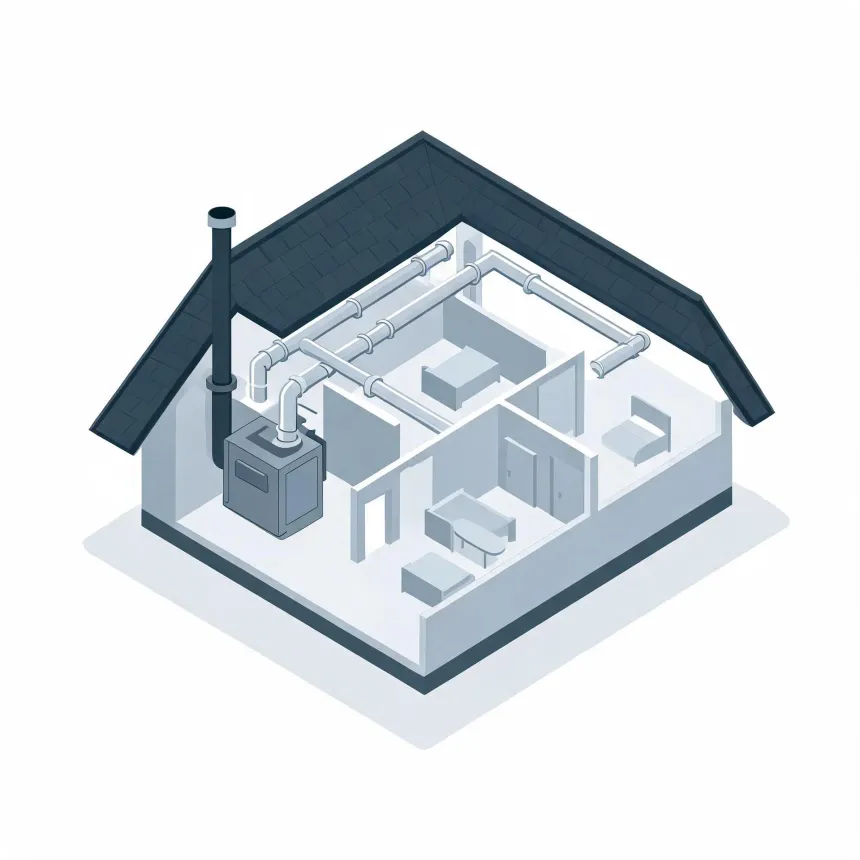
Isometric illustration of a cutaway house showing a dark furnace unit with a flue pipe and branching ductwork running through rooms with simple furniture under a dark gabled roof.
Your furnace works hardest from November through March.

NOAA nClimDiv, 1991–2020 normals

Electricity heats close to seven in ten homes in Oconee County.

A gas furnace is still worth asking about if gas is already run to the house, but for most homes here the straightforward swap is electric for electric.

Zone 3A winters don't call for an oversized furnace

Heat runs October through April
Winter nights average 33°F
Climate zone 3A
Heat runs here from October to AprilGet a new furnace in before October, so September isn't a scramble.

Winters here mean seven months of heating, October through April, with overnight lows averaging 33°F in December and January and February. That's cold enough to run a furnace steadily, but it never asks the system to fight single digit nights or deep freezes for weeks on end. A furnace sized and installed correctly for this climate isn't working at the edge of what it can do. That matters when you're comparing models. You don't need to pay for the highest efficiency tier on the shelf to get a furnace that holds up here. A well sized, correctly installed mid range furnace will do the job for as long as it's built to last, because the load it sees is manageable, not extreme.

What a new furnace has to meet in Seneca

Any furnace installed here now has to meet 80.0 percent AFUE, the federal minimum. That holds until December 2028, when new furnaces have to reach 95.0 percent. A furnace that meets the current minimum is a legitimate option today, and worth asking about alongside higher efficiency models.

Find a contractor
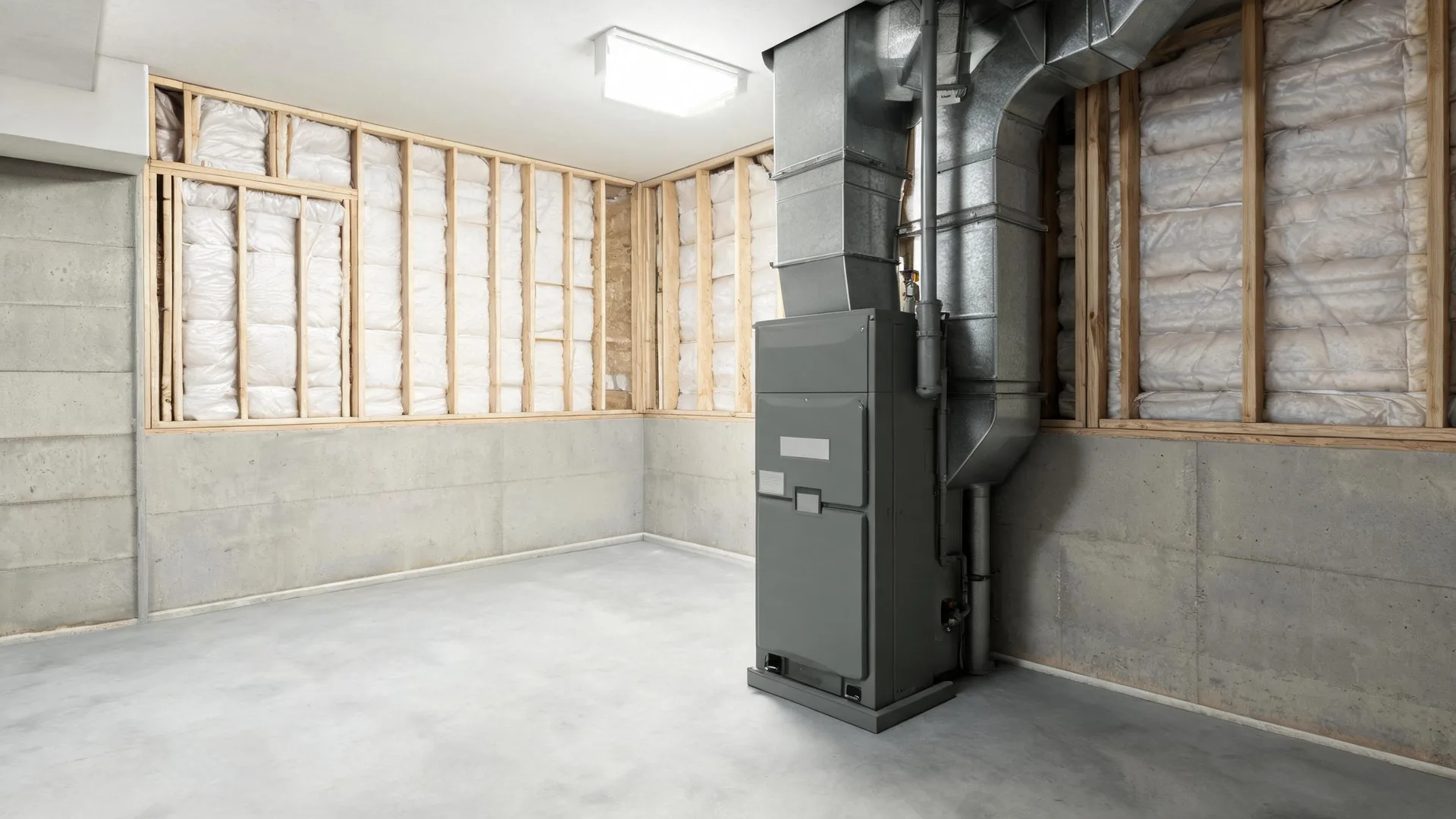
A gray residential gas furnace installed in an unfinished basement, surrounded by ductwork, a metal flue pipe, and a gas supply line.

Compare models on fit, not just the spec sheet

Mid range doesn't mean the cheapest unit on the lot. When you're comparing furnaces, ask what tier each one sits at and whether it's built for the load Oconee County actually puts on it, not the load a sales sheet assumes. A contractor who knows the climate can point you to a model that's reliable without charging you for a ceiling you'll never use.

The old furnace still has to come out right

Pulling a furnace means disconnecting the gas line or electric circuit, the venting, and the plenum it ties into. Whoever does the work should cap the gas line properly and make sure nothing feeding the old unit is left live or open. If the vent was shared with a water heater, that connection needs a second look too, since removing one appliance from a shared vent can change how the other drafts.

Old equipment has to go somewhere

A furnace is mostly steel and copper, and the heat exchanger and blower motor inside it have scrap value. Most contractors haul it off as part of the job rather than leaving it for the homeowner to deal with. Worth asking upfront whether removal and disposal is included in the quote, because it sometimes shows up as a separate line item.

What pushes an installation up or down usually comes down to how much has to change beyond the furnace itself. A straight swap, same fuel type, same spot, same ductwork, is the simplest job there is. Switching fuel types costs more, because that means running new gas line or new electrical circuit, not just setting a new unit where the old one sat. Ductwork modifications add to it too, if the new furnace's airflow doesn't match what's already there. Venting matters as well. A furnace that vents differently than the one it replaces may need new vent pipe run to the outside, not just a reconnection. None of that shows up on a model's price tag, but it shows up in the quote.

Installation day starts before the new furnace ever comes off the truck. The old unit gets disconnected and pulled, then the space gets prepped, the flue or vent checked, and the electrical or gas connection set up to match the new furnace's requirements. Setting the furnace in place and connecting the ductwork, gas or electric, and venting usually takes the bulk of the day. Once it's hooked up, a contractor runs the system through a full cycle, checks the gas pressure or electrical draw, confirms the blower is moving the right amount of air, and checks for leaks at every connection. The last step is airflow balancing, making sure each room is getting what the duct design intended rather than just confirming the furnace fires. A rushed startup check is how a new furnace ends up with the same uneven rooms the old one had.