



A single-story brick house with a white-columned wraparound porch and a neighboring light-colored siding house, seen across a lawn behind a trimmed hedge, under oak branches draped with Spanish moss.

Furnace Installation in Rock Hill, SC

Tell us about the job

Takes about a minute. No obligation.

New system or replacementFurnace or heatingYork County, SC
Step 1 of 2

What ZIP code is the job in?

The efficiency number on a furnace tells you how much of the fuel it burns turns into heat in your house, and how much goes out the flue. A higher rating means less waste. That number matters most on the days your furnace runs the longest, since a furnace that wastes fuel on a short cycle wastes a lot more over a whole winter. It's worth comparing that rating against what's already installed, because the gap between an old furnace and a new one is usually bigger than people expect. Installation matters as much as the rating itself. A high-efficiency furnace vents differently than an older one, often through a wall instead of a chimney, and that affects where it can go and what the job involves.

7 months
October through April, your furnace is on duty
33°F
the average winter night it heats against
80% AFUE
the federal minimum any new unit must meet
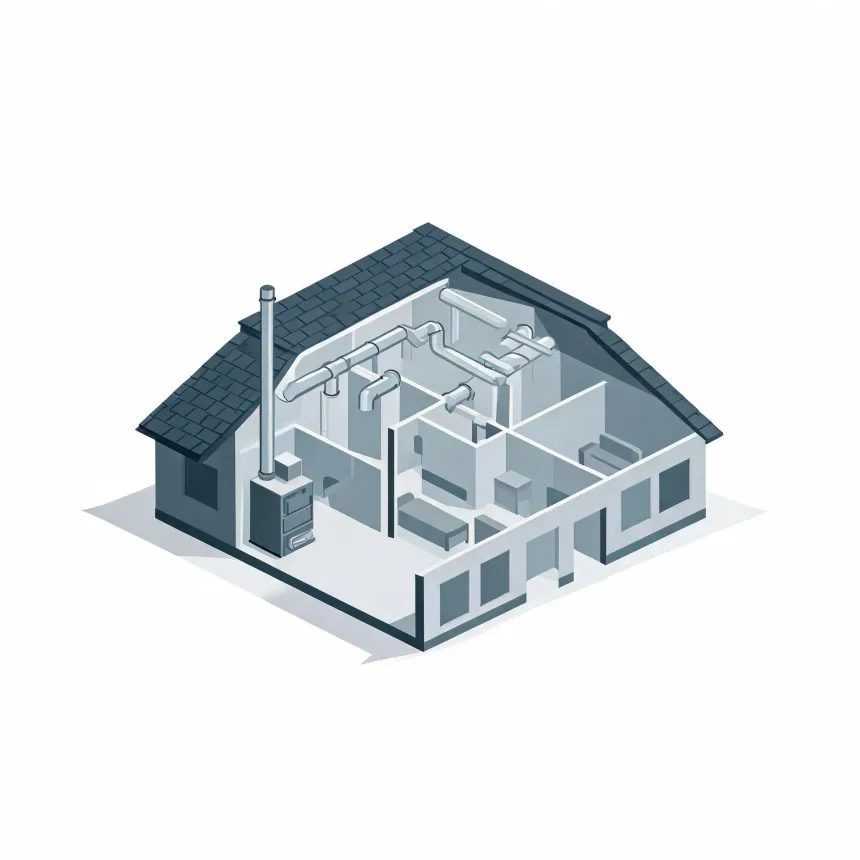
Isometric grayscale illustration of a cutaway house showing interior rooms, ceiling ductwork, a flue pipe, and a furnace unit on the left side.
Your furnace works hardest from November through March.

NOAA nClimDiv, 1991–2020 normals

A furnace here runs on electricity to start the blower and ignition, even on gas models.

At $41.71 per million Btu, a standard-efficiency furnace sized right for this house is the safer bet over anything bigger than it needs to be.

Heat starts in October here, so September is the month to put in a new furnace

Heat runs October through April
Winter nights average 33°F
Climate zone 3A

Taking out the old furnace is part of the job, not an extra step. A tech disconnects the gas line, the vent, the ductwork and the wiring, then removes the unit whole or in pieces depending on where it sits. If it vented through a chimney and the new furnace doesn't need one, that liner gets capped or removed so the chimney doesn't draw moisture into the house. Old refrigerant or combustion byproducts are handled under code, not just hauled off. Ductwork often needs new connections where the sizes or locations don't match, since furnaces aren't all built to the same dimensions. None of this is optional work bundled in to pad the job. A new furnace can't go in safely until the old one's hookups are fully undone.

Most homes here heat with electricity or gas, so this is a straightforward swap

Electricity heats 49.8% of homes in York County, gas heats 45.8%, and almost nothing else is in use. A new furnace here almost always means replacing the same fuel type that's already hooked up, not adding a gas line or rewiring the house for something new.

Find a contractor
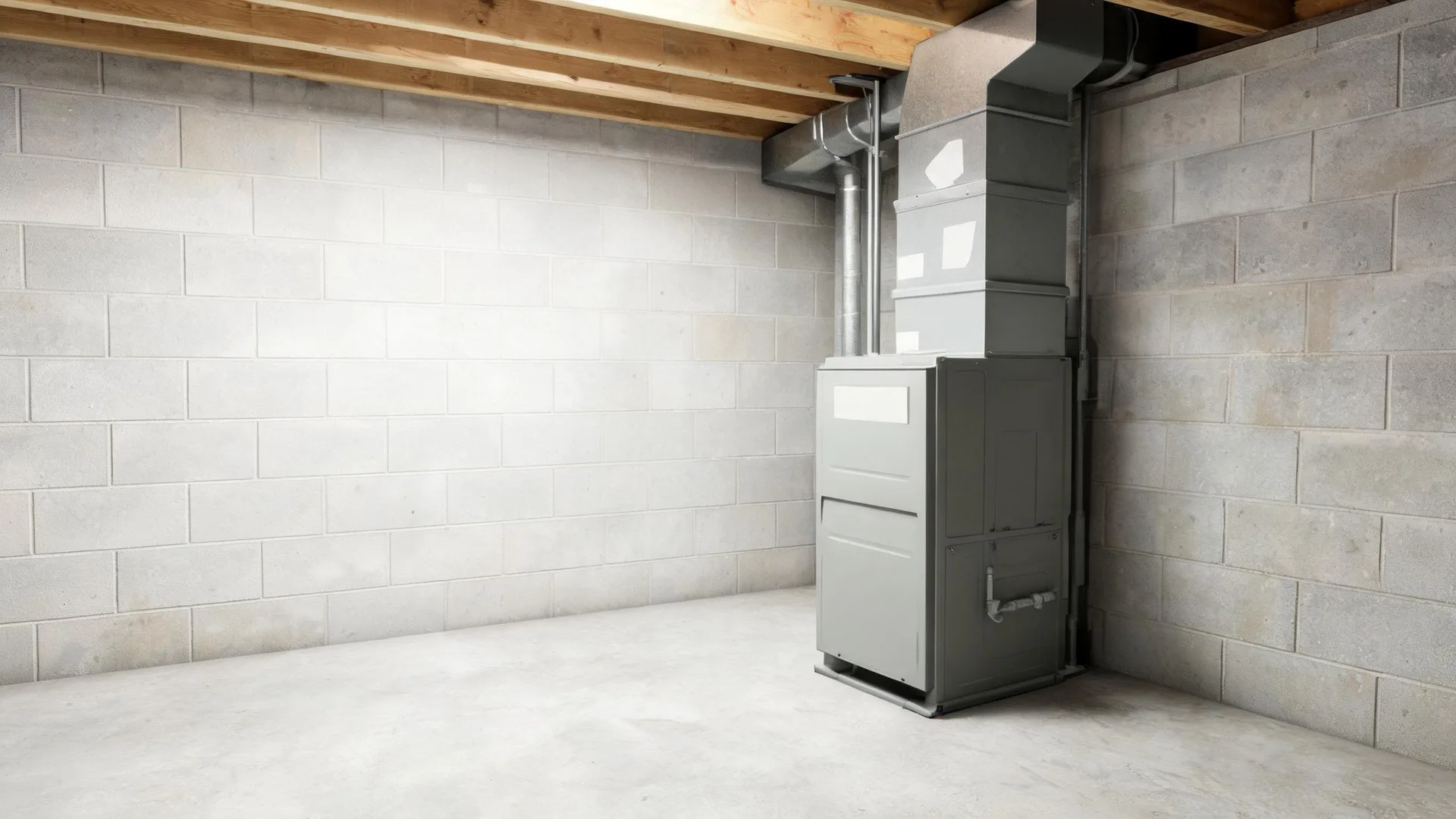
A gray residential gas furnace installed in an unfinished basement, surrounded by ductwork, a metal flue pipe, and a gas supply line.

Cold here rarely runs deep, so the furnace doesn't have to fight for it

Seven months of heat a year isn't nothing, but it's not the hard end of what a furnace can face either. The work really happens on the coldest nights, when the overnight low sits around 33 degrees, and that's mild as far as furnaces go. A furnace sized right for this house won't be straining to keep up on a January night here the way one might further north. That's one more reason a standard-efficiency unit built to the right size is the safer buy than something bigger or more advanced than this house calls for.

Bigger isn't safer

A furnace that's too big for the house heats the air fast, hits the thermostat setting, and shuts off before it's run long enough to warm things evenly. That short cycling wears on the ignition system and the blower, since those parts take the most stress every time the furnace starts and stops. A furnace sized right runs longer, steadier stretches and reaches every room instead of just the one near the thermostat.
Sizing is a room by room count

The right size comes from a heat loss calculation, not the size of the furnace already in the house or a guess based on square footage. A contractor works out how much heat escapes through the walls, windows, ceiling and floor, room by room, then adds it up to find the output the furnace needs to replace. Houses that look alike from the outside can need different furnaces if one has more window area or a different layout, which is why the old unit isn't always the right guide for the new one.

Ask what the AFUE rating actually is, not just whether it says high-efficiency on the label. Ask whether the quote includes a heat loss calculation or whether the size is based on the furnace already in the house. Ask what the venting change involves if you're moving to a higher-efficiency unit, since that's new pipe through a wall, not just a swap at the furnace itself. Ask what happens to the ductwork, whether it gets reused as is or needs new connections where the sizes don't match. And ask what's covered if the igniter or blower motor fails in the first few years, because that answer tells you more about the install than anything printed on the furnace itself.

Installation day starts with the house still running on the old furnace that morning and ending on the new one that night. The crew shuts off gas and power before anything gets disconnected, then pulls the old unit out once the ductwork, venting and wiring are free. Setting the new furnace means leveling it, connecting the supply and return plenums, running new gas line fittings if needed, and wiring it to the thermostat and blower control. Venting gets tied in next, through the chimney or through a wall depending on the furnace, and that connection gets sealed and checked before anything fires up. Once it's hooked up, the tech checks gas pressure, confirms the flame looks right, and runs the blower to feel for airflow at the vents. The last part is a walkthrough, where the tech shows the filter location, the thermostat settings, and what the furnace sounds like when it's running normally, so anything different later stands out.