




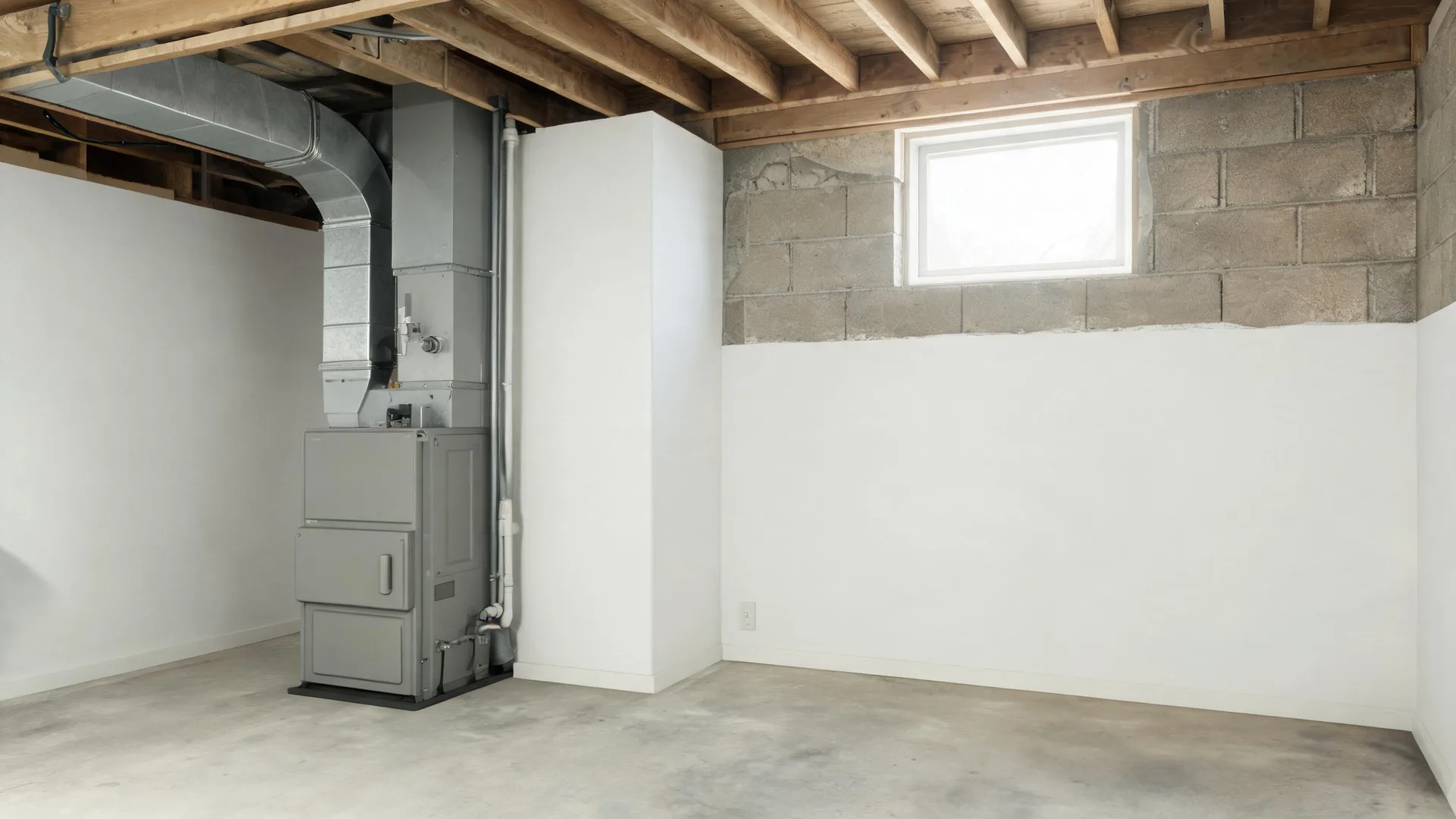
An empty unfinished basement containing a forced-air furnace with overhead ductwork, exposed ceiling joists, and a single hanging light bulb.

Furnace Installation in Cheraw, SC

Tell us about the job

Takes about a minute. No obligation.

New system or replacementFurnace or heatingChesterfield County, SC
Step 1 of 2

What ZIP code is the job in?

A furnace in Cheraw only has to carry about five months of the year, November through March. Overnight lows average 34°F in December and January, cold enough to run the heat steadily but not the kind of deep freeze that wears a system down fast. That means you don't need the biggest or most efficient furnace on the lot to stay warm here. What matters more is picking one that holds up through the ice storms and cold snaps that do pass through this part of South Carolina. A furnace that starts reliably after a power cut is worth more here than one rated for extreme output it will rarely need.

5 months
November through March, your furnace is on duty
34°F
the average winter night it heats against
80% AFUE
the federal minimum any new unit must meet
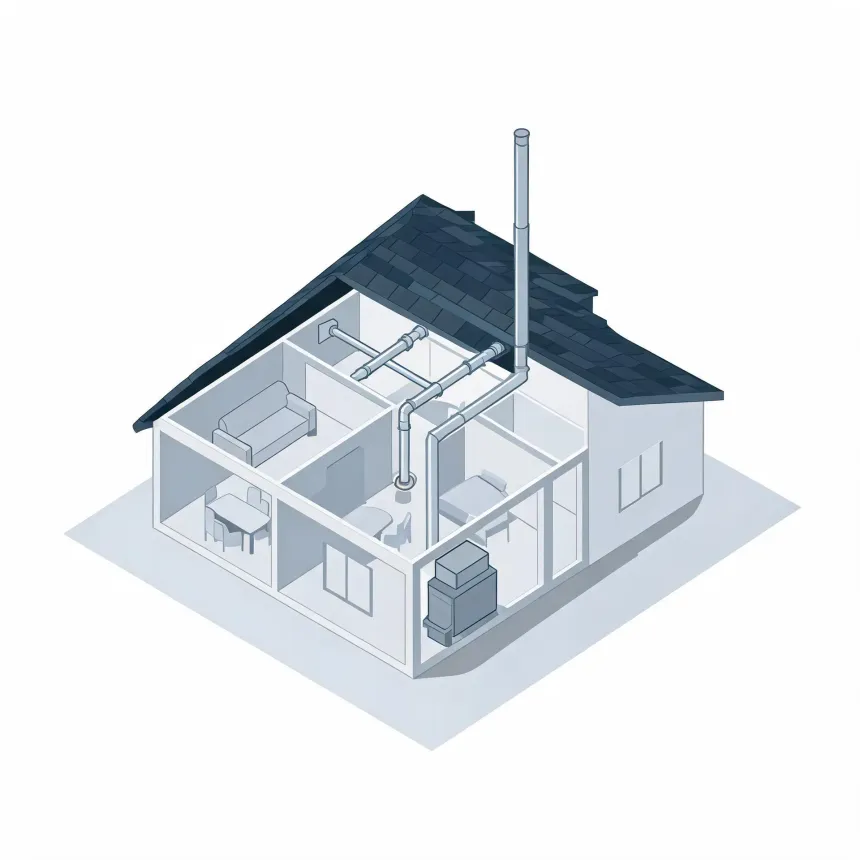
Isometric cutaway illustration of a single-story house showing interior rooms with furniture, ductwork and piping running to a tall vertical flue through the dark shingled roof, and a furnace-like appliance unit on the floor.
Your furnace works hardest from November through March.

NOAA nClimDiv, 1991–2020 normals

A furnace here doesn't need top-tier efficiency to earn its keep.

Electricity ran $41.71 per million Btu in South Carolina last year, so a mid-range furnace still keeps winter bills reasonable.

174 severe weather events in ten years means the furnace has to start back up on its own

174 severe weather events from 2015 to 2024
45% of homes statewide lost power a day or more in 2024
111 damaging wind events from 2015 to 2024

Chesterfield County splits about evenly between houses built before 1986 and after, and that age difference doesn't change what furnace to buy. A standard unit, properly installed, holds up in an older house the same as a newer one. The one thing worth checking before you install is whether the ductwork already in place was sized for the system going in, since that's a property of the house, not the furnace. Mobile homes make up more than a third of the housing here, and they need a furnace built and rated for mobile home installation, not a standard model. If your home falls into that category, say so when you're comparing options.

A new furnace here has to clear 80.0 percent AFUE, and there's a credit available if you go higher

Chesterfield County falls in climate zone 3A, and any furnace installed here has to meet the federal minimum of 80.0 percent AFUE. That rule holds until December 2028, when new furnaces will have to reach 95.0 percent. A federal tax credit is available for qualifying high-efficiency equipment installed now, on top of whatever you'd spend to meet code.

Find a contractor
A person in a dark long-sleeve shirt and tan work pants, seen from behind, carries a canvas tool bag while stepping up porch stairs toward a dark blue front door.
A gray high-efficiency gas furnace installed in an unfinished basement, surrounded by gas lines, a condensate drain, and sheet-metal ductwork.

Get it in before November, not during it

Furnace season here runs November through March, about five months. October is the month to get this done. Wait until the first cold snap and you're choosing from whatever's in stock, installed by whoever can fit you in. Schedule it in October and the install crew has time to size it to your ductwork and test it properly before it has to carry a cold night.

Ask what size the load calculation supports

A furnace should be sized to a room by room heat loss calculation, not matched to whatever size the old unit happened to be. An oversized furnace short cycles, heating the house in quick bursts that never run long enough to even out the temperature room to room. An undersized one runs constantly and still can't keep up on the coldest nights. Ask the contractor to show the calculation, not just quote a size.
Ask how the vent and gas line get handled

A higher efficiency furnace vents differently than a standard one. It often runs through PVC pipe out a sidewall instead of a metal flue up through the roof. Switching efficiency tiers can mean rerouting the vent entirely, and it's worth asking up front whether that work is included in the quote or treated as an extra. The gas line size matters too. It has to be rated for the new unit's input, not just reused because it's already there.

The old furnace doesn't stay once the new one's in. Whoever installs the replacement disconnects the gas line, pulls the unit, and hauls it off, that's standard with the job, not an extra trip to arrange. If it's a older unit, there may be a heat exchanger cracked or a blower motor seized, which is usually why it's being replaced in the first place. None of that gets reused. The flue or vent pipe connected to it comes out too if the new furnace vents differently, since a high-efficiency unit can't share a flue sized for a standard one. Ask whether the quote includes haul-away and disposal, because some contractors fold it in and some charge separately, and it's worth knowing before the work starts rather than after.

Installation day starts with the old furnace still running, so there's no cold stretch while the work gets done. The crew shuts off gas and power first, then disconnects the ductwork and vent before the old unit comes out. Setting the new furnace in place and leveling it matters more than people expect, since a unit sitting crooked can affect how the burner and heat exchanger perform later. Once it's in, the gas line gets connected and pressure tested before anything is fired up, because a leak caught then is a lot simpler than one found after the fact. The last stretch is startup. That means checking gas pressure, airflow, and the temperature rise across the heat exchanger against what the manufacturer specifies for that model. A furnace that passes those checks is one that's been installed, not just set down and hooked up.