





A white Southern-style house with a wraparound porch photographed at night, surrounded by Spanish moss-draped oak trees lit by landscape lights.

Furnace Installation in Barnwell, SC

Tell us about the job

Takes about a minute. No obligation.

New system or replacementFurnace or heatingBarnwell County, SC
Step 1 of 2

What ZIP code is the job in?

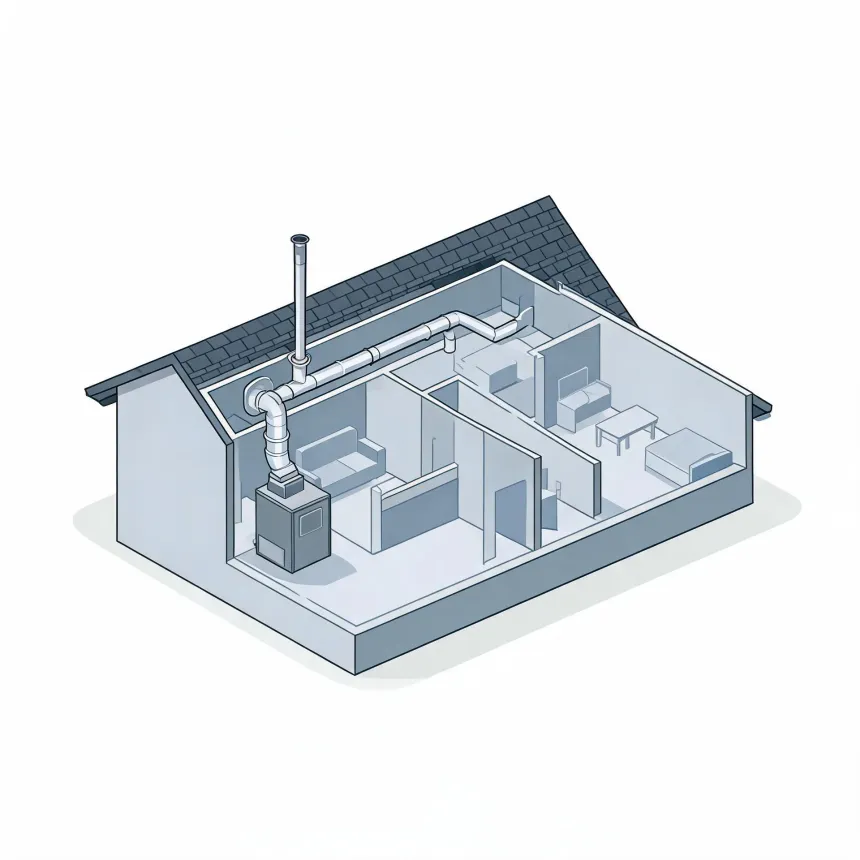
A furnace that's too big for the house will short cycle, kicking on, blasting heat, and shutting off before it ever runs a full cycle. That sounds like a good thing, but it means the air never circulates long enough to even out, so you get hot and cold spots and the blower never gets a real chance to filter and move the air properly. Too small and it runs constantly, straining to keep up on the coldest days and wearing out well before it should. Getting the size right isn't about the square footage of the house alone. A contractor works out a heat load calculation that accounts for the windows, the insulation, the ceiling height, and how the place is laid out, room by room. That number tells them what the furnace actually needs to put out, not more and not less, and it's worth asking to see that calculation before you sign off on any unit.

5 months
November through March, your furnace is on duty
37°F
the average winter night it heats against
80% AFUE
the federal minimum any new unit must meet
Isometric cutaway illustration of a single-story house showing interior rooms with furniture and a furnace connected to ductwork and a vertical flue pipe extending through the roof.
Your furnace works hardest from November through March.

NOAA nClimDiv, 1991–2020 normals

Furnaces in Barnwell run about five months a year, November through March.

A furnace that sits idle most of the year doesn't need to be the top efficiency model, just one installed right.

A standard furnace, sized and installed right, is what this county needs

Half the homes here were built by 1983
Heat runs November through March
Winter nights average 37°F

A standard furnace paired with a standard thermostat does the job here, and there's no reason to pay for more. Electricity in South Carolina ran $41.71 per million Btu in 2024, so if your furnace runs on electric heat strips as backup or your system includes an electric component, that's the rate behind your winter bill, not a reason to chase the highest efficiency unit on the lot. Once it's sized to the house, the efficiency rating matters less than whether the installation itself is done right, good duct connections, correct airflow, a clean gas or electric hookup. Spend on getting those details right before you spend on a model with a higher rating than this county calls for.

Most homes here heat with electricity, so an electric furnace is the straightforward choice

75.6% of homes in Barnwell County heat with electricity. Utility gas and LP gas together cover a smaller share. If your house is already wired for electric heat, matching what's already there keeps the installation simple and avoids running new gas lines for a fuel most of your neighbors don't use.

Find a contractor
A man in a cap, dark long-sleeved shirt and brown work pants walks up gray porch steps toward a dark blue front door, carrying a worn canvas tool bag filled with hand tools, with a potted shrub to the right.
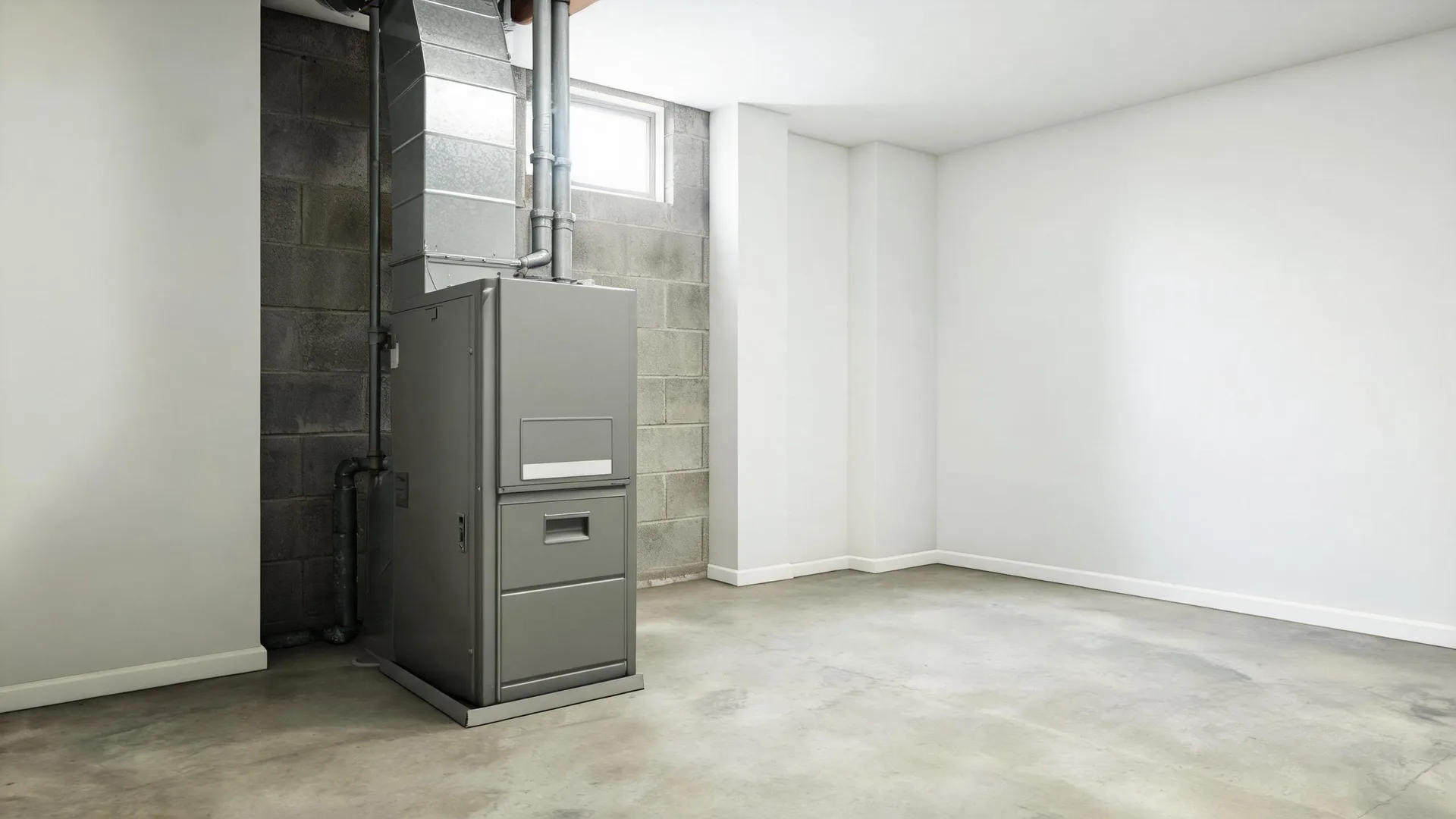
A gray residential gas furnace installed in an unfinished basement, connected to sheet-metal ductwork and PVC pipes.

Replace it before November, not after

Heat goes on in November here and runs through March, about five months. Replacing a furnace in October means the installer isn't racing a cold snap, and you're not stuck a week without heat because a part had to be ordered. Once the first cold morning hits, every contractor in Barnwell County is booked solid with no-heat calls. Getting it done the month before puts you at the front of that line instead of the back of it.

Ask what AFUE actually means for this unit

AFUE tells you how much of the fuel burned turns into heat in the house versus what goes out the flue. A higher number costs more up front. Ask the contractor to show the AFUE on the spec sheet for the exact model quoted, not a range for the product line, since the same line often sells at more than one efficiency level.
Ask what's included besides the furnace itself

Quotes for the same furnace model can cover very different work. Find out if the price includes new duct connections, a new flue or vent pipe, a new thermostat, and disposal of the old unit. A bid that skips the duct and venting work isn't actually the cheaper job once that work has to get done anyway.

The unit itself is only part of what you're paying for. Labor covers running new wiring or venting if the old setup doesn't meet current code, modifying ductwork where connections don't match the new furnace's output, and setting the controls so the system actually runs the way it's supposed to. A straightforward swap, same fuel type, same location, ducts already sized right, costs less than a job where the old furnace was shoehorned into a closet that needs rework, or where the vent pipe has to be rerouted to meet clearance rules. Removing and hauling off the old unit is its own line item too. None of this shows up on a price tag at the store, because it depends on what's already there and what has to change to do the job right.

Install day starts with the old unit coming out, and that alone takes a couple hours if the furnace is tucked in a closet or crawlspace with tight clearance. The installer checks the duct connections before the new furnace ever goes in, because the plenum and takeoffs have to match what the new unit puts out. Gas lines get pressure tested if it's a gas furnace, electrical connections get run or reused, and the vent pipe or flue gets inspected for the right slope and clearance. Once the furnace is set in place and connected, it gets fired up and run through a cycle while the installer checks the temperature rise, the gas pressure or amp draw, and the airflow at the registers. The thermostat gets programmed last, after the system's already proven it runs the way it should. A straightforward swap wraps up well within the day. A job that uncovers a cracked flue or ductwork that doesn't match takes longer, because that work has to get done before the furnace can be signed off as running right.