Profile view of a bearded man wearing a dark green baseball cap and a dark gray T-shirt against a plain light background.

When a furnace flame sensor needs cleaning in South Carolina

Tune-up, service, or cleaningFurnace or heatingSouth Carolina
Step 1 of 2

What ZIP code is the job in?

A flame sensor needs cleaning when the furnace starts up, runs for a few seconds, then shuts off on its own, sometimes over and over. That short cycling is the sign. The sensor is a thin metal rod near the burner that confirms a flame is actually lit. Over time it collects a layer of soot and oxidation, a gray or white film that builds up with normal use. Once that film coats the rod, it can't read the flame properly, so the furnace cuts the gas as a safety measure rather than let it run unmonitored. Most homes in South Carolina heat with electricity rather than gas, so this applies if your furnace runs on gas or propane. A technician can pull the sensor and clean it in a few minutes, and a furnace that keeps shutting off days apart is worth having looked at before a cold morning turns into no heat at all.

A gray-haired, bearded man in a dark coat dusted with snow stands smiling in a dimly lit room with a lamp, mirror, framed art, and a sofa in the background.
An older man with white hair and a beard, wearing a dark snow-dusted coat and scarf, stands in a warmly lit interior hallway with a framed landscape picture, a table lamp and a potted plant behind him, and a snowy view through a window at left.
An older man in a dark snow-flecked overcoat and scarf stands smiling in a warmly lit home entryway, with a glass-paned door showing darkness outside and a lamp-lit room visible through a doorway behind him.
An older man with gray hair and a beard, wearing a dark snow-dusted jacket and scarf, stands smiling in a warmly lit interior hallway with a lit table lamp, a vase of dried branches, and a framed picture in the background.

Why the sensor gets coated

The rod sits right in the burner flame every time the furnace fires. That flame leaves a thin layer of carbon on the metal, and in most furnaces that layer builds up slowly over a lot of cycles. South Carolina furnaces don't run as many hours as they would somewhere with a long winter, since most homes here heat with electricity and lean on the furnace less. Even so, the coating still forms a little at a time, and once it gets thick enough, the rod can't sense the flame reliably anymore. That's when the short cycling starts.


What the rod is checking for

The sensor isn't lighting anything. It's confirming that the gas igniting is actually burning. The rod reads a tiny electrical signal that only flows through an open flame. When carbon builds up on the metal, that signal gets weaker, and the furnace's control board reads it as no flame even though one is there. The board shuts the gas valve as a safety response. That's the whole job of the part. A clean rod passes a strong signal, a coated one passes a weak one, and the furnace reacts to whichever it gets.

A beige residential furnace stands on a concrete basement floor beside galvanized sheet-metal ductwork, a round flue pipe, copper gas piping, and a PVC condensate line, with a wood-paneled wall at right.
Before you get your furnace maintenance
A gray high-efficiency furnace in a basement with white PVC vent pipes, sheet-metal ductwork, copper and black piping, a condensate pump, and insulated walls above a concrete floor.
After you get your furnace maintenance
A gray high-efficiency furnace stands on a concrete basement floor beside galvanized sheet-metal ductwork, white PVC vent pipes, copper and black piping, and unfinished wood stud framing.

Running the way it should

The furnace fires, the burners stay lit, and warm air moves through the ductwork without interruption. A clean flame sensor reads the fire correctly every time, so the control board has no reason to cut the gas.

A gray furnace with two access panels stands on a concrete basement floor beside sheet-metal ductwork, with pipes, flexible conduit and an electrical box on the concrete wall to the left.

Short cycling on and off

A coated sensor can't always sense the flame it's looking at. The furnace lights, runs a few seconds, and shuts down, then tries again. Behind those access panels, the rod just needs the carbon wiped off.

Winter nights average 36°F statewide

36°F doesn't ask much of a furnace, and most nights here don't either. With fewer hard-firing cycles, carbon builds up on the sensor more slowly than it would somewhere colder, which is why the buildup can sit there a long time before you notice the short cycling.

NOAA nClimDiv 1991-2020 county normals weighted by homes

A furnace in a dim basement with a dirty pleated air filter partially pulled out of its slot, beside a water heater and concrete walls and floor.

The furnace kicks on a little after four, the light outside already going flat and gray. You're down in the basement because you heard it cut off again, the third time this week, and you want to see it for yourself. The burners catch, hold for a few seconds, then drop out with a soft click. You pull the filter to check it while you're down there, and it slides out grey with dust, more than you expected. You set it on top of the furnace and stand there a second, listening to the blower spin down, trying to decide if this is something you call about tonight or wait on.

A local pro for your furnace maintenance

Send the form, and lining up the furnace tune-up stops being yours to chase.

You only hire the pro if you want to.

Cleaning the Flame Sensor Right

  • The sensor only needs a light cleaning, a scrub with fine sandpaper or steel wool, not a swap unless the rod is cracked.
  • A technician shuts off gas and power first, then pulls the sensor out through the burner compartment without disturbing the igniter.
  • The rod gets wiped clean of carbon, checked for a solid connection at the bracket, and set back in the exact spot it came from.
  • Flame has to touch the sensor directly, so it gets reseated at the same depth and angle, not just pushed in loosely.
  • Once it's back in, the furnace gets a test cycle to see the burners stay lit past the point where it used to cut out.
  • A furnace that still short cycles after cleaning usually points to a different problem, like a bad control board or a grounding issue.

Cleaning a flame sensor is a small job done in a specific order, and skipping steps is usually why it doesn't hold. Gas and power get shut off first, since the sensor sits close to the igniter and the burner compartment is no place to work with either one live. The rod comes out through the burner assembly, usually held by a single screw on a bracket. From there it's just a wipe down, fine sandpaper or steel wool to take the carbon off the metal, nothing abrasive enough to scratch or thin the rod. A full swap is rarely needed unless the rod is cracked or the porcelain insulator around it has broken down. The connection at the bracket gets checked too, since a loose wire there can mimic the same short cycling a dirty sensor causes. Reinstalling it matters as much as the cleaning. The sensor has to sit at the same depth and angle it came out at, because the flame needs to touch the rod directly for it to read correctly. Pushed in loosely or seated at the wrong angle, it can fail the same way a dirty one does. Once it's back in, the furnace gets run through a cycle to confirm the burners stay lit past where they used to cut out. If it still short cycles after all that, the sensor likely wasn't the problem. That points toward something else, a control board issue or a grounding problem in the furnace itself.

A gray high-efficiency furnace with white PVC vent pipes stands beside sheet-metal ductwork and a water heater in an unfinished basement with concrete walls and wood framing.
A high-efficiency furnace like this one fires, holds its flame, and keeps running without the burners cutting out.
A beige gas furnace with a metal flue pipe stands in a basement against concrete block walls, beside sheet-metal ductwork, copper and white plastic pipes, and a water heater at right.
An older furnace like this one, with a coated sensor, can light and quit again and again until someone cleans the rod.

How often should a furnace flame sensor be cleaned?

Most furnace manuals don't give a cleaning schedule for the flame sensor, so the question is a fair one. You're not looking to do it every month out of habit, and you're not looking to ignore it until the furnace quits either. You want a number you can actually plan around, or at least a sign that tells you it's time.

Once a year, usually in the fall before the furnace runs much

A once-a-year cleaning, done before cold mornings start showing up, keeps carbon from building up enough to cause trouble. South Carolina winters don't put a furnace through many hard-firing nights, so that yearly pass is usually enough here, where somewhere colder might call for a mid-winter check too. The short cycling is still the real signal. If the furnace starts shutting off a few seconds after ignition, the sensor needs attention regardless of when it was last cleaned. A technician checking the furnace for other reasons can clean the sensor at the same time, since the burner compartment is already open.

A woman wrapped in a cream textured blanket sits in an armchair beside a lit lamp and a dark window, with an open book in the foreground.
A bearded man in a blue and brown plaid flannel shirt stands indoors looking out a window at snow-covered trees, with a ceramic mug on the windowsill.
A woman in a cream sweater and jeans stands in the open doorway of a white stucco house, holding the dark door, while a man in a dark quilted jacket seen from behind walks toward the entry past potted plants.

Short cycling means the sensor needs attention

A furnace that fires and quits, fires and quits, is telling you the flame sensor has carbon on it and can't read the flame anymore. That's the whole answer. South Carolina winters are mild enough that this buildup takes a while to show up, but once the short cycling starts, it won't fix itself. The rod needs a light cleaning, and in most cases that's all it needs.

If you're at the point of reading this because your furnace is already doing it, you don't have to figure out the rest on your own. A form on this page connects you with a contractor who handles furnace maintenance in your area, and they'll reach out to you directly about your furnace. You've already done the hard part, which was noticing the pattern and finding out what it meant. The rest is a phone call away from someone else.

A gray upholstered sofa with a matching cushion sits beside a potted plant and a wooden table holding a small green plant in a stone pot, near a curtained window.
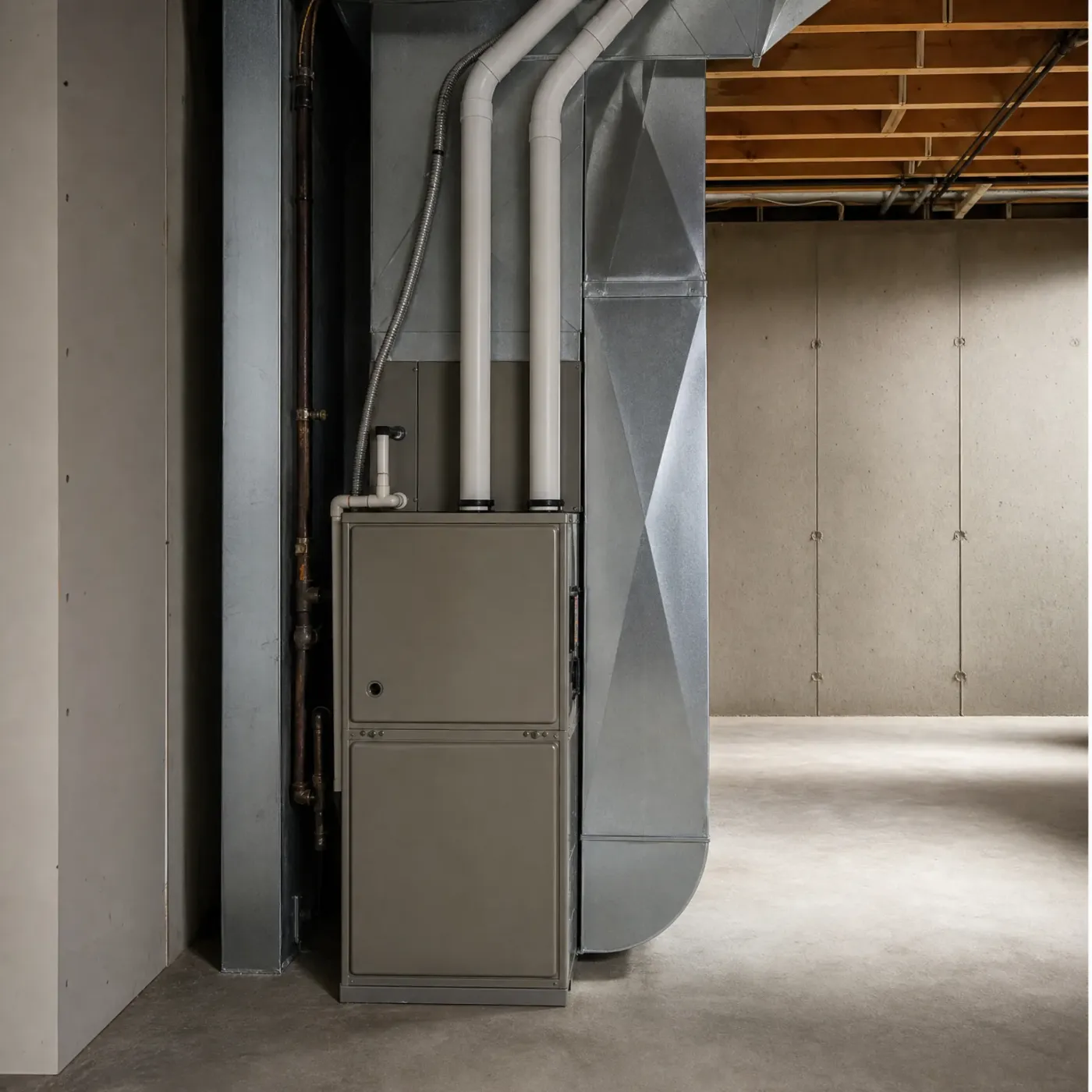
A gray high-efficiency furnace in an unfinished basement, connected to sheet-metal ductwork and two white PVC vent pipes, with copper piping and exposed wood floor joists nearby.

Get the right pro for your furnace

Hand it off

Send the form and the furnace tune-up stops being something to remember.

Asking costs nothing, and the choice to hire stays yours.