Night view of illuminated white Southern-style houses with wraparound porches beneath Spanish moss-draped oak trees.

Heat Pump Maintenance in Walterboro, SC

Tell us about the job

Takes about a minute. No obligation.

Tune-up, service, or cleaningHeat PumpColleton County, SC
Step 1 of 2

What ZIP code is the job in?

Colleton County sees real storm damage

Colleton County logged 614 severe weather events between 2015 and 2024, most of it damaging wind. Tornadoes and hurricanes have come through too. A heat pump's outdoor unit sits right in the path of that wind and debris.


Power doesn't always come right back

Almost half of South Carolina households went at least 24 hours without power in 2024. A heat pump needs electricity to run, so an outage that long means no heat or cooling until it's back on.

Over a third of the homes in Colleton County are mobile homes.

A heat pump feeding a mobile home has less room to hide a problem, so a yearly check matters more here, not less.

October starts heat. Have the heat pump checked in October.

Cooling runs May through October
Heat runs November through March
561 damaging wind events from 2015 to 2024

A tune-up gets inside the cabinet in a way nothing else does. The tech checks refrigerant charge against what the unit actually needs, not just whether it's blowing warm or cold. Low charge makes the compressor work harder and shortens its life, and you won't see that from the thermostat. They'll check the contactor and capacitor, the parts that get the outdoor fan and compressor started, since a weak capacitor can leave a unit struggling to start long before it quits outright. They'll clean the outdoor coil, because a coil caked with dirt or pollen makes the whole system run longer to do the same job. And they'll check the reversing valve, the part that switches the unit between heating and cooling, which can stick without any obvious sign until the day it won't switch at all.

Get the outdoor unit checked before the next storm

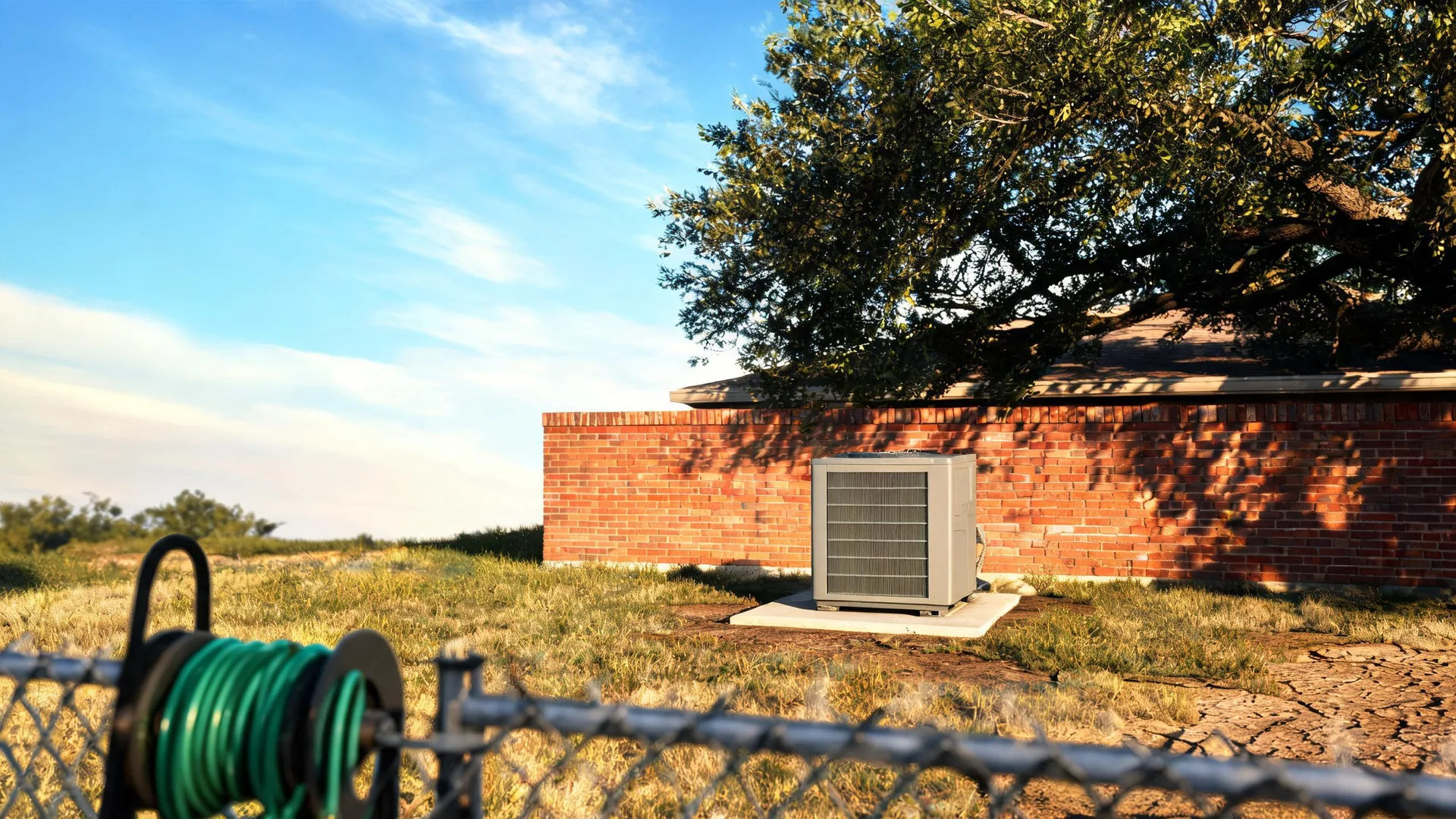
The outdoor unit sits outside year round, through every one of those storms. Have it checked for bent fins, loose panels and debris before the next one comes through, and get it cleared out now so it isn't working harder than it has to.

Find a contractor
A gray heat pump outdoor unit mounted on a concrete pad next to a residential house with lap siding and stone accents.

It doesn't get a season off

A furnace rests for months at a time. This doesn't. Once the outside temperature drops or climbs past the point the house is comfortable, the heat pump is the only thing running, in both directions, and it stays that way until the weather turns. That's more starts, more hours, and more cycles on the compressor than almost anything else in the house. Watch for a unit that runs long stretches without shutting off, or one that short cycles, kicking on and off every few minutes instead of settling into a steady run. Both point to the same kind of strain, just from different directions, and both are worth having looked at before the compressor is the part that fails.

Keep the area around the outdoor unit clear

Leaves, pine straw and grass clippings build up against the cabinet and get pulled into the coil fins. Keep a couple feet of open space on every side so the unit can pull air through freely, and after any storm check for branches or debris sitting against it before it runs again.

Change the air filter on a schedule

A dirty filter chokes airflow across the indoor coil, and a heat pump forced to push air through a clogged filter runs longer to move the same amount of heat. Check it monthly and swap it when it looks gray or packed, rather than waiting for a reminder from the system itself.

Skip a few years of maintenance and a heat pump doesn't just quit one day. It drifts. Refrigerant charge creeps off target and nobody adjusts it, so the compressor pulls harder to do the same job every cycle. A capacitor weakens slowly, so the outdoor fan or compressor hesitates on starts for months before one day it doesn't start at all. Dirt builds on the outdoor coil and the system loses its grip on the outside air, running longer to move the same heat. None of that trips a breaker or throws an error. It just wears the compressor down faster and sets up the breakdown that finally stops the system, usually on the day you need it most.

A tune-up also covers what happens inside the house, not just the cabinet outside. The tech checks the indoor coil for dirt and mold, since a coil that's lost its airflow makes the blower work harder without ever tripping anything. They'll check refrigerant line insulation, because bare or worn insulation lets heat transfer where it shouldn't and the system quietly loses efficiency. The condensate drain gets checked too. A heat pump pulls moisture out of the air same as an air conditioner would, and a clogged drain backs up into the pan or the house before anyone notices a drip. And they'll check the thermostat calibration against an actual thermometer, since a thermostat reading a few degrees off runs the system longer than the house needs, cycle after cycle, for no reason anyone would catch from the couch.