


A gray outdoor HVAC condenser unit mounted on a concrete pad in the front yard of a two-story suburban house.

Heat Pump Maintenance in Seneca, SC

Tell us about the job

Takes about a minute. No obligation.

Tune-up, service, or cleaningHeat PumpOconee County, SC
Step 1 of 2

What ZIP code is the job in?

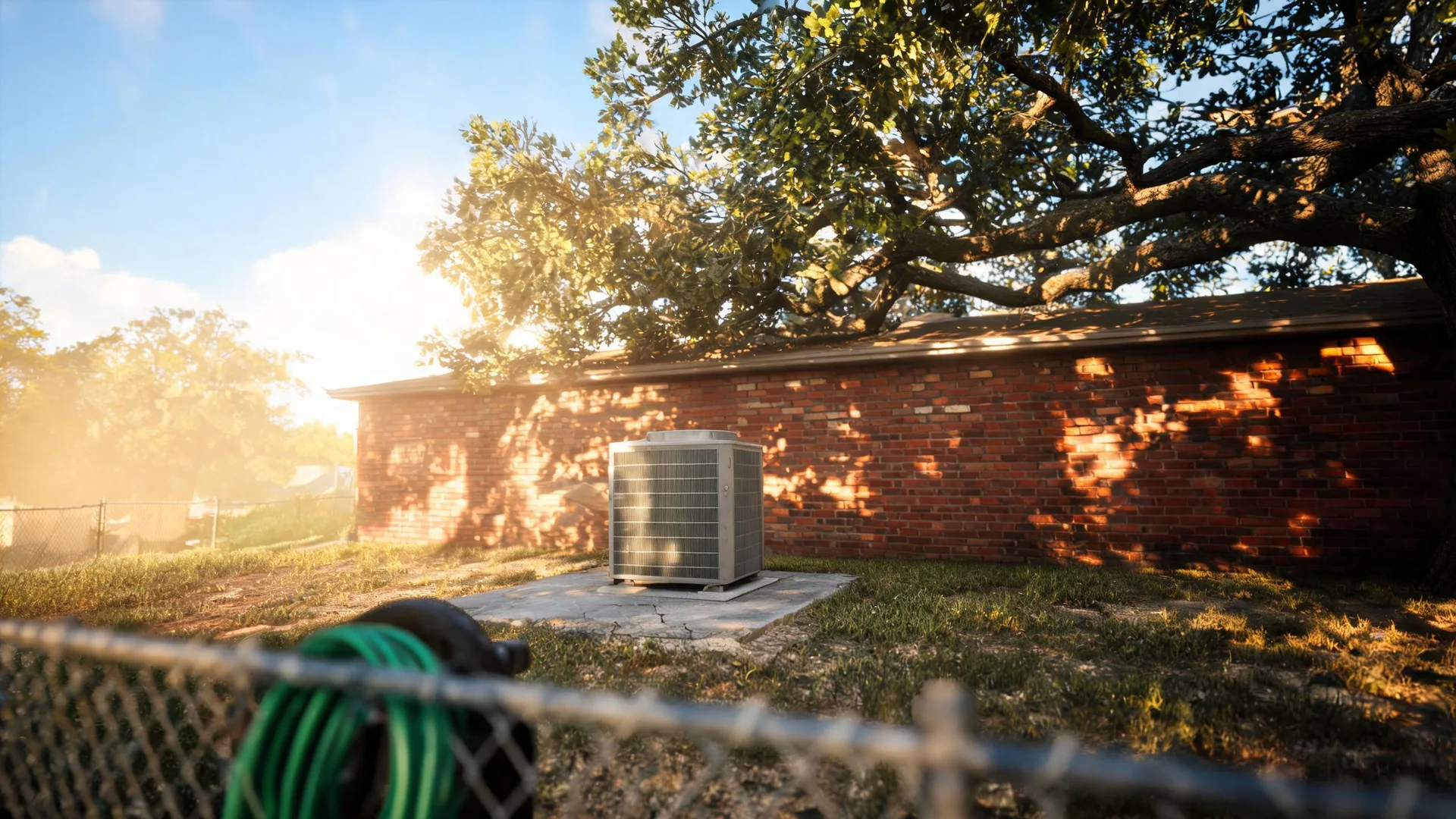
Oconee County saw 136 severe weather events between 2015 and 2024, most of it wind. That outdoor unit sits right in the path of it. Wind drives branches and grit into the coil and fan. Hail dents the housing and bends the fins that move heat in and out. A unit that took a hit during the last storm might still run, just not at its best, until someone looks it over.

Your heat pump switches over and starts carrying the load in October.

Have it looked at in September, before storm damage meets its first cold stretch.

Easy on the system hereWinters average 33°F at night, mild enough that your heat pump isn't working hard to keep up.

A tune-up gets the panels off, and that changes what you can actually see. The refrigerant charge gets checked against what the system calls for, since even a slight loss off that makes the whole system work harder without any obvious sign from inside the house. The reversing valve gets tested both directions, because that's the part that lets the unit heat in winter and cool in summer, and a valve that's starting to stick won't always announce itself right away. The contactor and capacitor get checked for wear, since those are the parts that most often fail outright rather than just losing efficiency. The coil gets inspected and cleaned if it needs it, because a coil caked with debris can't move heat the way it should, and from the outside it just looks like a normal fan running.

A newer system is worth keeping that way

Half the homes in Oconee County were built in 1990 or later, so a lot of the heat pumps in them still have a lot of working life ahead. A yearly check is what keeps a newer system running that way. It's a different job than fixing one that's already struggling.

Find a contractor
A gray air-source heat pump mounted on a concrete pad next to a house with gray vinyl siding, surrounded by gravel and flanked by green shrubs and white hydrangea flowers.

It never really stops, so nothing gets a break

A heat pump does not get a season off. It runs on the cooling side, then switches over and runs on the heating side, and the reversing valve is what makes that switch happen. A valve that sits in one position for months is more likely to stick when it's finally asked to move the other way. That's part of why a system that ran fine all through one season can struggle the moment it's asked to do the opposite job. Watch for ice forming on the outdoor coil when it shouldn't be there. Watch for air coming out of the vents that's barely warm or barely cool. A unit that runs constantly without shutting off, or one that kicks on and off every few minutes, is telling you something too. None of that fixes itself by running longer.

Were the panels actually off

A quick visit means a filter swap, a glance at the thermostat, and a reading off the outdoor unit from a few feet away. A thorough one means the panels come off the air handler and the outdoor unit both, because the contactor, the capacitor and the reversing valve are all inside, not visible from the yard.
What gets measured, not just looked at

Anyone can tell you the unit is running. A thorough tune-up checks the refrigerant charge against the number the system is built to run at, checks the temperature split between the air going in and the air coming out, and tests the reversing valve in both directions. Those are readings, not impressions, and they're what catch a problem before it becomes a breakdown.

The filter is the cheapest part of this system and the easiest to ignore. Air has to pass through it before it ever reaches the coil, and once it's clogged, the system is pulling against something it was never built to fight. A coil that stays clean moves heat the way it's supposed to. One that's caked in dust or pet hair loses that ability gradually, so the drop in performance looks like a lot of other problems before anyone traces it back. The drain line matters just as much, just differently. Heat pumps pull moisture out of the air during cooling, and that water has to go somewhere. A line that's clogged with algae or sludge backs up, and depending on the system, that means water where it shouldn't be or a safety switch shutting the whole unit down to protect against it.

There's a yearly list beyond refrigerant and the reversing valve, and it matters just as much. Electrical connections loosen over time from the vibration of the unit cycling on and off, and a loose connection runs hotter than it should until something fails. The blower motor and its bearings get checked, since a motor working harder than it needs to wears out faster than one that's running clean. Belts don't come into it on most of these systems, the motor drives the blower directly, but the wheel itself collects dust and grime that throws it out of balance over time. The outdoor fan motor gets the same look, because it sits outside all year with nothing protecting it but the housing around it. Thermostat calibration gets checked too, since a thermostat reading a few degrees off tells the system to run when it doesn't need to, or shut off before the house is actually comfortable.