





Night view of illuminated white Southern-style houses with wraparound porches beneath Spanish moss-draped oak trees.

Heat Pump Maintenance in Rock Hill, SC

Tell us about the job

Takes about a minute. No obligation.

Tune-up, service, or cleaningHeat PumpYork County, SC
Step 1 of 2

What ZIP code is the job in?

A heat pump that needs a look usually tells you before it quits. Listen for the outdoor unit running longer than it used to, or cycling on and off more than it should. Check the air coming from the vents. If it feels lukewarm when it used to feel warm, the system is working harder to do less. Ice on the outdoor coil outside of a defrost cycle is worth a call, not something to wait out. And if a room never quite reaches the set temperature anymore, that's the system falling behind, not the thermostat being wrong.

Rock Hill runs long, hot summers and short winters, so the heat pump works most months of the year.

One yearly visit covers a system that doesn't get much downtime to begin with.

September is the month to get the heat pump looked at, right before it switches over to heat

Cooling runs May through September
Heat runs October through April
78 damaging wind events from 2015 to 2024
York County's homes run newerHalf the homes in York County were built in 2000 or later.

A tune-up gets inside the cabinet in a way a homeowner never does. The tech checks refrigerant charge, because a system running low won't show it on the thermostat until the coil starts icing or the compressor starts straining. The contacts and connections in the electrical panel get checked too, since a loose one causes wear long before it causes a failure you'd notice. The outdoor coil gets cleaned, not just looked at, because dirt and pollen packed into the fins make the system pull harder to move the same air. The reversing valve gets tested, since that's the part that switches the system from cooling to heat, and a valve that's starting to stick won't always show up until the first cold morning you actually need it to switch.

Keep a newer system working like one

If your heat pump came with a house built in the last couple decades, it's likely still well within its working life. A yearly check is what keeps it that way instead of letting small wear turn into an early replacement.

Find a contractor
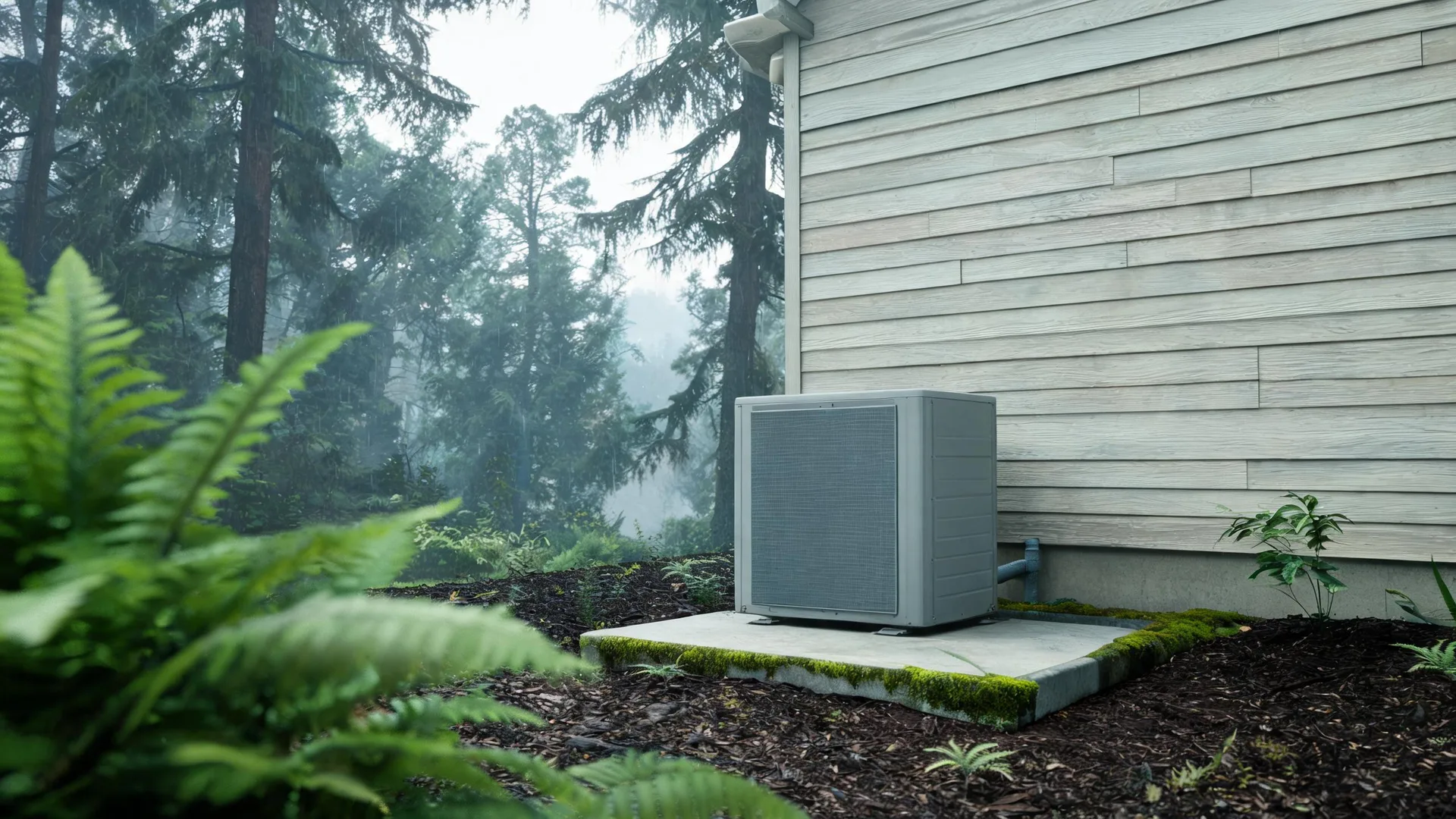
A white mini-split heat pump outdoor unit mounted on a concrete pad beside a gray-sided house, surrounded by gravel and green shrubs.

What you can check, what you can't

The filter is the one thing worth checking without calling anyone. Pull it out, hold it to the light, and if you can't see through it, swap it. A clogged filter starves the indoor coil of airflow, and that makes the whole system work harder for less heat or less cooling. Outside, keep the area around the unit clear. Leaves, grass clippings, mulch, anything that can get pulled into the fins makes the coil work harder to move air across it. Keep at least a couple feet open on all sides so it can breathe. Inside, leave the vents open and unblocked by furniture or rugs, even in rooms you don't use much. Closing them off raises the pressure in the ductwork and makes the system strain to push air where it's told to go. Between visits, that's the extent of it. Anything involving the refrigerant, the electrical connections, or the reversing valve is for the tech, not the homeowner.

Dirt and wear don't announce themselves

A heat pump left unchecked doesn't fail all at once. Refrigerant drops a little at a time, the coil collects a season's worth of dirt, a contact loosens under normal vibration. None of that trips a breaker or shows up on the thermostat right away. The system just quietly asks the compressor and the fan motor to work harder to make up the difference, and they do, until one of them can't anymore.
The failure shows up somewhere else

When a heat pump runs strained for long enough, the part that finally gives out is rarely the part that caused the problem. A dirty coil raises the pressure the compressor has to work against, and the compressor absorbs that extra load for months before it trips out or fails. A loose connection left alone doesn't stay a loose connection. It burns a contact or takes out a control board that had nothing to do with the original problem.

A quick visit and a thorough one can look the same from the kitchen. Both end with the tech saying the system's running fine. The difference is whether anyone actually opened the panel and pulled the blower, or just ran the system for a few minutes and checked the thermostat reading. A real tune-up means the covers come off. The tech should be able to tell you the refrigerant pressure, not just that it's fine, and what the readings were when checking the contacts. Washing the outdoor coil with water and a brush takes real time, so if the visit is over before the hose even dries on the unit, that step probably got skipped. Ask what got tested on the reversing valve. If the answer is vague, the valve wasn't actually cycled and checked, only looked at.

A tune-up also means the defrost control gets tested, not just glanced at. That's the board and sensor that tell the system when to pause, melt the ice off the outdoor coil, and switch back to heating. If the sensor reads wrong or the board doesn't trigger the cycle, frost builds up and stays, and the system loses heat capacity right when it needs it most. The condensate drain gets checked too, since a heat pump pulls moisture out of the air same as an AC does, and a clogged drain backs water up into the cabinet instead of outside where it belongs. None of this shows up by running the system for a few minutes and watching the fan spin. It shows up when the tech triggers a defrost cycle on purpose and watches it finish.