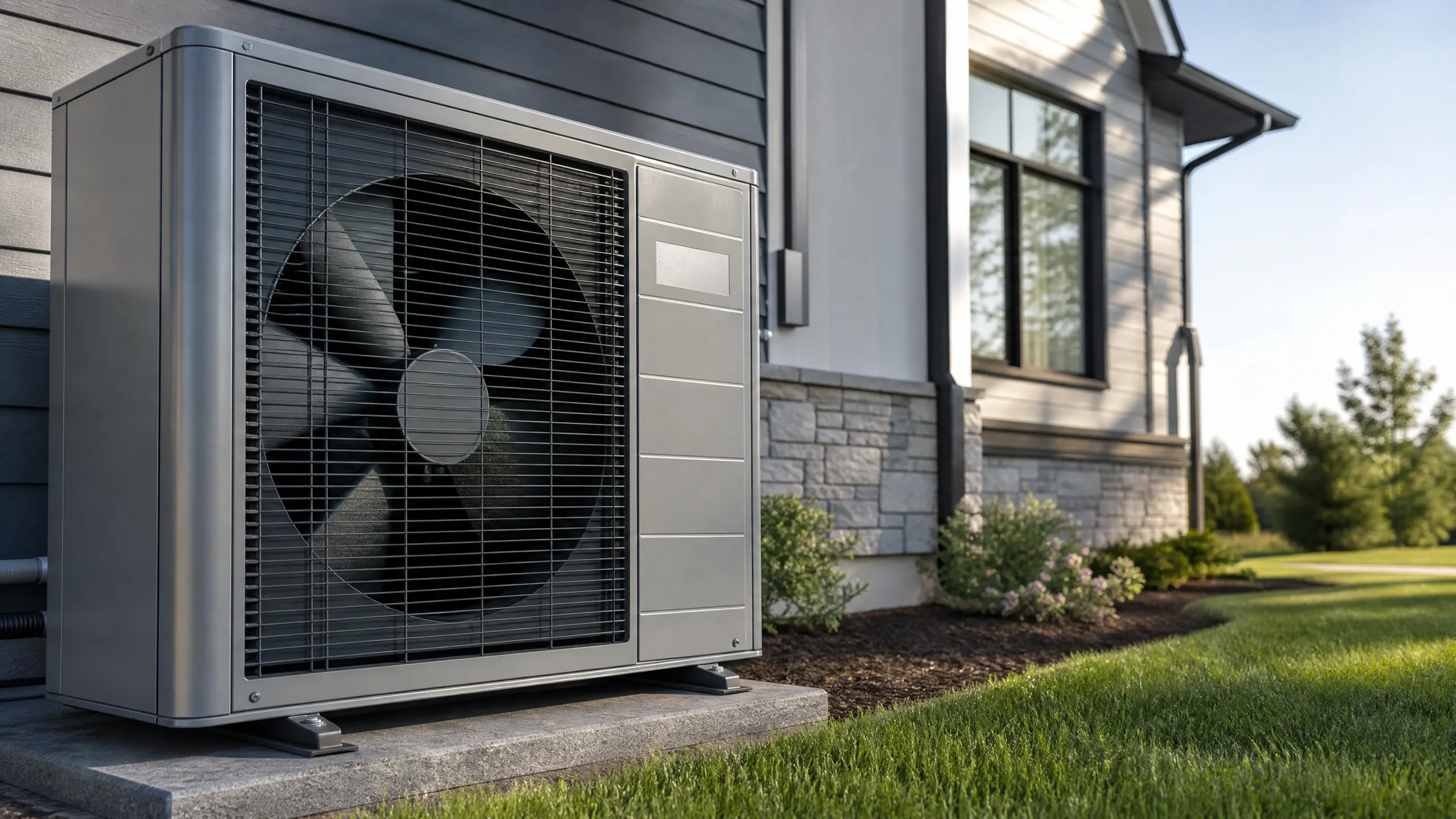

A grey heat pump outdoor unit mounted on a concrete pad against the exterior wall of a house with grey siding and stone veneer.

Heat Pump Maintenance in Newberry, SC

Tell us about the job

Takes about a minute. No obligation.

Tune-up, service, or cleaningHeat PumpNewberry County, SC
Step 1 of 2

What ZIP code is the job in?

Newberry County logged 231 severe weather events between 2015 and 2024, most of them damaging wind. Your heat pump's outdoor unit sits through all of that weather with no cover. Wind-blown branches and grit can dent the cabinet or bend the fins that let the unit breathe, and hail does the same. The county has seen hail, tornadoes, and tropical storms in that stretch too. A maintenance visit is the time to check the unit for that kind of damage before it has to work.

Half the homes in Newberry County were built in 1981 or later, half before that.

Old house or new, the heat pump inside still only needs that one yearly checkup.

Your heat pump switches over to heat in November here and keeps at it through March. October is the month to get it checked. A heat pump that's been sitting idle in cooling mode all summer needs its heating side looked at before it has to carry the house through a cold snap, not during one. If a part is wearing out, April is a bad time to find out, since that's when the outages this county sees are most likely to leave you without a backup. Get it done in October and the unit's ready before it has to prove it.

Have the outdoor unit checked before the next storm finds its weak spot

Get the outdoor unit checked before storm season leaves its mark on it. A maintenance visit catches bent fins and cabinet dents while they're still easy to fix, and if the power does go out, you want to know the unit was already in good shape going in.

Find a contractor
A white mini-split heat pump outdoor unit mounted on a concrete pad beside a gray-sided house, surrounded by gravel and green shrubs.

A unit that sits through all of it

That outdoor unit sits outside year-round, through the wind this county gets. 189 damaging wind events hit Newberry County between 2015 and 2024, and each one was a chance for the fins to bend or the cabinet to take a hit. A unit already running long hours shows that kind of damage sooner. A maintenance visit is the time to find a bent fin or a strained part, before the unit has to lean on it.

The refrigerant charge is never obvious

A heat pump low on refrigerant still blows air and still runs. The house still heats and cools, just worse and longer than it should. Checking the charge means gauges and a look at pressures, not a guess from how the air feels at the vent.
The reversing valve only shows itself one way

The valve that switches a heat pump between heating and cooling can stick without any sound or smell to warn you. The system keeps running in whichever mode it was last in. The only way to know it still switches is to test it switching, which a homeowner running the thermostat day to day has no reason to do.

A heat pump that never gets looked at doesn't fail all at once. The filter loads up with dust first, and airflow across the indoor coil drops. The system keeps running, just pulling harder to move the same air. That strain lands on the compressor, the one part in the whole unit that's hardest to replace. Dirty outdoor coils cause the same problem from the other side, since the unit can't dump heat or pull it in the way it's built to. None of this trips a breaker or throws an error code. It just wears the unit down faster than it should.

A tune-up starts with the filter and both coils, since airflow is what the whole system leans on. The tech checks refrigerant pressures against what the unit is supposed to run at, not just whether the air feels cold or warm at the vent. The reversing valve gets tested in both directions, since that's the only way to know it still switches clean. Electrical connections get checked for looseness and corrosion, because a loose connection builds heat over time. The contactor and capacitor get tested under load, since both can be weak enough to limp along but not enough to say so. Condensate drains get cleared too, so the system isn't fighting a backup it doesn't need.