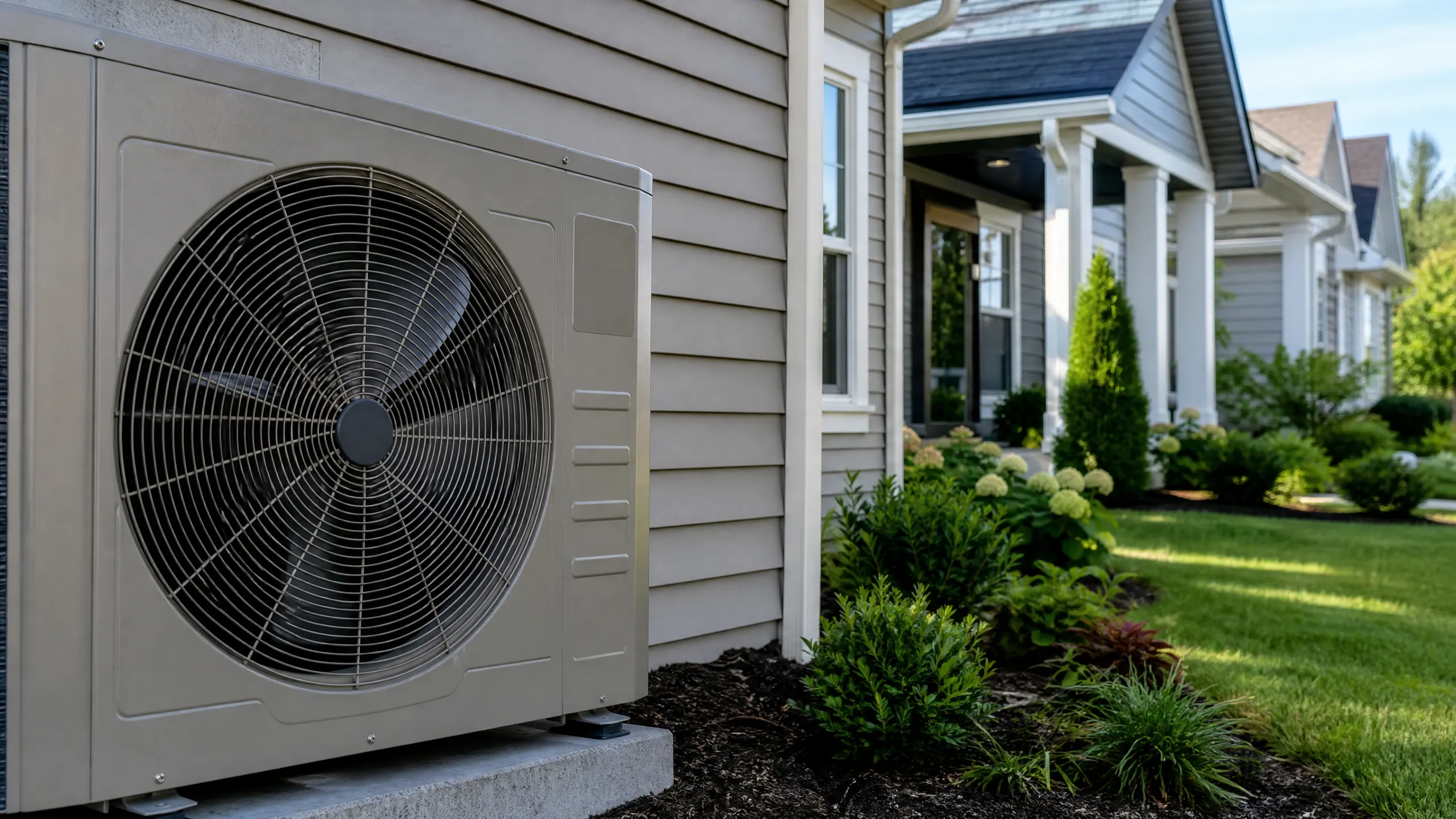
A large outdoor air-conditioning unit mounted beside a vinyl-sided house, surrounded by mulched garden beds and green shrubs.

Heat Pump Maintenance in Lancaster, SC

Tell us about the job

Takes about a minute. No obligation.

Tune-up, service, or cleaningHeat PumpLancaster County, SC
Step 1 of 2

What ZIP code is the job in?

Dirty coils make the system work harder

A heat pump moves heat instead of making it, so both coils need to stay clean to do that well. When the outdoor coil is caked with dirt or the indoor coil is coated in dust, the system has to run longer to reach the same temperature. That longer runtime wears on the compressor, and the compressor is the part nobody wants to replace.


Small problems get found late

A refrigerant leak starts small, a few degrees off where the system used to perform. A worn contactor or a weak capacitor does the same, the system still runs, just not quite right. Without someone checking the charge and the electrical readings on a schedule, the first sign is often the system struggling to heat or cool at all. Caught early, it's a part swapped on a service call. Caught late, it's a breakdown.

Heat pumps in Lancaster County start working hard in November, the day heat takes over from cooling.

Get it looked at in October, before it has to switch over and run.

One tune-up a year, timed before the switch to heat, covers it

133 damaging wind events from 2015 to 2024
46 hail events from 2015 to 2024
Power costs 14.23 cents a kWh statewide
Newer homes, younger systemsHalf the homes in Lancaster County were built since 2000.

The filter is the one part of this system the homeowner controls, and it matters more on a heat pump than on a furnace alone, because the same coil handles both heating and cooling all year. A clogged filter starves the indoor coil of airflow, and a starved coil can ice over even in heating mode. Once ice builds on that coil, the system loses capacity and has to work around it instead of through it. The condensate drain matters just as much and gets thought about less. If it's blocked, water backs up instead of draining off, and that water finds its way to places that don't dry out on their own. None of these are complicated to check. They just have to be checked before the system is relying on them every day.

Your heat pump is young. A yearly check keeps it that way.

A system built since 2000 still has a lot of working life left in it. A yearly check before the heat takes over is what keeps it that way, catching the worn contactor or the weak capacitor while it's still a part swapped, not a system replaced.

Find a contractor
A gray air-source heat pump mounted on a concrete pad next to a house with gray vinyl siding, surrounded by gravel and flanked by green shrubs and white hydrangea flowers.

A real tune-up opens the panels

A quick visit gets you a filter check and a glance at the thermostat. That's it. A thorough one means the panels come off. The tech checks refrigerant charge against what the system calls for, tests the contactor and capacitor under load instead of just looking at them, and clears the condensate drain instead of assuming it's open. Electrical connections get tightened, since a loose connection heats up over time and that heat damages the parts around it. The outdoor coil gets washed, not just brushed off, because dirt packed between the fins blocks airflow that a visual check won't catch. Ask what the visit actually covers before it starts. If the answer is just filter and thermostat, that's not a tune-up, that's a glance.

The reversing valve gets tested, not guessed at

A heat pump depends on the reversing valve to switch between heating and cooling, and a valve that's starting to stick won't announce itself. It might still shift most of the time, just slower, or hang partway and cut capacity in one mode without failing completely. Running it under load during a check shows whether it switches clean. Waiting for the homeowner to notice means waiting for the day it doesn't switch at all.

Defrost control gets checked before the system needs it

In heating mode, the outdoor coil collects frost and has to clear itself on a regular cycle. That cycle depends on a sensor and a control board reading temperature correctly. If the sensor drifts or the board misreads it, the coil can stay iced longer than it should, or never get the signal to defrost at all. From inside the house, the only sign is the system running without putting out much heat. A tune-up catches the sensor before the ice does.

Most heat pumps give some warning before they quit, the trouble is the warning doesn't sound like an emergency. The system takes longer to reach the set temperature, or it runs almost constantly without the house feeling any different. Air comes out of the vents noticeably cooler than it used to in heating mode, even though the system is still running. Sometimes there's a smell when it kicks on, or a rattle that wasn't there last season. None of these stop the system from working, so they get lived with for weeks or months. That's exactly the window a check is for, catching the thing making the noise before it takes something else down with it.

Between visits, the thermostat is worth a look more than people think. If it's set to "auto" on the fan, leave it there, since "on" keeps air moving over a wet coil in cooling mode and can push moisture into the ductwork. Outside, keep the area around the outdoor unit clear. Leaves, mulch, or anything stacked against the cabinet blocks the airflow the coil depends on, and a heat pump pulls air through that coil in both heating and cooling. After a hard frost, a light coat of frost on the outdoor coil is normal and should clear on its own during a defrost cycle. A thick layer of ice that doesn't go away is not normal, and that's worth a call rather than a wait. Keep furniture and curtains clear of the indoor vents and returns too, since blocked airflow on either end makes the whole system work harder.