





Low-angle view across a lawn and pine-needle mulch toward a single-story brick house with a dark hipped roof and covered porch, framed by pines and a moss-draped oak branch.

Heat Pump Maintenance in Kingstree, SC

Tell us about the job

Takes about a minute. No obligation.

Tune-up, service, or cleaningHeat PumpWilliamsburg County, SC
Step 1 of 2

What ZIP code is the job in?

A heat pump here works both sides of the year, cooling from May through September, then heating from November through March. October is the month before it switches over to heat, and that's the time to have it checked. A tech can look at the refrigerant charge, the reversing valve, and the outdoor coil while the system isn't working hard. Find a weak part in October and it gets fixed before the first cold night, not during one.

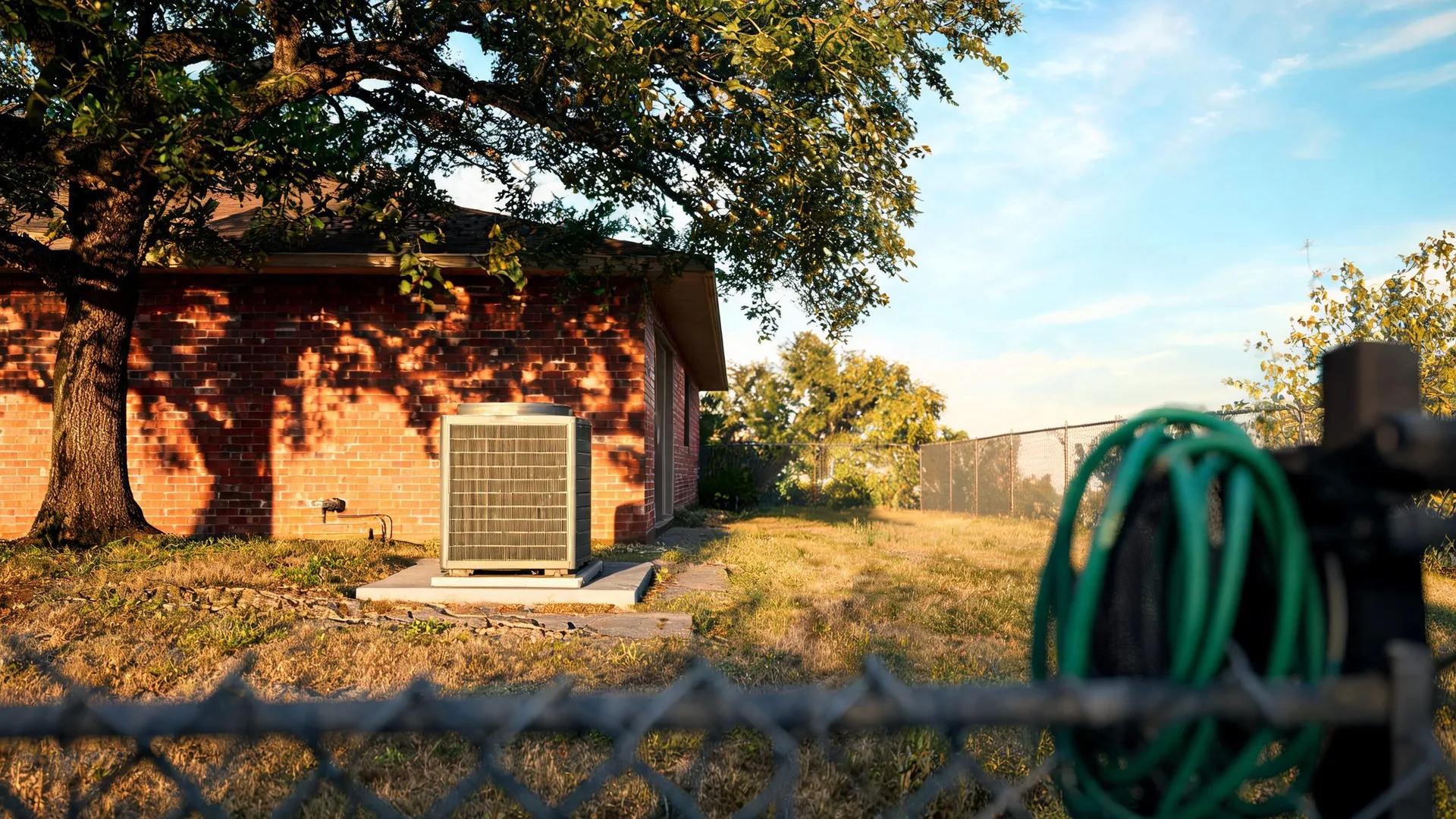
Between visits, you can rinse the outdoor coil off with a garden hose and keep leaves and grass clippings away from the cabinet.

A coil caked with debris can't give up heat the way it should, and that makes the whole system work harder than it needs to.

This county doesn't ask more of a heat pump. One visit a year covers it.

Half the homes here were built by 1985
Power costs 14.23 cents a kWh statewide
Climate zone 3A

A few signs tell you it's time to have the system looked at sooner rather than later. If it's running longer than it used to, or cycling on and off more than it used to, something has changed. Warm air coming from the vents when you'd expect it to feel hot points to a weak charge or a reversing valve that isn't shifting all the way over. Ice on the outdoor unit outside of a normal defrost cycle is another one worth a call, not something to wait out. So is a burning or musty smell when the system kicks on. None of these mean the system is done for. They mean it's telling you something, and it's easier to listen now than after it quits on the coldest night of the year.

Book it before the season

It starts running hard in the first month of the season here. Book the check the month before.

Find a contractor
A man in a dark long-sleeve shirt and tan work pants, seen from behind, carries a worn canvas tool bag up concrete steps toward a dark blue front door.
A gray heat pump condenser unit mounted on a concrete pad against the gray lap-siding exterior wall of a house.

What's wearing where nobody's looking

A heat pump doesn't get a season off. It runs on the cooling side, then switches over and runs on the heating side, and every part that moves is moving in both. A tune-up is the only time anyone actually looks at the parts that don't announce themselves while they wear. Refrigerant pressures get checked against a gauge, not guessed at from how the air feels. The reversing valve gets watched while it shifts, because a valve that's starting to stick usually still moves, just not all the way, and you can't see that from inside the house. Terminals inside the disconnect box get checked for the kind of heat discoloration that only shows up once a connection has already started to go. None of this is visible with the panels on, and none of it is something a homeowner would catch by listening to the system run. That's the part a tune-up is actually for.

The filter is doing more than keeping dust down

A dirty filter chokes the air moving across the indoor coil. The system pulls harder to get air through, the coil underneath can ice up even in cooling mode, and the compressor ends up working against its own airflow. Checking it is the simplest part of maintenance and the easiest one to let slide.
The drain line decides whether a small problem stays small

Both coils pull moisture out of the air, and that water has to leave through the condensate drain. Let that line clog with algae or dirt and the water backs up into the pan, sometimes into the cabinet or the space around it. It is not a sign the system is failing. It is a line that needs clearing, and it is easy to check before it becomes a bigger job.

A thorough tune-up means the panel comes off. A tech checks refrigerant charge against what the system calls for, not just whether the house feels cool or warm enough that day. They test the reversing valve under power, watching it actually shift, not just look at it sitting still. Electrical connections get checked for looseness and corrosion, because a connection that's starting to fail will run hot before it ever trips anything. A quick visit skips most of this. Someone glances at the unit, maybe hoses off the coil, and calls it done, and the system looks the same walking out as it did walking in. The difference doesn't show up that day. It shows up months later, in the part nobody tested.

Capacitor and contactor get tested under a meter, not eyeballed. A capacitor can look fine and still be weak, and a weak one makes the compressor and the fan motor work harder to start every cycle. The contactor's points pit a little more each season, and a pitted contactor is what leaves a system not starting at all. A tech also checks the defrost control, running the system into a defrost cycle and watching it come back out of one, because a heat pump that gets stuck there is a heat pump blowing cold air into a cold house. Blower wheel and motor get checked too. A blower caked with dust moves less air even at full speed, and that shortfall shows up everywhere downstream of it.