Two illuminated white colonial-style houses with wrap-around porches, flanked by oak trees draped in Spanish moss, photographed at night.

Heat Pump Maintenance in Georgetown, SC

Tell us about the job

Takes about a minute. No obligation.

Tune-up, service, or cleaningHeat PumpGeorgetown County, SC
Step 1 of 2

What ZIP code is the job in?

The refrigerant pressures get checked, not just the filter

A quick visit means a new filter, a glance at the outdoor unit, and a reset. A thorough one has the tech hook up gauges and check the refrigerant charge against what the system calls for, test capacitor strength under load, and check the reversing valve actually switches the system between heat and cool. That last one matters because a heat pump earns its keep running both directions, and a sticking valve will not show up until the season it's needed.


The outdoor coil gets cleaned, not just looked at

Dirt and pollen build up between the fins on the outdoor coil, and that cuts into how well the system can move heat in either direction. A tech doing a real tune-up rinses the coil clean and straightens any bent fins blocking airflow. One who just checks that the unit is running and powers back on skips this, and the system keeps losing efficiency a little at a time without anyone noticing until it struggles to keep up.

Heat pumps in Georgetown County start working for cooling in May and for heat in November, so there's no real off season.

April and October are when to get the check done, right before each side of the job starts.

Half these homes were built since 1993, young enough that upkeep is what decides how long the heat pump lasts

Half the homes here were built by 1993
Power costs 14.23 cents a kWh statewide
Climate zone 3A
Storm season doesn't skip the outdoor unit78 severe weather events hit Georgetown County between 2015 and 2024, and the outdoor unit takes all of it.

A heat pump installed new in a home built since 1993 still has plenty of working life left in it. What happens to that life from here depends on whether it gets looked at once a year. Skip the yearly check and small problems, a coil losing airflow, a refrigerant charge drifting low, go unnoticed until the system is working harder than it should to do the same job. Catch them early and the system holds its efficiency year after year instead of losing it a little at a time. That yearly check is what keeps a newer system newer for longer.

Book it before the season

It starts running hard in the first month of the season here. Book the check the month before.

Find a contractor
A man in a cap, dark jacket and tan work pants carries a canvas tote bag as he steps up concrete stairs toward a blue front door, with a potted shrub beside him.
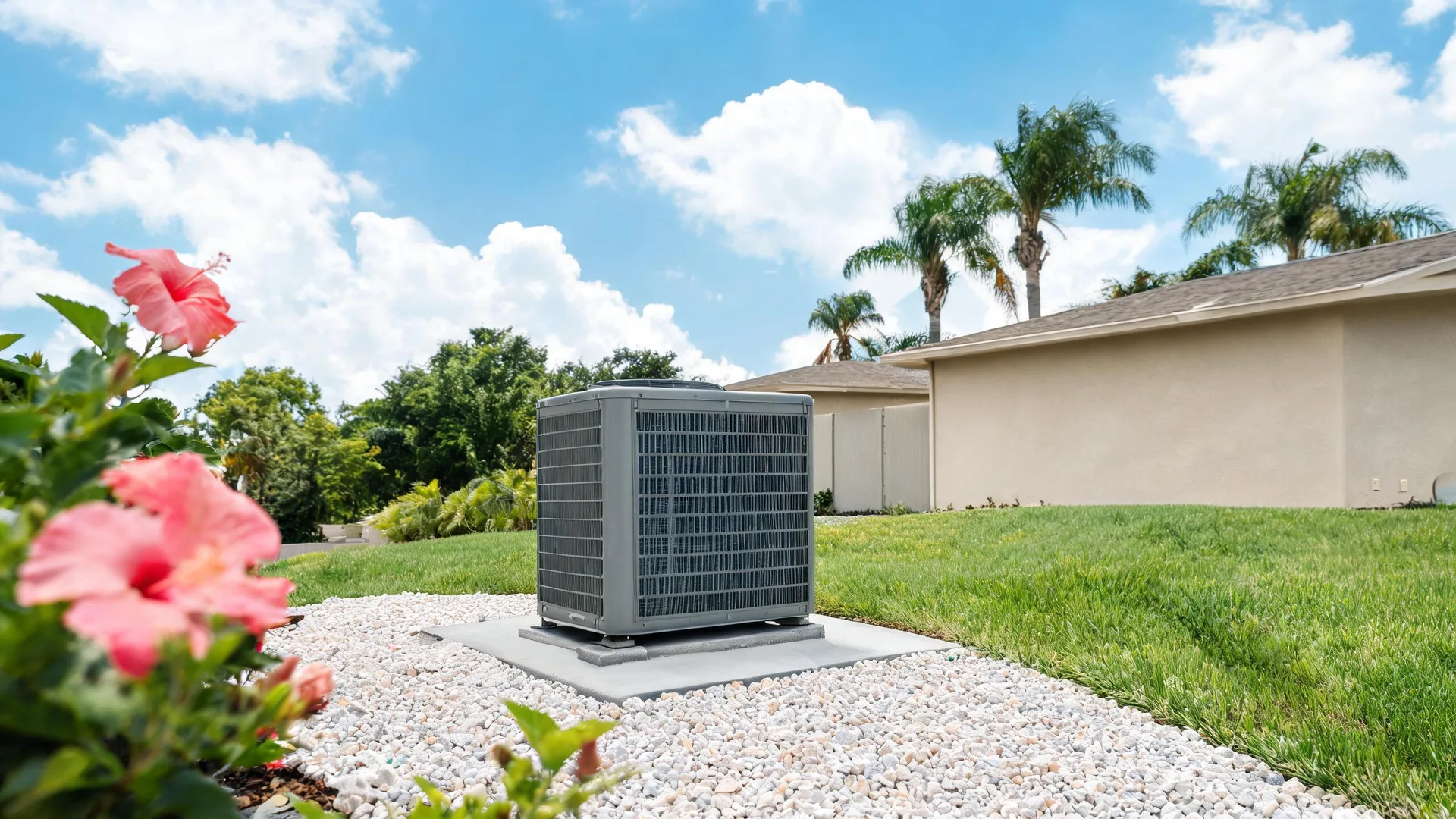
A gray heat pump outdoor unit mounted on a concrete pad next to a residential house with lap siding and stone accents.

What to check yourself, and what to leave for the visit

Between visits, the filter is the one thing worth your attention. Pull it out and hold it up to the light. If you can't see through it, swap it in. A clogged filter starves the indoor coil of airflow, and a heat pump starved of airflow runs longer to move the same amount of heat. While you're at the outdoor unit, look at what's piled against it. Leaves, pine straw, grass clippings, anything stacked against the cabinet blocks the coil from breathing. Keep a couple feet clear on all sides. After a storm, check for anything leaning on the unit or sitting in standing water around the base. Inside, listen for anything new. A rattle. A hum that wasn't there before. The system running and running without the house catching up to the thermostat. None of that is something to fix yourself. It's a reason to get someone out before the next scheduled visit instead of waiting for it.

The contactor gets tested, not just eyeballed

A contactor that looks fine can still have burnt or pitted contacts from months of cycling on and off. Left alone, it either fails to pull in, so the outdoor unit won't start, or it sticks closed and runs the compressor nonstop. A tech checks it under power and replaces it before it strands the system.

The defrost cycle gets proven out, not assumed

A heat pump is supposed to sense ice building on the outdoor coil, switch briefly into cooling to melt it off, then switch back. If the defrost control or sensor is drifting out of calibration, the coil can ice over and stay iced, and the system keeps running while it quietly loses its ability to heat the house. This only shows up by forcing the cycle and watching it complete.

A heat pump that never gets serviced doesn't fail all at once. It loses a little capacity every season and the house compensates without anyone noticing, until a hot afternoon or a cold snap finally shows what the system can't do anymore. The compressor is the part that pays for it. It's built to push refrigerant against a certain pressure, and when the coil is dirty or the charge is off, it works outside that range every time it runs. That shortens its life even though nothing about it looks broken. Oil also circulates with the refrigerant to keep the compressor's moving parts lubricated, and a low charge means less oil making the trip. A system can run that way for a long time before it quits, which is exactly why nobody catches it without someone checking.

A full tune-up also means the tech checks the blower motor and the wiring it runs on, not just the big-ticket parts. The blower has to move air across the indoor coil at the right rate, and a motor running slow or pulling too much current will wear out before its time. Electrical connections get checked too, since a loose one heats up every time the system cycles and eventually burns. The condensate drain gets flushed as well, because the indoor coil sheds water whenever it runs in cooling, and a clogged drain backs up and can trip the system off or drip where it shouldn't. None of this shows up by glancing at the thermostat and seeing cool air come out. It shows up months later as a breaker that trips or a pan that overflows, and by then the tune-up that would have caught it is long past.