





Three white clapboard houses with wraparound porches glow with warm interior and landscape lighting beneath Spanish moss-draped oak trees at dusk.

Heat Pump Maintenance in Gaffney, SC

Tell us about the job

Takes about a minute. No obligation.

Tune-up, service, or cleaningHeat PumpCherokee County, SC
Step 1 of 2

What ZIP code is the job in?

A heat pump only works as hard as it can breathe. A dirty filter chokes the airflow across the indoor coil, and once that coil can't pull heat the way it should, the system runs longer to do the same job. The outdoor coil matters just as much. Dirt and grass clippings packed into those fins keep it from giving up heat in summer or pulling in heat during the colder months, which is exactly backward from what you want with a heat pump working both directions. Then there's the drain. Condensation has to go somewhere, and if that line clogs, water backs up into the pan and sometimes into the house. Keeping the filter changed and the outdoor coil clear of debris is most of what keeps this system running the way it's supposed to.

Gaffney winters stay short and mild, so a heat pump here isn't working against the cold months most of the year.

Less strain doesn't mean no strain, and a yearly check catches what easy duty still wears down.

Your heat pump starts earning its keep in May. Get it checked in April.

Cooling runs May through September
Heat runs October through April
49 damaging wind events from 2015 to 2024
One visit a year covers itHalf the homes in Cherokee County were built in 1984 or earlier. One yearly visit still covers what a heat pump needs.

A heat pump that's struggling gives you a few honest signs before it quits. It runs longer than it used to without the house feeling any different, because something in the system is working harder to move the same amount of heat. It cycles on and off more than it should, short bursts that never quite settle into a steady run. Ice shows up on the outdoor unit outside of a normal defrost cycle, or stays there longer than it should clear. The air coming out of the vents feels less distinct from the room air, neither warm enough in winter nor cool enough in summer. Any one of these on its own might be nothing. Together, or left alone for a season, they're usually the system telling you it needs a look before something in it actually breaks.

A system with less to fight still needs a yearly look

Short winters and a long mild stretch mean this heat pump isn't straining the way it would somewhere colder. That eases the load, but the filter still loads up, the outdoor coil still collects debris, and the drain still clogs. A yearly check catches those before they turn into a longer repair.

Find a contractor
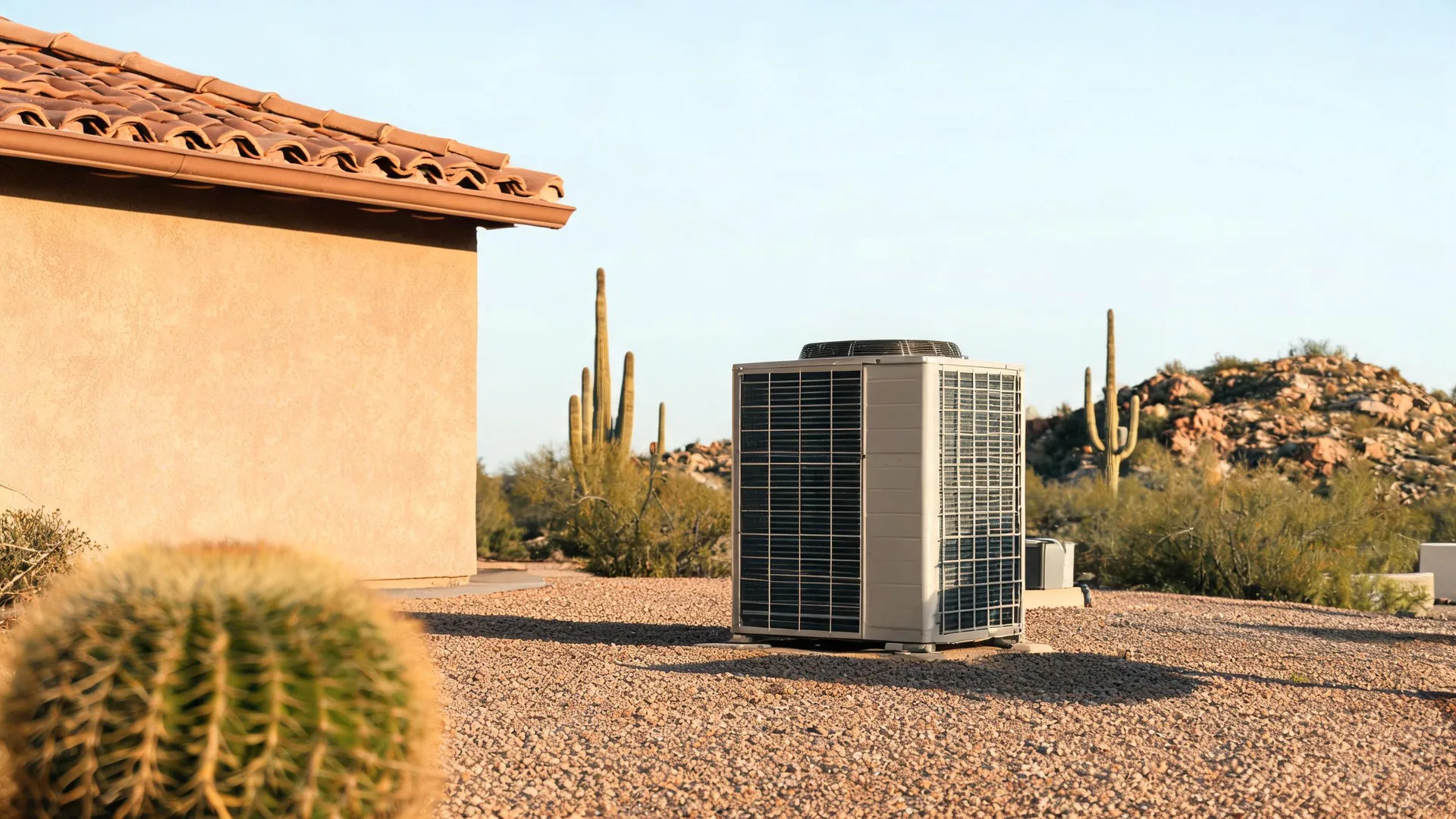
A residential heat pump outdoor unit mounted on a concrete pad next to a house with gray vinyl siding.

What a gauge finds that a thermostat can't tell you

A heat pump runs in both directions, and that gives it more ways to drift out of spec before anyone inside the house would notice. A tune-up checks the refrigerant charge, because a system low on charge still blows air, just not the right temperature of it, and a thermostat reading won't show that. It checks the contactor and capacitor in the outdoor unit, parts that wear from the compressor starting over and over, long before either one fails outright. It checks the reversing valve, the part that switches the system between heating and cooling, since a valve that sticks can leave you heating when you asked for cooling and the only sign is air that feels wrong. None of that shows up on a filter you can hold to the light or a coil you can see is dirty. It shows up on a gauge, or in a reading, or in a tech listening to how the compressor sounds when it kicks on.

A gauge was connected, or it wasn't

A quick visit gets the filter swapped and the outdoor unit hosed off, things a homeowner could mostly do themselves. A thorough one puts gauges on the lines to check refrigerant charge, checks the amp draw on the compressor, and tests the capacitor under load instead of just looking at it for swelling. Ask what was actually measured, not just what was wiped down.
Watching the switch happen

Checking the reversing valve means running the system in both directions and watching that it actually switches clean, not assuming it works because the house felt fine last week. That takes standing at the unit and listening to it cycle through. A visit where nobody waited for that switch didn't really check it.

Between visits, the filter is the one thing worth checking yourself. Pull it out, hold it to the light, and if you can't see through it, swap it. A filter left too long doesn't just make the system work harder, it lets dust settle on the indoor coil where you can't reach it. Outside, keep the area around the unit clear so air can move through the coil the way it needs to, and after a storm check that leaves or clippings haven't packed into the fins. Don't stack anything against the cabinet or let shrubs grow in close. Inside, keep an eye on the vents and make sure nothing is blocking them, since a heat pump moves air in both directions and needs a clear path either way.

A tune-up starts with the nameplate numbers, not a general look at the unit. The tech checks static pressure across the air handler, because airflow that's too low or too high changes how the coil performs no matter how clean it is. Electrical connections get checked for looseness, since a loose connection heats up and burns before it ever trips a breaker. The blower wheel gets inspected too, not just the filter in front of it, because dust cakes onto the blades over time and throws off the airflow even with a fresh filter installed. The condensate pan gets checked for rust or cracking, not just whether the line drains, since a pan that's failing won't show it until it leaks. None of this is guesswork. It's a set routine, in the same order, every visit.