






A row of single-story houses, one of red brick and others with pale siding, behind a mowed lawn and a tall trimmed hedge, framed by large oak branches draped with Spanish moss.

Heat Pump Maintenance in Dillon, SC

Tell us about the job

Takes about a minute. No obligation.

Tune-up, service, or cleaningHeat PumpDillon County, SC
Step 1 of 2

What ZIP code is the job in?

Skip maintenance long enough and a heat pump doesn't fail all at once. It just slowly asks for more to do the same job. Dirt on the outdoor coil keeps it from shedding heat properly, so the system runs longer to reach the same setpoint. A clogged filter chokes airflow across the indoor coil, and that coil can ice over in heating mode or sweat and grow mold in cooling mode. The reversing valve, the part that switches the unit between heat and cool, can start sticking if it never gets checked, leaving the system stuck in one mode. None of this announces itself. It shows up as a system that runs longer and more often, until a part that was already stressed finally gives out.

A heat pump that runs long cycles but never seems to catch up is already telling you something.

A tech who catches that during a check is looking at a filter or a dirty coil, not a failed compressor.

A heat pump works year round here, so April and October are both worth a check

Cooling runs May through September
Heat runs November through March
Climate zone 3A
Dillon County, SCHalf the homes here were built in 1984 or earlier, and more than a third are mobile homes.

A quick visit usually means a filter glance and a refrigerant pressure check, then the tech is back in the truck. A thorough one starts outside, washing the coil fins clean instead of just looking at them. Dirt packed between the fins doesn't show from a glance. It includes pulling the panel off the indoor unit to check the blower wheel for buildup. A dirty wheel moves less air even when the filter is clean. It means checking refrigerant charge against the manufacturer's numbers rather than just confirming the system is cooling or heating at all. A real tune-up also tests the reversing valve by switching the system between modes and watching that it responds right away. It covers the electrical side too, tightening connections that can work loose over time, and testing the capacitor instead of assuming it's fine because the system started up that day.

Book it before the season

It starts running hard in the first month of the season here. Book the check the month before.

Find a contractor
A man in a cap, long-sleeve navy shirt and tan work pants walks up porch steps toward a dark front door, carrying a canvas tool bag in his right hand, with a potted shrub to the left.
A gray heat pump outdoor unit mounted on a concrete pad next to the stone-accented exterior wall of a house.

What you can check without a tech

Between visits, the filter is the one thing worth your attention. A dirty filter chokes airflow across the indoor coil, and everything the tech checks at a tune-up gets harder on the system when that airflow is already cut. Look at it, and if it's gray with dust or you can't see light through it, swap it. Outside, keep the area around the unit clear. Leaves, grass clippings and anything stacked against the cabinet block the airflow the outdoor coil needs to do its job, whether it's shedding heat or pulling it in. Walk past the outdoor unit after a storm and knock off any debris caught in the fins. Inside, keep an eye on the vents and registers. A vent that got closed or blocked by furniture changes the airflow balance the whole system was set up for. None of this replaces a tech checking refrigerant charge or testing the reversing valve. It just keeps the system from working against itself while it waits for that visit.

A capacitor weak enough to fail doesn't look weak

A compressor or fan motor will start on a weak capacitor the same as a good one, most of the time. A gauge during a tune-up shows the capacitor losing capacitance before it leaves a motor straining to start. Wait for the no-start call and the compressor took the wear instead.
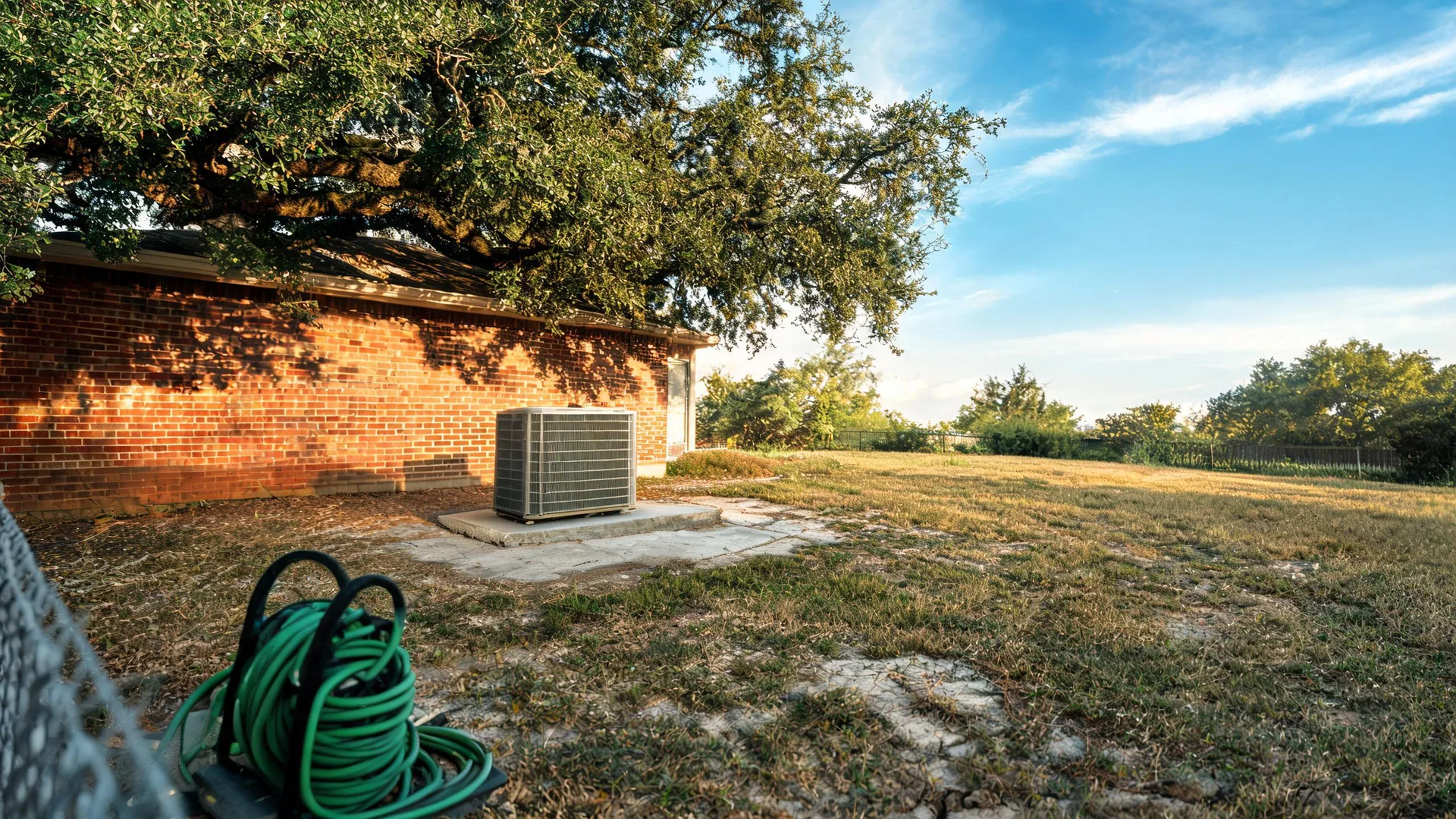
Temperature split tells you what the thermostat can't

The thermostat reads the room, not the system. A tech checking the temperature difference between the air entering and leaving the indoor unit catches a refrigerant charge that's drifted low before it shows up as a house that never quite reaches setpoint.

The drain line is the part people forget because it only matters when it's blocked. Condensate forms on the indoor coil and has to go somewhere, and if that line clogs with algae or sludge, the water backs up into the drain pan and from there into the house. A float switch will shut the system down before it overflows, if one is installed and working. Without it, the pan overflows quietly until someone notices a stain or a damp spot. Checking that line and clearing it is a small job next to pulling a blower wheel or testing a reversing valve, but a system that's otherwise in good shape can still make a mess over a clogged drain.

A tune-up also means looking at the defrost control, the part that tells the system to pause heating and melt frost off the outdoor coil. If that sensor or board reads wrong, the unit either never defrosts and ices over, or defrosts too often and loses heat it should be putting into the house. A tech runs the system through a defrost cycle on purpose during a check, rather than waiting to see if it happens right on its own. The same visit should confirm the backup heat only kicks in when the heat pump actually needs help. A heat pump that can't keep up on its own leans on strip heat or a furnace behind it, and a failed lockout there means that backup runs far more than it should without anyone noticing.