




A single-story brick house with a white-columned wraparound porch and a neighboring light-colored siding house, seen across a lawn behind a trimmed hedge, under oak branches draped with Spanish moss.

Heat Pump Maintenance in Cheraw, SC

Tell us about the job

Takes about a minute. No obligation.

Tune-up, service, or cleaningHeat PumpChesterfield County, SC
Step 1 of 2

What ZIP code is the job in?

Chesterfield County saw 174 severe weather events between 2015 and 2024, and most of that was damaging wind. Your heat pump's outdoor unit sits right in the path of that, with coils and fan blades exposed to whatever blows through. Hail hits the county often enough to dent fins and bend the cabinet, and either one can cut the airflow the coil needs. Tropical storms and tornadoes have passed through too, so the unit has had plenty of chances to take on debris you can't see from the kitchen window. A maintenance visit is when a contractor checks the coil and cabinet for that kind of damage, before it turns into a bigger repair.

A heat pump only needs the one visit a year, whether it's in a mobile home or a house built last year.

Half the homes in Chesterfield County were built in 1986 or earlier, and that visit is when a contractor finds out what age has done to the coil and cabinet.

Heat pump works hardest from May on. Get it looked at in April.

Cooling runs May through September
Heat runs November through March
111 damaging wind events from 2015 to 2024

One visit a year covers it. Wind and hail are the two things most likely to catch your outdoor unit off guard here, and a yearly check is built to catch what they leave behind before it grows into a bigger repair. There's no case for skipping a year because nothing looked wrong from the kitchen window, and there's nothing to gain by doing it more often than that. The same visit that checks refrigerant charge and electrical connections is the one that checks the coil and cabinet for dents and bent fins. One visit, every year, is what keeps a heat pump ready for whatever blows through next.

Check it before storm season

Storm season beats up outdoor units here. Have it checked for damage and debris before you need it.

Find a contractor
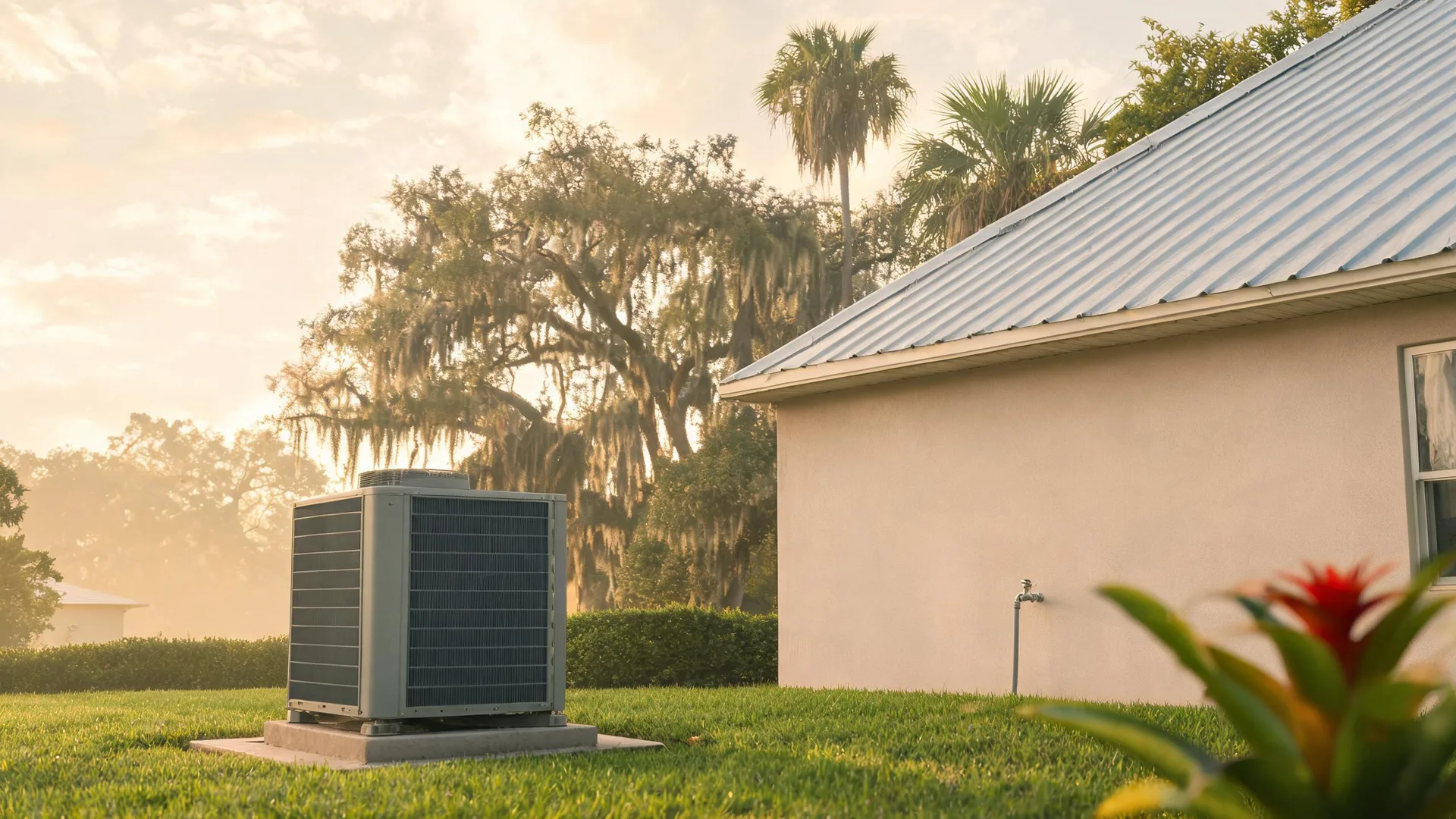
A gray heat pump outdoor unit mounted on a concrete pad next to a residential house with lap siding and stone accents.

What gets checked with the panels off

A tune-up starts with the panels off, which is the only way to see what the cabinet hides. Inside, a contractor checks refrigerant pressure against what the system calls for. Too little and the compressor works harder to move the same heat, too much and it floods back liquid that the compressor was never built to handle. Either way shows up on a gauge long before it shows up as a breakdown. The reversing valve gets tested too, since that's the part that switches the system between heating and cooling, and a sticking valve can leave you stuck in one mode without ever throwing an obvious fault. Electrical connections get checked for corrosion and loose lugs, because a connection that's heating up quietly under a wire nut is one that eventually fails outright. None of that is visible from outside, and none of it waits for a season to go wrong.

Short cycling means something's wrong already

A heat pump that kicks on, runs a few minutes, then shuts off before the house feels any different is losing the fight somewhere. A dirty coil, a weak capacitor, low refrigerant charge, any of those can cause it. Left alone, the constant starts wear on the compressor faster than steady running ever would.
Ice that doesn't melt on its own

A heat pump in defrost mode will carry a little frost sometimes, that's normal. What's not normal is a coil still iced over an hour after the unit shuts off, or ice building on the lines running to the house. That points to a defrost control that isn't switching the system back, or airflow across the coil that's been choked off for a while.

Skip enough years and the coil does its job with a layer of dirt sitting on it, which means it can't give up heat the way it's supposed to. The system answers by running longer to reach the same setpoint, and the compressor takes the brunt of that extra run time. A weak capacitor that would've been caught in a quick check instead gets left in until it fails outright, usually on the day you need the system most. Refrigerant charge drifts low from a slow leak nobody was looking for, and the compressor keeps working against a charge it was never designed to run on. None of this announces itself. The house still heats, the house still cools, right up until the compressor itself goes, and that's the one part in the whole system nobody wants to see fail.

A tune-up also covers the parts that don't fail so much as wear down a little every year. Belts aren't part of it, a heat pump's motors drive the fan and compressor directly, but the bearings in those motors still need checking, and a motor running rough gets caught here before it seizes. The filter gets pulled and looked at, since a clogged one starves the coil of airflow no matter how clean that coil is otherwise. Condensate drains get cleared too, because a line that backs up doesn't just drip, it can shut the system down on purpose to keep from overflowing. The outdoor fan blade gets checked for cracks and the contactor points get checked for pitting, both small things that either spin smoothly or don't. A contractor also confirms the thermostat is calling for the right mode and the system is answering it, which sounds obvious until it's the thing that wasn't checked.