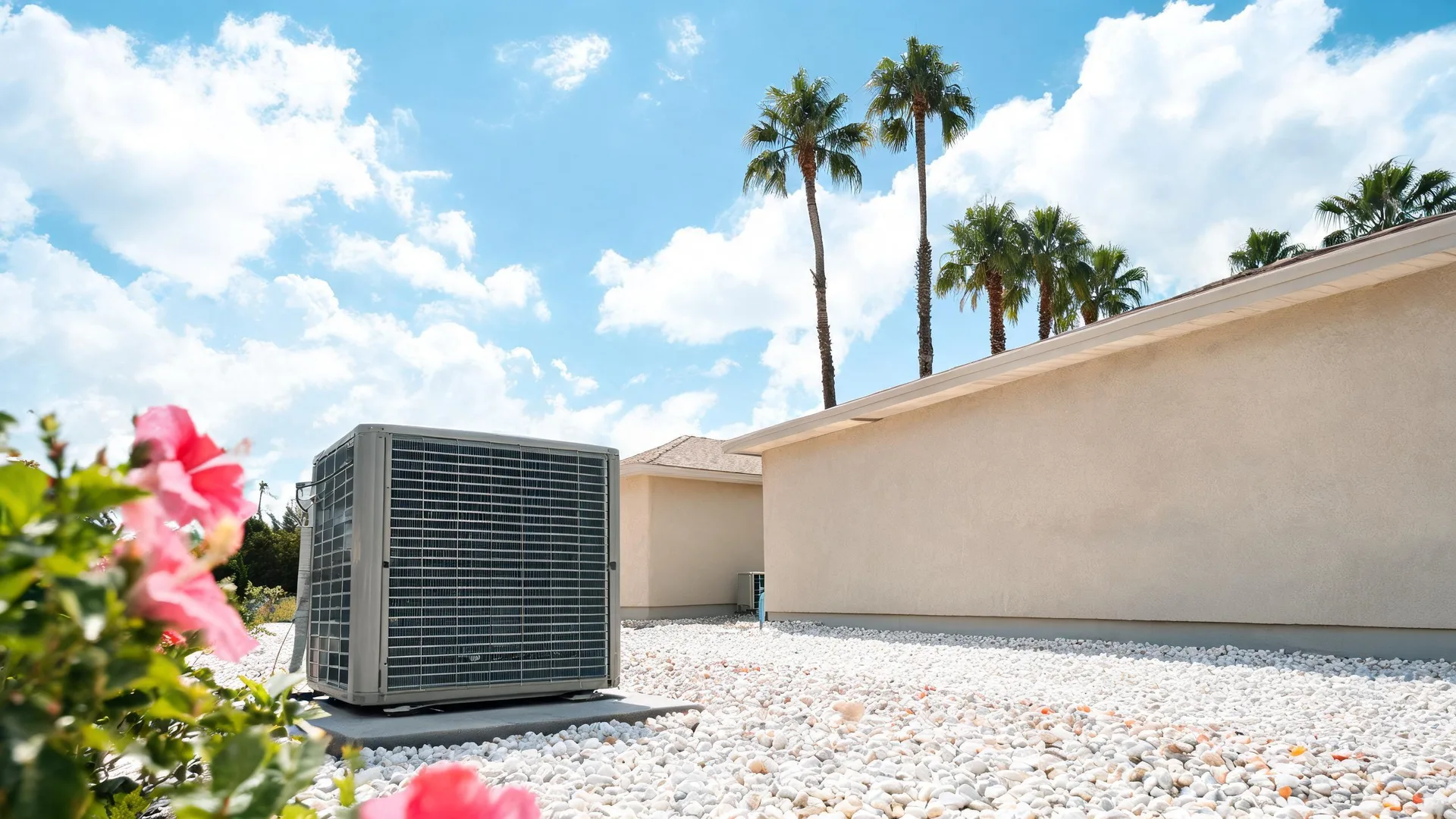
A quick visit is a glance and a filter swap. A thorough one has the tech pulling the covers off both the indoor and outdoor units to check the coils for dirt and buildup, since a dirty coil makes the whole system work harder and move less heat. They should check refrigerant pressure against the manufacturer's spec, not just glance at a gauge, because a heat pump running low won't heat or cool properly in either direction. The reversing valve gets tested too, since that's the part that switches the system between heating and cooling, and a sticking valve is easy to miss until the season it's needed most. A real tune-up also means checking the electrical connections and capacitor, tightening what's loose, and clearing the condensate drain so it isn't backing up. If the tech is in and out in a few minutes with nothing opened up, that's a filter change, not a tune-up.
Kershaw County saw damaging wind 116 times between 2015 and 2024.
A heat pump that gets checked once a year is less likely to fail when a storm knocks the power out and brings it back hard.
Half the homes in Kershaw County were built since 1993, so most heat pumps here haven't had decades to wear out
Half the homes here were built by 1993116 damaging wind events from 2015 to 2024Power costs 14.23 cents a kWh statewide
Cooling starts in May here, so April is the month to have a heat pump looked at. Heat starts in November, so October is the other. Both months come right before the system has to carry the full load, not after. A reversing valve that sat idle all summer should get tested before the first cold night asks it to switch, not after it fails to. The same goes for refrigerant charge and the coils before the first hot week in May. A newer system still benefits from this timing, since the parts that fail first, like a valve or a capacitor, don't fail from age so much as from sitting unused and then getting asked to work hard without warning.
A system built with the house in 1993 or later still has plenty of working life ahead of it, and a yearly check is what keeps it on track to use all of that. Catching a weak capacitor or a coil going dirty early means it gets fixed before it turns into a compressor replacement. That's the difference an annual visit makes over years of running, not just the next hot week.
A dirty filter is the whole problem, most of the time
Airflow is what a heat pump moves, and the filter is what chokes it. A clogged filter starves the indoor coil, and a starved coil can ice over even when it's running in cooling mode. Ice on the coil blocks airflow further, so the system works harder for less heat or cooling and the compressor runs under stress it wasn't built for. Swapping the filter is the easiest thing to check and the easiest thing to put off, which is why it causes more trouble than parts that actually break.
The drain line decides where the water goes
A heat pump pulls moisture out of the air during cooling, and that water has to leave through the condensate drain. Let the drain clog with algae or dirt and the water backs up into the pan, then past it, which means a wet ceiling or a soaked subfloor instead of a line running outside like it should. A coil caked with dirt causes the same slowdown as a dirty filter, just further along, and it has to be cleaned by hand since no filter catches what settles directly on the coil fins.
Between visits, the filter is the main thing worth your attention. Check it monthly and swap it when it looks gray or clogged, since that one part controls how hard the system has to work. Keep the area around the outdoor unit clear too. Leaves, grass clippings and anything piled against it blocks airflow across the coil the same way a dirty filter does. After mowing nearby, take a look and brush off any clippings stuck to the fins. If you notice ice building up on the outdoor unit when it should be running clean, or water pooling near the indoor unit instead of draining away, that's not something to wait on. Those are signs worth a call between scheduled visits, not something a filter change will fix.
A tune-up is also when the tech checks what the system can't tell you by running. Refrigerant charge gets checked against the spec, not eyeballed, since a heat pump can run low for a long time before it stops heating or cooling well enough to notice. The reversing valve gets cycled both ways to make sure it actually switches clean, not just that it switches. Electrical connections get tightened, since a loose one heats up and wears out the part it's feeding power to. The condensate drain gets cleared before it's clogged, not after water shows up somewhere it shouldn't. None of this shows up from outside the cabinet, which is the whole reason it has to be done by hand, once a year, instead of waited on until something fails.