





Night view of illuminated white Southern-style houses with wraparound porches beneath Spanish moss-draped oak trees.

Heat Pump Maintenance in Abbeville, SC

Tell us about the job

Takes about a minute. No obligation.

Tune-up, service, or cleaningHeat PumpAbbeville County, SC
Step 1 of 2

What ZIP code is the job in?

A heat pump in Abbeville switches over in May and starts working through the heat right away. October is the better time to have it checked, not May. The same system has to cover heating too, from November through March, so a tech looking at it in October can catch something before it's pulling double duty the other way in a few weeks. There's no rush job during the first hot week or the first cold snap that way. Set the check for October and the rest of the year takes care of itself.

A quick visit checks the thermostat and calls it done.

A thorough one pulls the panel, checks refrigerant pressure, and tests the reversing valve before the heat pump has to switch modes.

A heat pump here doesn't need more than one good check a year

Half the homes here were built by 1980
Climate zone 3A
Power costs 14.23 cents a kWh statewide

Between visits, the filter is the one thing worth checking yourself. Pull it out, hold it up to the light, and if you can't see through it, swap it or rinse it depending on the kind you have. A dirty filter makes the system pull harder to move air, and that shows up as longer run times or a unit that struggles to catch up on the coldest or hottest days. Outside, keep the area around the outdoor unit clear. Leaves, grass clippings and anything piled against the cabinet block airflow across the coil, and a heat pump that can't breathe runs harder than it should. Inside, if you notice ice building up on the outdoor unit when it should be in defrost, or the air coming from the vents feels wrong for the mode it's in, that's worth a call rather than something to wait out.

Book it before the season

It starts running hard in the first month of the season here. Book the check the month before.

Find a contractor
A man in a dark long-sleeved shirt and olive work pants carries a canvas tool bag up steps toward a blue-gray front door of a shingled house, with a potted shrub beside the entry.
A dark gray heat pump unit mounted on a concrete pad next to a house with gray siding and a stone veneer wall.

What's wearing out quietly, before it fails loudly

A reversing valve that's starting to stick doesn't always announce itself. It'll still switch most of the time, so the system keeps heating and cooling well enough that nobody notices anything's wrong. A tech checking it off the system can feel the hesitation, or catch the pressure reading that's just slightly off from where it should sit. Same with a contactor that's pitted from wear. It still closes the circuit every time you ask it to, right up until the day it doesn't. Refrigerant charge is another one. A system that's lost a little runs fine on a mild day and only falls behind when it's working hardest, which is exactly when you don't want to find out about it. None of this shows up as a strange noise or a bad smell. It shows up as a number on a gauge, or a part that moves a little slower than it should, and that's the whole reason to have someone look before the system has to lean on itself.

A noise that wasn't there before is worth mentioning

A heat pump makes the same sounds every cycle once it's running right. A click on startup, a hum while the outdoor fan spins up, then quiet operation after that. If it's suddenly louder, or a new rattle or squeal shows up partway through a cycle, that's a change worth having someone listen to, not just live with.
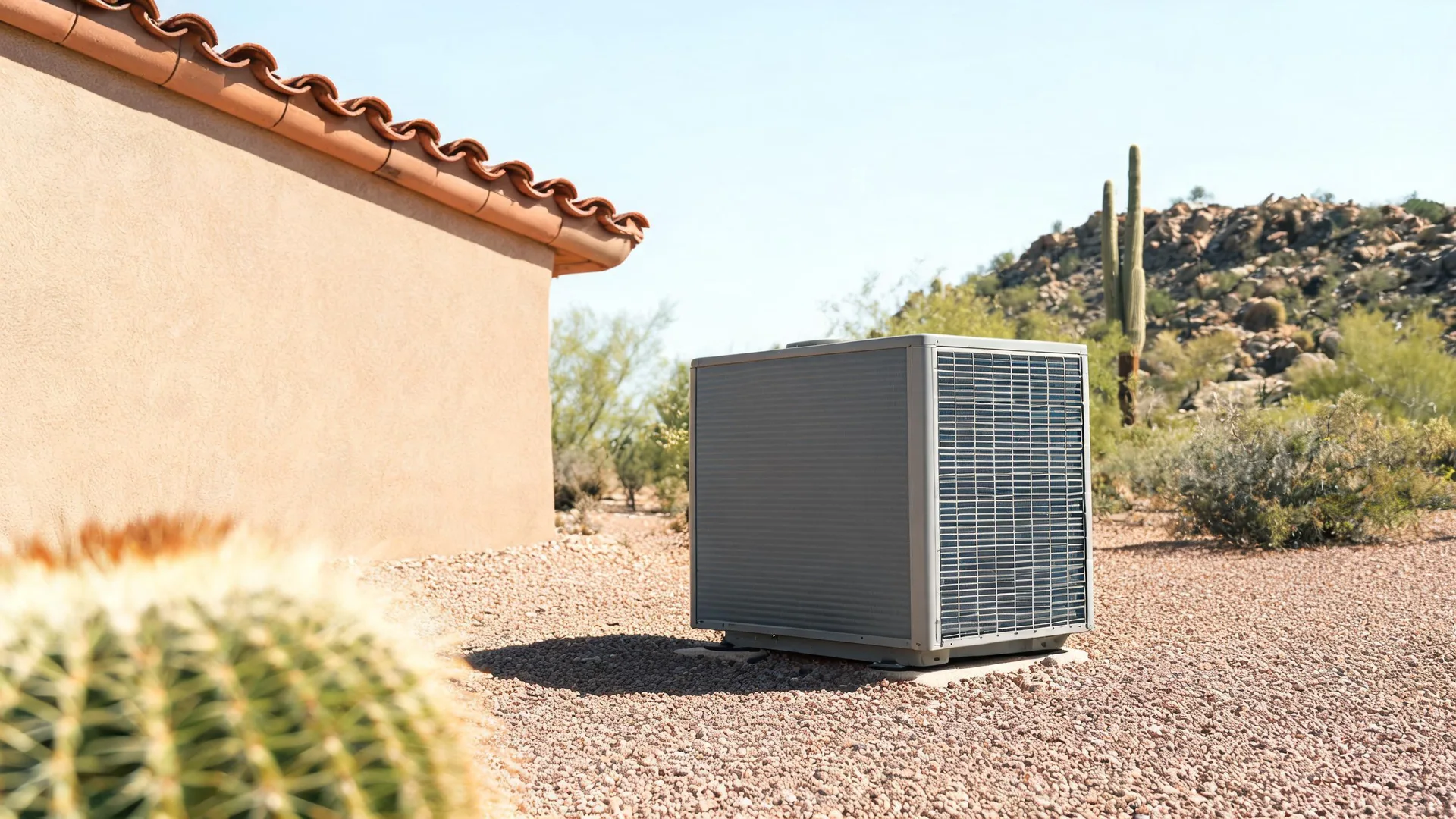
The outdoor unit tells you things if you look

Ice on the coil outside when it shouldn't be there, a fan that looks like it's spinning slower than it used to, or a cabinet that's started vibrating against its pad are all things a glance will catch. None of them stop the system from running. They're just signs something underneath has shifted, and they're easier to deal with before they turn into a repair.

The coil is where the heat pump actually moves heat, and dirt on it works like a blanket. A coil caked with dust or pollen can't transfer heat the way a clean one does, so the system runs longer and still falls behind. The condensate drain matters just as much, especially in cooling mode, where the coil pulls moisture out of the air and needs somewhere for it to go. A clogged drain backs water up into the pan, and from there it can trip a safety switch that shuts the system down or, worse, overflow where it shouldn't. None of this is dramatic on its own. A little dust, a little algae in the drain line, nothing that announces itself, but together they're most of what turns a fine system into one that struggles.

A proper tune-up starts outside, with the tech pulling the cabinet apart far enough to see the fan motor and the coil, not just glancing at the unit from a few feet away. Refrigerant pressure gets checked against what the system is supposed to run at, not just whatever number shows up on the gauge. The reversing valve gets tested in both directions, since that's the part most likely to get skipped when someone's rushing. Electrical connections get checked for looseness and corrosion, because a connection that's slowly failing puts more load on the parts around it. The contactor and capacitor get looked at directly, not assumed fine because the system happens to be running that day. Airflow gets measured, not eyeballed, since a system can look like it's blowing fine and still be moving less air than it needs. None of this takes long when nothing's wrong. It takes longer when something is, which is the point of doing it before the system has to prove itself on its own.