




An outdoor heat pump unit mounted on a concrete pad in front of a two-story suburban house with a landscaped lawn.

Heat Pump Installation in Walterboro, SC

Tell us about the job

Takes about a minute. No obligation.

New system or replacementHeat PumpColleton County, SC
Step 1 of 2

What ZIP code is the job in?

Electricity in South Carolina ran 14.23 cents per kilowatthour in 2024, cheaper than a lot of the country. That changes the math on a heat pump. The highest efficiency model on the lot will cost more up front and take longer to earn that back here than it would somewhere with pricier power. So the question worth spending time on isn't which unit has the best rating. It's which one holds up and keeps running when a storm knocks the power out for a while, since that happens here more than most places.

5 months
November through March, your system heats
6 months
May through October, it cools
38°F
the average winter night it heats against
90°F
the average summer afternoon it cools against
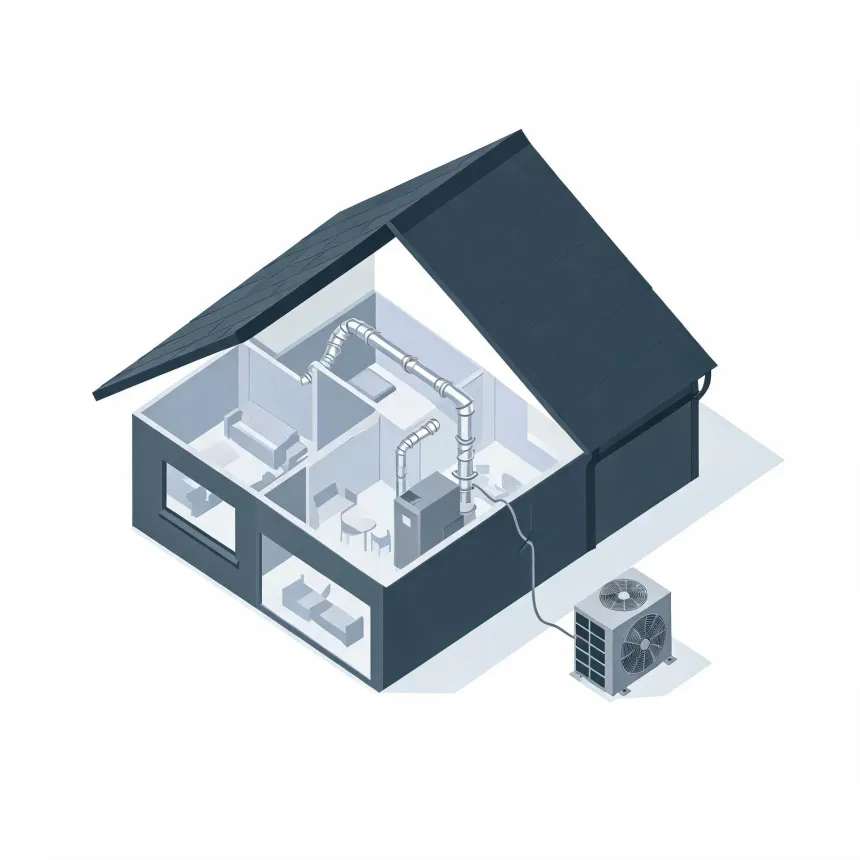
Isometric illustration of a cutaway house showing interior rooms with furniture, a furnace and ductwork, connected by a line to an outdoor condenser unit on the ground outside.
Your system heats November through March and cools May through October.

NOAA nClimDiv, 1991–2020 normals

The old unit stays running right up until the new one takes over, so there's no stretch without heat or cooling.

Removal happens after the new heat pump is holding charge and cycling on its own, not before.

October is the month to put in a heat pump here, before it has to carry the first cold night

Cooling runs May through October
Heat runs November through March
561 damaging wind events from 2015 to 2024

Walterboro sits in climate zone 3A, which the energy code treats as warm, with long summers and a short, mild winter. Any split-system heat pump installed here has to clear 14.3 SEER2 for cooling and 7.5 HSPF2 for heating if it was built after the start of 2023. That's a federal floor, not a local one, so it narrows the lot to units already built for a cooling-heavy climate rather than a cold one. A federal tax credit is available on top of that for systems that qualify, separate from whatever the power company charges per kilowatt-hour. The rating on the sticker tells you the unit clears the minimum. It doesn't tell you how it holds up once the power's been out for a few hours.

Most homes here already run on electric heat, so a heat pump is the natural next step

Almost 8 in 10 homes in Colleton County heat with electricity already. A heat pump fits right into that setup, no new fuel line, no new venting, just a different unit doing the same job your electric furnace or baseboard does now. That's what makes this the straightforward swap for most houses here.

Find a contractor
A gray air-source heat pump mounted on a concrete pad next to a house with gray vinyl siding, surrounded by gravel and flanked by green shrubs and white hydrangea flowers.

This unit runs most months and takes the wind the rest

A heat pump here runs on the cooling side most of the year and switches to heat for the short, mild stretch Walterboro calls winter. That's work nearly every month, not just a few weeks. The running hours aren't the only thing wearing on it. Colleton County has taken damaging wind 561 times between 2015 and 2024, and the outdoor unit sits through every one of those, exposed, while the rest of the system keeps cycling. A unit picked for the number on its sticker doesn't have to prove anything beyond that number. One that holds up here does.

Ask what happens at low load

A heat pump spends most of its time running at a fraction of its full capacity, not flat out. Ask whether the compressor can actually throttle down to match that, or whether it only knows on and off. A unit that can't scale down short cycles, and short cycling wears the compressor and leaves the house less comfortable than one sized right and running steady.

Ask how the outdoor unit is mounted

The outdoor unit takes the weather every day it runs, which is nearly all of them. Ask what the pad or mount is rated for and how the installer anchors it down. A unit that rocks or shifts on its base stresses the refrigerant lines and the electrical connections long before the compressor itself gives out.

The SEER2 and HSPF2 numbers on the label come from a lab test, run with the system new and clean under one fixed set of conditions. That number tells you how efficiently the unit can move heat when everything's in its favor. It doesn't tell you how the same unit performs on a day harsher than the test used, or after the coil's gone a while without a cleaning. Units with the same rating can still behave differently once they're mounted outside and tied into the ductwork already running through the house. The rating is a starting point for comparing equipment against equipment, not a promise about what the power bill will look like. How the installer sizes the unit to the house, and how tight the ducts are, matters just as much as what's printed on that sticker.

Installation day starts with the old system still in place. The crew disconnects it, pulls the indoor and outdoor units, and checks the line set and ductwork against what the new heat pump needs before anything goes back in. If the line set is being reused, it gets flushed or replaced, since residue left behind can damage a new compressor fast. The new outdoor unit goes on its pad, the indoor coil or air handler goes in, and the refrigerant lines get connected, pressure tested, then evacuated to pull out moisture and air before any refrigerant goes in. Once it's charged, the crew runs it, checks the pressures and temperatures against what the manufacturer specifies, and confirms the thermostat is talking to the right system. A job isn't done when the unit turns on. It's done when it's been watched through a full cycle and the numbers hold where they should.