






Single-story houses, one brick and one with light siding, both with covered porches, behind a mowed lawn and trimmed hedge, under large moss-draped oak branches.

Heat Pump Installation in Spartanburg, SC

Tell us about the job

Takes about a minute. No obligation.

New system or replacementHeat PumpSpartanburg County, SC
Step 1 of 2

What ZIP code is the job in?

That yellow efficiency tag on a heat pump tells you how much heat it moves for the power it uses, nothing more. A higher rated unit pulls more heat out of the outside air per watt of electricity, so it costs less to run than a lower rated one of the same size. But that rating comes from a lab test, not from your ductwork, so the number on the sticker only tells part of the story. A unit sized wrong for the home will hit the thermostat setting fast and shut off before it pulls the moisture out of the air, no matter what the tag says. Installation decides as much as the rating does. A correctly sized unit, set up by someone who worked out the load for that house, will outperform a higher rated one that was installed carelessly.

7 months
October through April, your system heats
5 months
May through September, it cools
33°F
the average winter night it heats against
88°F
the average summer afternoon it cools against
Isometric illustration of a cutaway house showing interior rooms, ceiling ductwork and an air handler, connected by lines to an outdoor condenser unit on a pad beside the building.
Your system heats October through April and cools May through September.

NOAA nClimDiv, 1991–2020 normals

Electricity in South Carolina ran 14.23 cents per kilowatthour in 2024, cheaper than most of the country.

A top-tier heat pump takes longer to earn back its price here, so picking the right size and a good installer matters more than chasing the highest rating.

Most homes in Spartanburg County already run on electricity

67.7% of homes heat with electricity
125 damaging wind events from 2015 to 2024
53 hail events from 2015 to 2024

Spartanburg County falls in zone 3A, a warm climate where summer runs long and winter stays mild. A heat pump built for this zone will carry the county's heating load on its own, without leaning on backup strips when it gets cold. That's reason enough to skip the top of the efficiency line and skip oversizing too. A correctly sized, mid-range heat pump will keep up with what this county asks of it, summer and winter both. Put the extra money into correct installation instead. That's what decides how the system runs here, not a higher number on the tag.

Spartanburg systems have to clear a higher bar. A federal credit helps cover one that does.

Any heat pump installed here now has to meet 14.3 SEER2 and 7.5 HSPF2 at minimum, and central air systems below 45,000 Btu/h have to hit that same 14.3 SEER2 mark, a higher bar than the rest of the country. That narrows what a contractor can put in, but it also means the baseline unit already meets a real standard. A federal tax credit is available on top of that for units that qualify. Get the sizing and installation right and a system at this minimum will do the job here.

Find a contractor
A man in a cap, dark t-shirt and worn tan work pants walks up steps toward a dark front door, carrying a canvas tool bag filled with tools, beside a potted shrub.
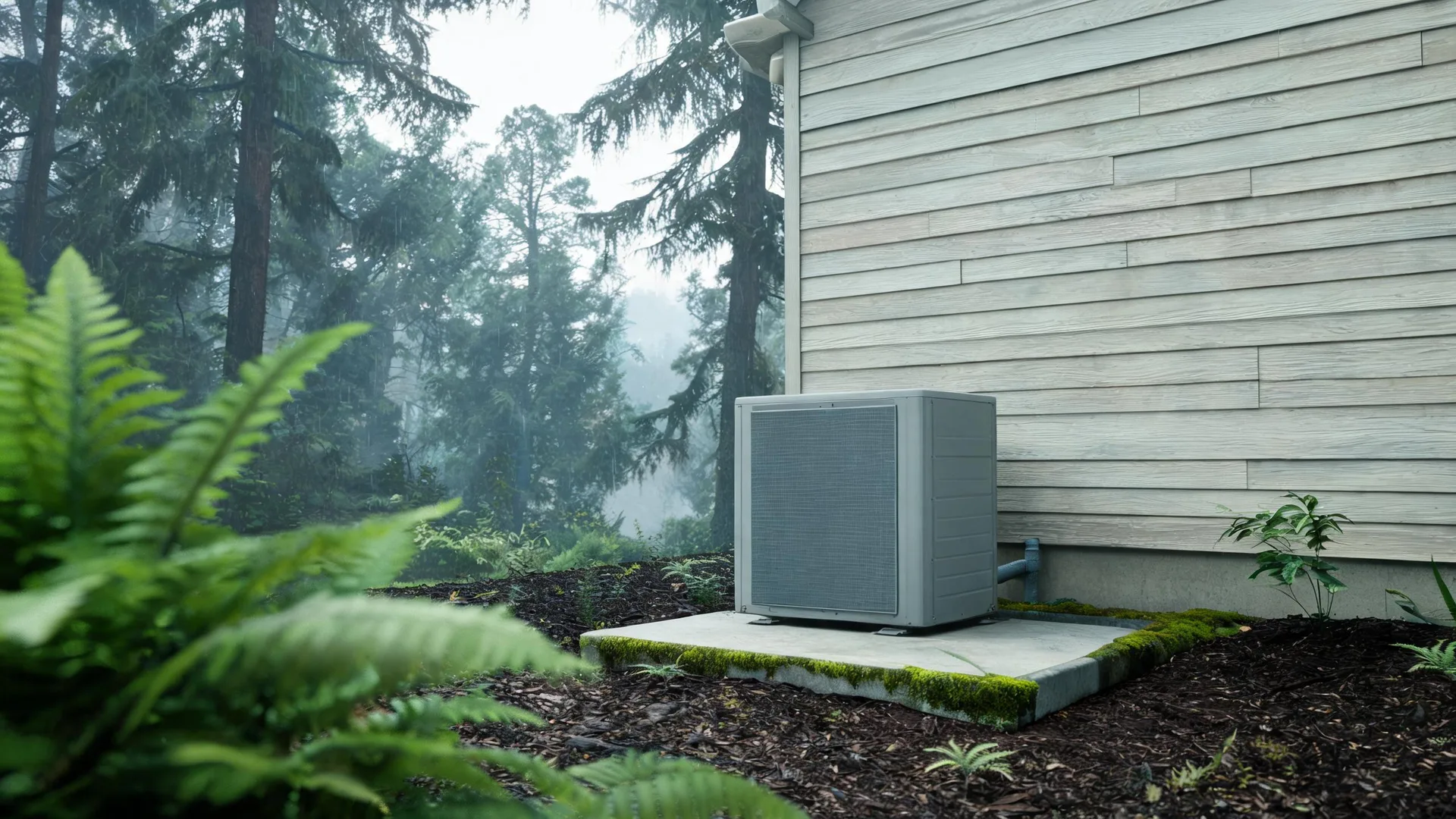
A gray heat pump outdoor unit mounted on a concrete pad next to a residential house with lap siding and stone accents.

This runs most months of the year, so get it installed before it has to

This heat pump will run nearly year round here. Heating from October through April, seven months, then cooling picks up in May and holds through September. That leaves April and September as the only real breaks, and even those months can call for one or the other on a cold snap or an early heat wave. A system that works that many months benefits from going in before either season starts, so the sizing and the ductwork get checked without anyone waiting on it to get warm or cold first.

Ask what manual the contractor used to size it

A load calculation looks at square footage, insulation, windows and duct layout to figure the actual heating and cooling load of the house. A contractor who sizes off the old unit's nameplate or a rule of thumb is guessing. Ask to see the numbers, not just the final tonnage.
Ask what happens to the ductwork before the new unit goes in

A heat pump moves a different volume of air than a furnace or straight AC did, and leaky or undersized ducts will choke that airflow no matter how good the unit is. Ask whether the ducts get tested or inspected as part of the install, not just connected to the new equipment and left alone.

Sizing a heat pump means working out how much heat the house loses in winter and gains in summer, room by room, then matching the equipment to that number. A contractor does this with a load calculation, weighing wall and ceiling insulation, window area and orientation, and duct layout against each other, not by copying the tonnage off the unit being replaced. Go too big and the unit satisfies the thermostat in short bursts, so it never runs long enough to pull humidity out of the air, and it cycles on and off more than it should, which wears on the compressor. Go too small and it runs constantly without catching up on the coldest or hottest days, leaning on backup heat strips more than it needs to. The right size runs in longer, steadier stretches, which is what actually keeps a house comfortable and keeps the system from wearing out early.

Installation day starts outside, not with the new unit going in. The old outdoor unit and indoor coil come out first, and the line set connecting them usually comes out too, since reusing old refrigerant lines on new equipment risks contamination and the wrong oil mixing with the wrong refrigerant. The electrical whip and disconnect box get checked against what the new heat pump actually draws, since a heat pump can call for different amperage than what was there before. Once the new outdoor unit is set on its pad and the indoor coil is in place, the lines get connected, pressure tested for leaks, then pulled into a vacuum to clear out air and moisture before any refrigerant goes in. After that the contractor charges the system to the exact weight the manufacturer specifies for that line length, checks airflow at the vents, and sets the thermostat to match the equipment. None of this is quick work done well. A system rushed through any one of these steps will run, but it will not run the way the rating on the box said it would.