





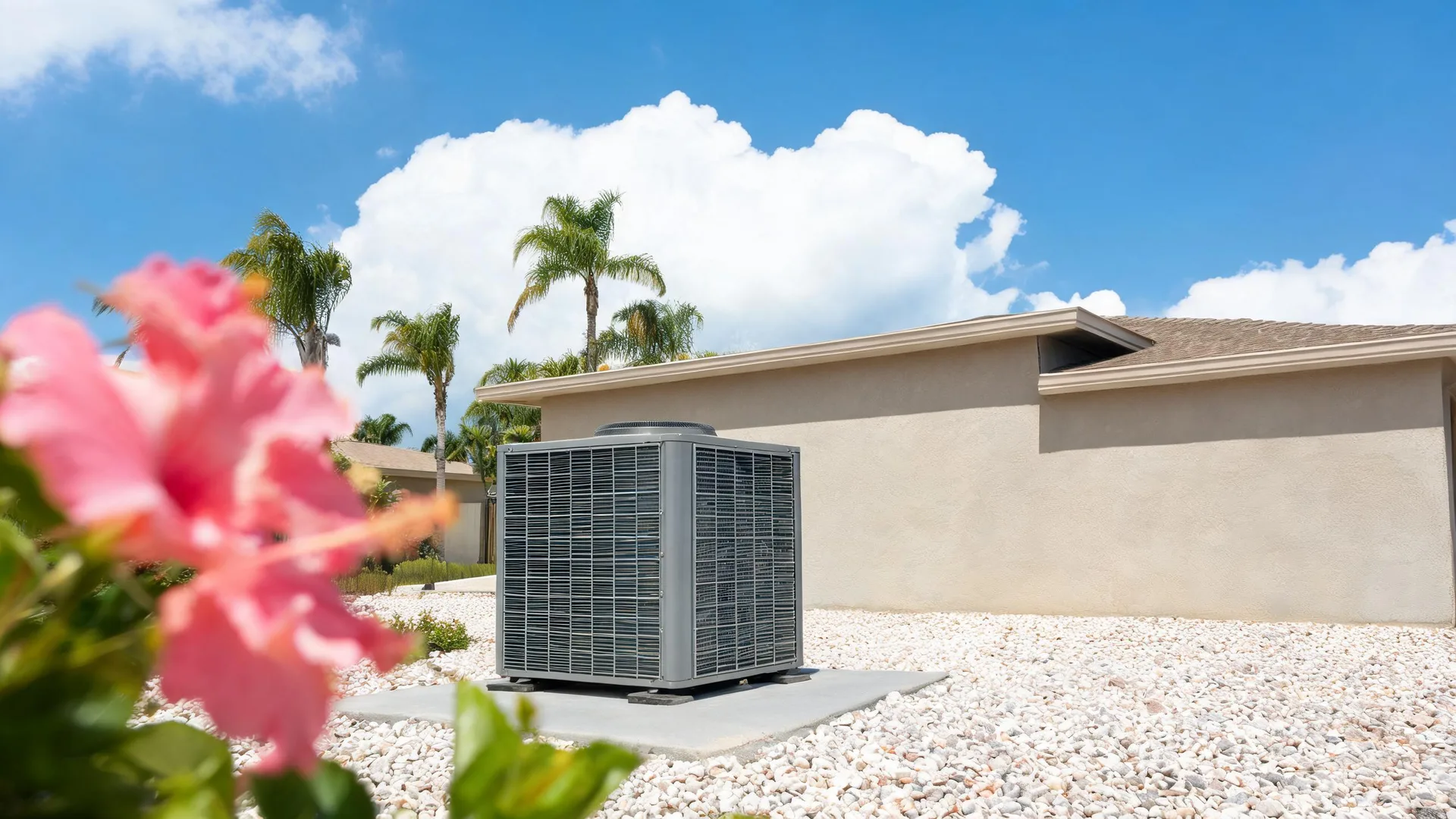
An outdoor air conditioning condenser unit mounted on a concrete pad in front of a single-story suburban house.

Heat Pump Installation in Seneca, SC

Tell us about the job

Takes about a minute. No obligation.

New system or replacementHeat PumpOconee County, SC
Step 1 of 2

What ZIP code is the job in?

Ask what size unit they're proposing, and ask how they got that number. A heat pump that's too big will cycle on and off instead of running steady, and that short cycling wears on the compressor. The contractor should walk through your house, not just measure the old equipment and match it. Ask about the ductwork too. A new heat pump pushing air through old, leaky or undersized ducts won't heat or cool the way it's rated to, no matter how good the equipment is. Ask what happens on the coldest days, since heat pumps lose capacity as the temperature drops outside, and find out whether the system has backup heat strips or relies on something else to cover the gap.

7 months
October through April, your system heats
5 months
May through September, it cools
33°F
the average winter night it heats against
87°F
the average summer afternoon it cools against
Isometric illustration of a cutaway single-story house showing interior ductwork and an air handler connected by lines to an outdoor condenser unit on a pad beside the building.
Your system heats October through April and cools May through September.

NOAA nClimDiv, 1991–2020 normals

Most homes in Oconee County already run on electric heat.

A heat pump replacing that setup is working with wiring and ductwork already built for it.

Electricity here runs 14.23 cents a kWh, cheaper than a lot of the country, so a heat pump earns its keep more through reliability than through savings on the power bill.

Power costs 14.23 cents a kWh statewide
92 damaging wind events from 2015 to 2024
37 hail events from 2015 to 2024

Oconee County has logged 136 severe weather events between 2015 and 2024, with damaging wind and hail among the most common. A heat pump's outdoor unit sits outside year-round, so where it goes matters. Keep it clear of tree limbs and anything loose that could come down in high wind, and ask the contractor about a cover or cage for hail. Power cuts are common here too, and a heat pump needs electricity to run, for both heat and air conditioning. If you want a way to keep the system going through an outage, ask about backup power options before the install, not after one hits.

Like for like is simple here

Most homes here already use this type of system, so like for like is the simple path.

Find a contractor
A gray outdoor HVAC unit mounted on a concrete pad beside a house with gray lap siding and a stone foundation.

It won't be worked hard here

Winters here are short and mild, overnight lows averaging 33°F in December and January, so a heat pump spends most of its time on the cooling side, not straining against deep cold. That's a lighter load than a lot of the country asks of one. Less strain means a repair is usually worth making rather than a sign the unit is done. It also means age and upkeep matter more here than hard use does, so when something does go wrong, it's rarely because the system was pushed past what it's built for.

The old unit has to come out whole

A heat pump has refrigerant sealed inside its lines, and that refrigerant has to be recovered by a licensed contractor before anything gets disconnected. It can't be vented or dumped. That's not optional and it's not a quick unbolt job, so factor it into the timeline for the swap.
The pad and lines usually stay

If the new heat pump is going in the same spot as the old one, the concrete pad, the line set, and sometimes the electrical whip can often be reused. A contractor will check the line set diameter against what the new equipment calls for before reusing it, since the wrong size line hurts efficiency even with new equipment on both ends.

Sizing a heat pump comes down to a room by room heat loss and heat gain calculation, not a guess based on square footage. A contractor measures window area, wall and ceiling insulation, orientation to the sun, and how much air leaks in and out, then works out how much heat the house loses on a cold day and gains on a hot one. That number tells you what capacity the equipment actually needs. Skip that step and you end up with a unit sized off the equipment it's replacing, which only works if the old one was sized right in the first place. Oversizing causes short cycling, where the system satisfies the thermostat fast and shuts off before it's run long enough to dehumidify the air or distribute heat evenly. Undersized equipment runs constantly and still can't keep up on the coldest or hottest days. The right size runs longer, steadier cycles, which is both more comfortable and easier on the compressor.

Installation day starts with the old equipment coming out and the refrigerant recovered, then moves to whatever's changing underneath, the pad, the line set, the electrical whip. Once the new outdoor unit and air handler are set, the contractor connects the line set, pulls a vacuum on it to clear out air and moisture, then charges it with refrigerant to the weight the manufacturer specifies. That vacuum step matters more than it sounds. Any moisture left in the lines mixes with refrigerant and forms acid that eats away at the compressor over time. After charging, the contractor checks airflow at the vents, sets the thermostat, and runs the system in both heating and cooling to confirm it's pulling the right temperature split between the air going in and the air coming out. A combustion appliance doesn't enter into any of this. A heat pump moves heat rather than burning fuel to make it, so there's no flue, no gas line, no carbon monoxide check to run, just the electrical connections and the refrigerant circuit.