





White plantation-style houses with wraparound porches lit at night, surrounded by Spanish moss-draped live oak trees.

Heat Pump Installation in Rock Hill, SC

Tell us about the job

Takes about a minute. No obligation.

New system or replacementHeat PumpYork County, SC
Step 1 of 2

What ZIP code is the job in?

The label on a heat pump lists a rating for cooling and a rating for heating. A higher number on either one means the unit moves more heat for the same amount of electricity. That matters most in spring and fall, when the pump runs long hours at partial load instead of short bursts at full power. Units with the same rated capacity can still cost different amounts to run, because the rating reflects how the compressor and coil perform across a range of conditions, not just at the extreme. It's a lab number, measured under set conditions. What you actually get depends on the ductwork it's tied into, whether the unit is sized right for the space, and whether it was installed and charged correctly. A high-efficiency unit that's undersized or poorly matched to the ducts will run all the time and still underperform a plainer unit that fits the house right.

7 months
October through April, your system heats
5 months
May through September, it cools
33°F
the average winter night it heats against
89°F
the average summer afternoon it cools against
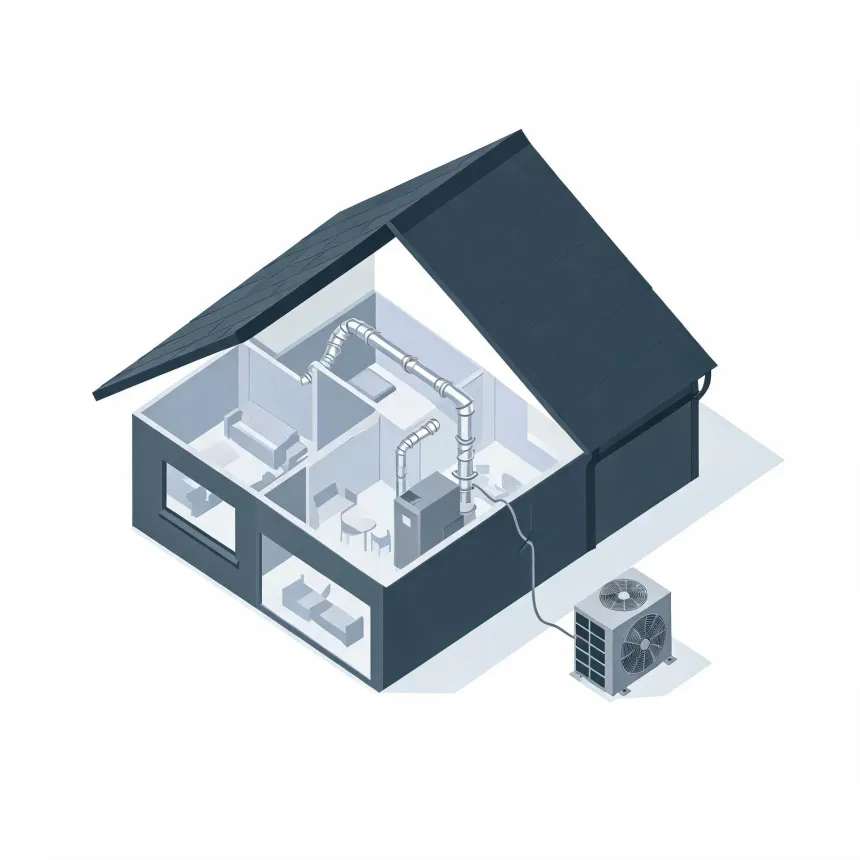
Isometric illustration of a cutaway house showing interior rooms with furniture, a furnace and ductwork, connected by a line to an outdoor condenser unit on the ground outside.
Your system heats October through April and cools May through September.

NOAA nClimDiv, 1991–2020 normals

Close to half of York County heats with electricity already.

A heat pump replacing an electric furnace or baseboard heat is swapping one electric system for another, with no new fuel line or gas hookup to plan around.

Power here runs 14.23 cents a kWh, so the payback on efficiency alone is slow

Power costs 14.23 cents a kWh statewide
78 damaging wind events from 2015 to 2024
34 hail events from 2015 to 2024

Heat runs here from October through April, about seven months a year. September is the month before it starts, and that's the window to get a heat pump installed. Wait until the first cold night and you're taking whatever unit the contractor has on the truck, not the one sized right for your house. A September install gives the contractor time to work out the duct match and the load calculation before anyone's cold. The same thing is true on the cooling side, just shorter. Homes here run cooling May through September, so April is the month to beat that deadline too.

Any new system here has to clear SC's minimum

Heat pumps installed here now have to hit 14.3 SEER2 for cooling and 7.5 HSPF2 for heating. That's the floor, not a selling point, and it narrows what a contractor can put on the truck. A unit that clears it may also qualify for the federal tax credit.

Find a contractor
A man in a dark shirt and brown pants carries a worn canvas tool bag up concrete steps toward a gray-blue front door of a house with horizontal siding and a potted shrub.
A gray air-source heat pump mounted on a concrete pad next to a house with gray vinyl siding, surrounded by gravel and flanked by green shrubs and white hydrangea flowers.

The old equipment doesn't stay behind

Whatever is running now gets disconnected, not folded into the new system. A heat pump doesn't pair with an old furnace or an old condenser left in place, so that equipment comes out. If the old unit used a different refrigerant, the lines get flushed or replaced rather than reused, because the oils and refrigerants don't mix. The old thermostat usually can't run a heat pump correctly either, since it doesn't know how to manage a reversing valve or backup heat strips, so that gets swapped too. Scrap contractors generally take the old condenser for the metal and the copper in the coil. Anything holding old refrigerant has to be recovered properly before it's hauled off, not just cut open, since venting it is illegal. None of this is a reason to delay. It's just part of the same job, and a contractor doing the install should already have it priced in.

The load calculation decides the equipment list

A contractor has to work out how much heat the house loses in winter and gains in summer before pricing anything. That number decides tonnage, and tonnage decides which units are even options. Skip this step and you get a price for the wrong machine.

Ductwork either carries the air or it doesn't

A heat pump moves a different volume of air than a furnace or straight AC, often for longer stretches at lower speed. Ducts sized for the old system sometimes can't carry that properly, and resizing or adding runs is real labor, not a line item anyone can skip to save money.

Ask what happens below freezing, because every heat pump leans on backup heat strips or a dual-fuel setup once the outdoor coil can't pull enough warmth from the air. Ask how the contractor is sizing the unit, not just what size they're quoting. Different contractors can land on different tonnage for the same house, and the one who skipped the load calculation is guessing. Ask what refrigerant the unit uses, since older refrigerants are being phased out and that affects what parts and service look like down the line. Ask about the sound rating too. A heat pump runs longer and slower than a straight AC, and the outdoor unit sits there working through more of the year, so a noisy compressor is something you'll actually live with. Ask who's doing the startup charge and airflow check, because a unit that's right on paper still underperforms if it's not commissioned correctly.

Install day starts with the old equipment coming out, not the new unit going in. The condenser gets disconnected and the lines get drained before anyone touches the new coil. Inside, the air handler or furnace connection gets tied into the existing ductwork, and that's where delays usually show up. A duct run that looked fine on paper sometimes needs a collar resized or a return beefed up once someone's actually in the attic. The electrical side gets checked too, since a heat pump's outdoor unit draws differently than a straight AC condenser, and the breaker and disconnect have to match what the new unit calls for. Once everything's connected, the system gets charged with refrigerant to the manufacturer's spec, not just topped off by feel. Then comes commissioning. Airflow gets measured at the vents, the thermostat gets programmed for the reversing valve and backup heat, and the contractor runs the system in both heating and cooling mode before calling it done.