






Single-story brick and white-sided buildings with covered porches behind a trimmed hedge and lawn, framed by overhanging oak branches draped with Spanish moss.

Heat Pump Installation in Newberry, SC

Tell us about the job

Takes about a minute. No obligation.

New system or replacementHeat PumpNewberry County, SC
Step 1 of 2

What ZIP code is the job in?

Electricity in South Carolina ran 14.23 cents per kilowatthour in 2024, cheaper than most of the country. That changes the math on a heat pump. A higher efficiency model costs more up front, and here it takes longer to earn that back through lower bills. That doesn't make efficiency worthless, but it means the better reason to choose one unit over another is how well it holds up in a power cut and how it fits the house you have. Spend on reliability and the right size before you spend on the efficiency rating.

5 months
November through March, your system heats
5 months
May through September, it cools
34°F
the average winter night it heats against
91°F
the average summer afternoon it cools against
Isometric line illustration of a cutaway house showing interior rooms with furniture, ceiling ductwork connected to an indoor air handler, and a line running outside to an outdoor condenser unit.
Your system heats November through March and cools May through September.

NOAA nClimDiv, 1991–2020 normals

October is the month before heat pump season starts here.

Put the new system in before then and the first cold snap in November isn't the day you find out something's wrong.

A standard system, sized right, is all this county needs

Half the homes here were built by 1981
189 damaging wind events from 2015 to 2024
Power costs 14.23 cents a kWh statewide

Electricity heats 66% of homes in Newberry County, more than any other fuel, with gas a distant second at 25.9%. That matters here because a heat pump runs on the fuel most of this county already has in the house. There's no gas line to plan around and no new fuel service to bring in, just a changeout of the equipment itself. For the share of homes already on electric resistance heat or an older heat pump, this is a straight swap, not a conversion.

A system built for what this county throws at it

Newberry County saw damaging wind 189 times between 2015 and 2024. A heat pump here has to run through that, then keep running through the long stretch of summer heat that follows. Get the size right and pick a unit built to take it.

Find a contractor
A man in a cap, dark long-sleeved shirt and brown work pants walks up porch steps toward a gray front door, carrying a worn canvas tool bag filled with hand tools.
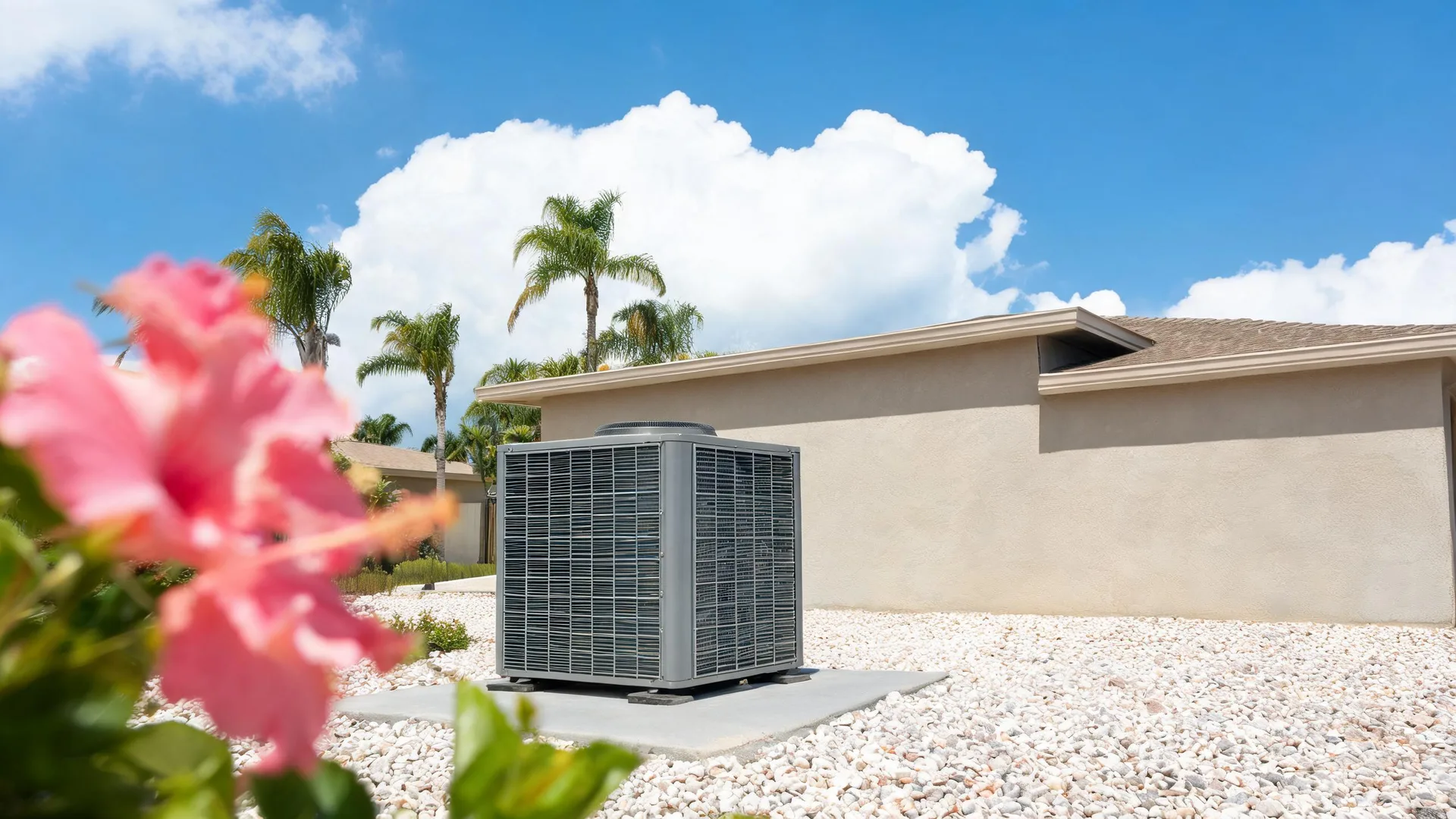
A gray outdoor HVAC unit mounted on a concrete pad beside a house with gray lap siding and a stone foundation.

Summer heat and storm recovery both lean on the same unit

A heat pump sized right for this house runs close to full tilt most of the summer here and still has to answer every time the power comes back after a wind event. That's two kinds of load stacked on one unit, year after year. Get the sizing wrong and the strain shows up sooner, in a compressor or a board that quits early. Size it to the house, not the budget, and that's one less thing working against it.

The rating is a lab number, not a promise

SEER2 and HSPF2 come from a test run under fixed conditions, not from your attic or your ductwork. A unit can carry a high rating and still run worse than it should if the refrigerant charge is off or the ducts leak. The rating tells you what the equipment is capable of, not what it will deliver in your house.
Cooling and heating get separate grades

SEER2 covers cooling, HSPF2 covers heating, and a heat pump needs both because it runs both directions. A unit with a strong cooling number and a weak heating number is built for summer and will lean hard on backup heat all winter. Check both before you compare units on price.

Sizing a heat pump starts with a load calculation, not a tape measure on the old unit. A contractor works out how much heat the house loses in winter and gains in summer by looking at wall and ceiling insulation, window area and orientation, and how much air leaks in and out. Go too big and the unit short cycles, hitting the thermostat setpoint fast and shutting off before it finishes pulling moisture out of the air, so the house feels cool but clammy. Go too small and it runs flat out on the hottest and coldest days and still falls behind, leaning on backup heat strips far more than it should. Either mistake wears on the compressor over time, because neither lets the system settle into the slow steady runs it's built for. The right size is the one that matches the house, not the one that matches what the old system happened to be.

Installation day starts with the parts of the job you won't see once it's done. The old outdoor unit comes out, the old indoor coil comes out, and if the line set or ductwork doesn't match what the new system needs, that gets addressed before anything new goes in. The refrigerant lines get connected, then pressure tested and pulled into a vacuum to clear out air and moisture before any refrigerant goes in. Electrical gets tied in to match what the new unit draws. Once it's running, a tech checks refrigerant charge against the manufacturer's numbers, checks airflow across the coil, and sets the thermostat up to run the heat pump correctly rather than treating it like a furnace with a switch. None of that shows up when you look at the unit sitting outside, but it decides whether the system runs the way the rating on the box says it should.