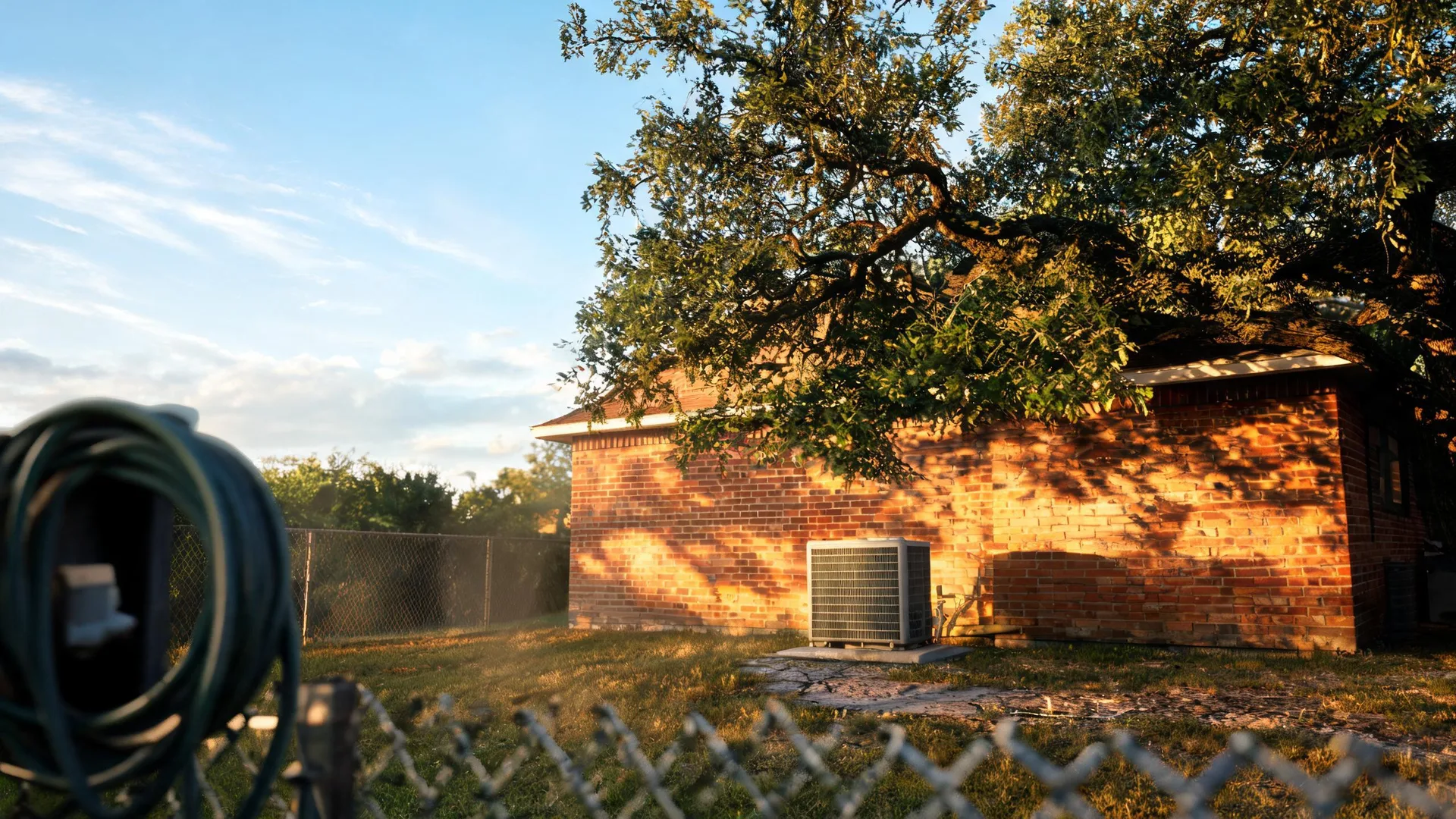
An outdoor HVAC condenser unit on a concrete pad in front of a two-story suburban house.

Heat Pump Installation in Lancaster, SC

Tell us about the job

Takes about a minute. No obligation.

New system or replacementHeat PumpLancaster County, SC
Step 1 of 2

What ZIP code is the job in?

The old equipment comes out

A contractor disconnects the refrigerant lines, the electrical whip and the ductwork or air handler connections, then removes the outdoor unit and the indoor coil or furnace. If the old system used refrigerant, that gets recovered into a tank rather than released, since venting it is not allowed.

The pad and lines usually stay

The concrete pad outside often gets reused if it is level and in good shape, and the existing line set can sometimes carry the new refrigerant if it is the right size and free of leaks. A contractor checks both before deciding what gets replaced and what gets kept.

5 months
November through March, your system heats
5 months
May through September, it cools
33°F
the average winter night it heats against
89°F
the average summer afternoon it cools against
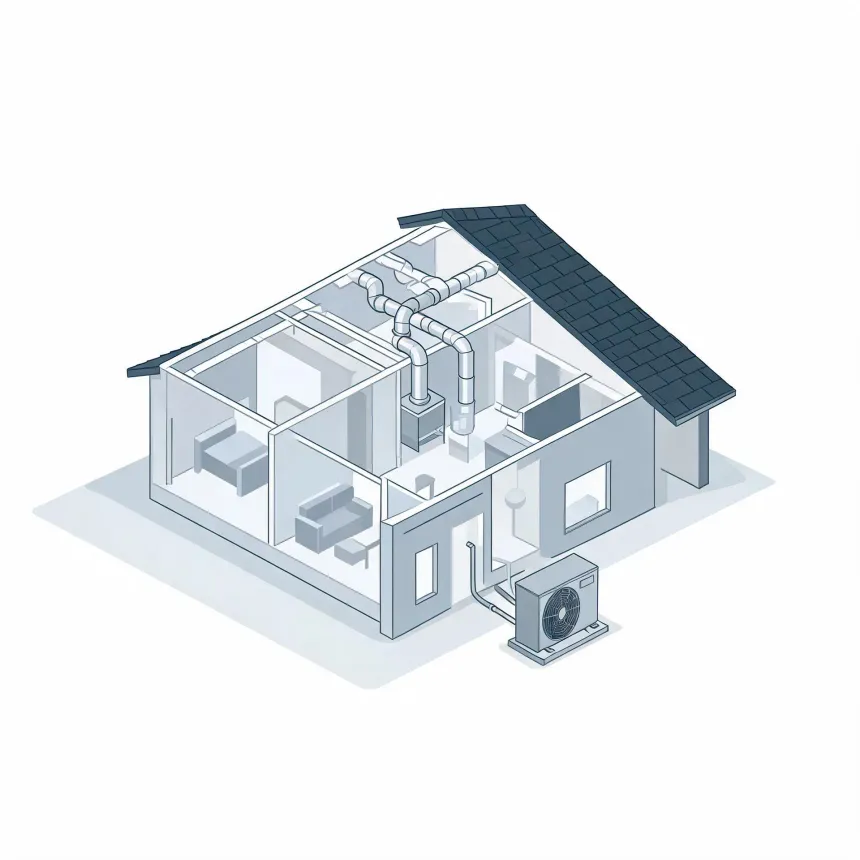
Isometric line illustration of a cutaway house showing interior rooms with furniture, ceiling ductwork connected to an indoor air handler, and an outdoor condenser unit linked by refrigerant lines.
Your system heats November through March and cools May through September.

NOAA nClimDiv, 1991–2020 normals

Electricity in South Carolina runs 14.23 cents per kilowatt-hour, below the national average.

A heat pump here earns back a high efficiency rating slower, so picking one for reliability in a storm matters more than chasing the lowest operating cost.

October is when Lancaster County gets a heat pump in before it has to earn its keep

Cooling runs May through September
Heat runs November through March
133 damaging wind events from 2015 to 2024
Most of Lancaster County heats with gasUtility gas heats 50.4% of homes here, electricity heats 46.3%

Since the payback on a top efficiency model stretches out here, it makes sense to put the money into the install instead. Ask what happens to a heat pump when the power comes back on after an outage, and whether it needs a backup heat source wired in for the nights it can't keep up. A contractor sizing the unit for this house should size it for the coldest night it has to handle, not the average one. The lowest bid on paper is not always the system that keeps running when a line goes down in a storm.

A new system here has to clear the region's efficiency minimum first

Any heat pump installed here now has to hit 14.3 SEER2 for cooling and 7.5 HSPF2 for heating, and a central air conditioner under 45,000 Btu/h needs 14.3 SEER2 as well. That narrows the field before you even start comparing brands. A federal tax credit is available on top of that, so it's worth seeing which qualifying systems fit this house before deciding what goes in.

Find a contractor
A man in a dark long-sleeve shirt, tan work pants and a cap climbs porch steps toward a gray door, carrying a canvas tool bag in his right hand, with a potted shrub to the right.
A gray heat pump condenser unit mounted on a concrete pad against the gray lap-siding exterior wall of a house.

The number on the label is a lab result, not a promise

The rating on the label comes from a lab test, run at one speed under fixed conditions. Your house does not run at those conditions. A cold snap, a duct that leaks air into the attic, a system that cycles on and off all night, none of those show up in that number. A unit can carry a strong rating and still run poorly once it is installed, if the ductwork leaks or the system is sized wrong for the house. The rating tells you what the equipment is capable of. Whether it actually runs that well comes down to the installation, not the sticker.

A heat pump sized too big short cycles

An oversized heat pump satisfies the thermostat fast, shuts off, then starts again a few minutes later. It never runs long enough to pull moisture out of the air or settle into a steady airflow. The compressor takes the wear of all those starts and stops, and the house ends up feeling clammy even though the temperature reads right.

The size comes from a room by room heat loss and gain calculation

A contractor measures the walls, windows, insulation and ceiling height in every room and works out how much heat that room loses in the cold and gains in the heat. That total, not the size of the old system, is what the new equipment gets sized to. Swapping in a unit that matches the one coming out skips that step and carries the old mismatch into the new install.

The equipment is only one line on the invoice. A heat pump installation often means running new electrical circuits sized for the outdoor unit and the air handler, and setting a disconnect box outside. If the panel doesn't have room for another breaker, that's its own job before the heat pump goes in at all. Ductwork matters just as much. A heat pump moves a different volume of air than the furnace or AC it replaces, and ducts sized for the old system can choke the new one or leave rooms short. Where the lines run, how far the outdoor unit sits from the panel, and whether the attic or crawlspace is easy to work in all change how many hours the job takes. None of that shows up on the equipment sticker, but all of it shows up in what the install actually costs.

Install day starts with the house still running on the old system, so the crew usually tackles the outdoor unit and indoor coil or air handler first, then works backward to the connections. Once the new equipment is in place, a contractor pulls a vacuum on the line set to clear out moisture and air before any refrigerant goes in. Running refrigerant through a line that still has air or moisture in it is how a brand new system ends up with a damaged compressor months later. After charging the system, the contractor checks the refrigerant level against the manufacturer's specification for the actual conditions that day, not just a gauge reading, since pressure alone can be misleading. The thermostat gets wired and tested last, cycling the system through heating and cooling modes to confirm it responds correctly. Before anyone packs up, airflow gets checked at the vents and the system runs long enough to see that it holds a steady temperature instead of short cycling.