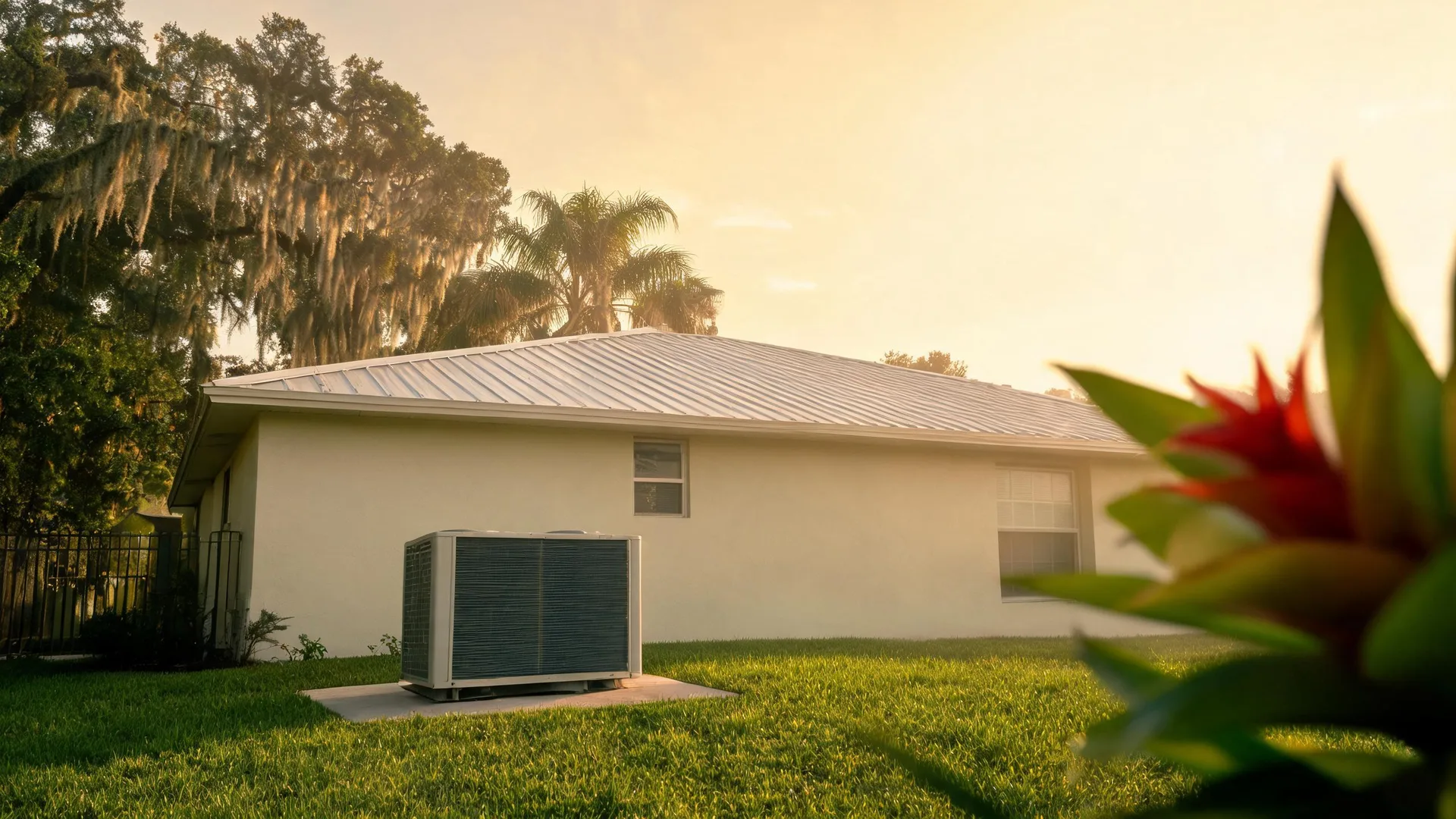
An outdoor air conditioning condenser unit mounted on a concrete pad next to a residential house at sunset.

Heat Pump Installation in Goose Creek, SC

Tell us about the job

Takes about a minute. No obligation.

New system or replacementHeat PumpBerkeley County, SC
Step 1 of 2

What ZIP code is the job in?

Bigger isn't better here

A heat pump that's too large for the house cycles on, satisfies the thermostat fast, and shuts off again. That short run never gives it time to pull moisture out of the air or settle into steady operation. One that's too small runs nearly nonstop and still falls behind when the temperature swings hard. The right size runs longer, steadier stretches, and that steady runtime is how these systems are meant to work.


The size comes from a load calculation

A contractor works out the sizing from the house itself. Square footage, window area, insulation, ceiling height, how many walls face outside all go into it. It is not a guess based on the size of the old system, since that one may have been wrong from the start. Ask to see the calculation before you agree to a number.

5 months
November through March, your system heats
6 months
May through October, it cools
38°F
the average winter night it heats against
91°F
the average summer afternoon it cools against
Isometric line illustration of a cutaway house showing interior rooms with furniture, a furnace or air handler with overhead ductwork, and an outdoor condenser unit connected by lines outside the wall.
Your system heats November through March and cools May through October.

NOAA nClimDiv, 1991–2020 normals

Most homes in Berkeley County already run on electricity, close to 8 in 10.

A heat pump fits that setup without asking for a gas line or new wiring to the panel.

October is when to put in a heat pump here, before heat runs November through March

Cooling runs May through October
Heat runs November through March
146 damaging wind events from 2015 to 2024
Electricity here runs 14.23 cents a kilowatt-hourThat's below the national average, so a heat pump still has to earn its keep on reliability, not just the power bill

Berkeley County saw 240 severe weather events between 2015 and 2024, most of it wind and hail. An outdoor heat pump unit sits outside year round, so hail and flying debris are worth asking a contractor about when they pick the spot for it. Tropical storms and hurricanes have come through too, and outages often follow behind them. A heat pump runs on electricity, so when the power goes out, so does your heat, which is worth planning for if you're in a storm-prone part of the county.

The system has to clear this region's minimum before it clears anything else

Any heat pump installed here now has to hit 14.3 SEER2 and 7.5 HSPF2 at minimum, and the cooling-only minimum in this region runs higher than the national floor. That rules out the low end of the market. It also qualifies the right equipment for the federal tax credit, which is worth asking a contractor about before you settle on a model.

Find a contractor
A white mini-split heat pump outdoor unit mounted on a concrete pad beside a gray-sided house, surrounded by gravel and green shrubs.

The old equipment doesn't linger

Whatever is getting replaced doesn't have to leave the yard empty. A straight swap reuses the existing pad, the existing line set location, sometimes the existing ductwork if it was sized right and is still sound. A contractor checks that duct run before counting on it, since a system built for a furnace and a separate AC doesn't always move air the way a heat pump needs to. The old unit itself gets disconnected, drained of refrigerant the right way rather than vented, and hauled off. If it's a straight electric or gas furnace coming out in favor of a heat pump, the gas line gets capped by someone licensed to do it, not left live and unused. None of that is a reason to delay the decision. It's just the part that happens the same day, out of sight, while the new equipment goes in.

The equipment is only one line item

A heat pump's price covers the outdoor unit and the indoor coil together, since they're matched as a pair and sold that way. Beyond that, the cost reflects the refrigerant lines, the electrical disconnect, the condensate drain, and the controls that tie it to the thermostat. Systems with the same rating on the sticker can still price out differently depending on what else has to be done to put them in.

What's already there changes the job

A straight swap into the same spot, using the existing line set and ductwork, is the simplest version of this job. The price moves when any of that has to change. Ductwork built for a furnace and a separate air conditioner doesn't always suit a heat pump, and reworking it is labor beyond the equipment itself. Electrical service built for an older system sometimes needs upgrading too, since a heat pump draws power differently than the gas furnace or electric resistance setup it's replacing.

A few questions tell you more than the spec sheet does. Ask what the sound rating is at low and high stage, since a heat pump runs longer stretches than an AC and the compressor noise sits right outside a window or a patio. Ask how low the unit can run before it needs backup heat, because that's the point where a furnace or electric strips kick in and the power bill shifts. Ask what the warranty covers on the compressor versus the coil, since they often differ, and whether it's void if someone other than the installer services it later. Ask what happens to the existing thermostat, because some heat pumps need a specific control board or communicating thermostat to run the way they're designed to. None of that shows up on the sticker, but all of it shows up in how the system runs once it's in.

Install day starts with the old system coming out and the new pad or bracket going in, so expect the house to be without heat or air for stretches of the day. The line set gets run or reused, connected to both the outdoor unit and the indoor coil, then the whole system gets pressure tested before anyone adds refrigerant. That pressure test matters more than it sounds like it should, since a leak found that day is a lot easier to fix than one found a year later. Once the lines hold, the system gets charged to the exact weight the manufacturer specifies, not just topped off until it feels right. Electrical gets tied in, the thermostat gets wired or paired, and then the contractor runs the system through both heating and cooling before calling it done. The last step is airflow at the vents and a check that the thermostat is actually controlling the system the way it's supposed to.