






A illuminated white antebellum-style house with a wraparound porch, white columns, and Spanish-moss-draped oak trees, photographed at dusk.

Heat Pump Installation in Gaffney, SC

Tell us about the job

Takes about a minute. No obligation.

New system or replacementHeat PumpCherokee County, SC
Step 1 of 2

What ZIP code is the job in?

Ask what size unit they're proposing and how they got that number. A contractor should walk the house, check the windows and insulation, and run a load calculation, not just match the system you have now. Ask about the compressor. Some run at one fixed speed, others step up and down, and the best ones modulate to match the heat loss on a given day instead of switching fully on and off. That keeps the house more even and the indoor coil working less hard. Ask how the system performs in cold weather and at what point it needs backup heat to take over. Ask what that backup source is and how the switch happens. Get the warranty terms in writing, both the parts covered and whether labor is included, since those are often separate.

7 months
October through April, your system heats
5 months
May through September, it cools
32°F
the average winter night it heats against
88°F
the average summer afternoon it cools against
Isometric line illustration of a cutaway single-story house showing interior rooms with furniture and ceiling ductwork, connected to an outdoor condenser unit on the ground outside the left wall.
Your system heats October through April and cools May through September.

NOAA nClimDiv, 1991–2020 normals

Electricity in South Carolina ran 14.23 cents per kilowatt-hour in 2024, below the national average.

A high-efficiency heat pump still costs more up front, so weigh that against a steadier, more reliable unit before you pay extra for the top efficiency number.

A standard heat pump sized right for the house is all this county asks for

Half the homes here were built by 1984
49 damaging wind events from 2015 to 2024
18 hail events from 2015 to 2024
Install before OctoberHeat runs here from October through April, about seven months a year.

Electricity heats 69.7% of occupied homes in Cherokee County. A heat pump fits that setup without rewiring the house around a new fuel. Check whether the home already has the electrical capacity and panel space a heat pump needs, since that's one less thing to sort out if the prior system was electric too. If your home was heated with gas or oil instead, ask the contractor what changes that brings, from the gas line to the venting.

Any new system here has to clear a higher bar

South Carolina's Southeast rule sets the minimum at 14.3 SEER2 for cooling, and heat pumps installed from 2023 onward have to hit 14.3 SEER2 and 7.5 HSPF2 for heating too. That narrows what a contractor can legally put in. A federal tax credit is available toward a qualifying heat pump, which helps offset a system built to meet it.

Find a contractor
A gray outdoor HVAC unit mounted on a concrete pad beside a house with gray lap siding and a stone foundation.

Light duty, but it still has to take a hit

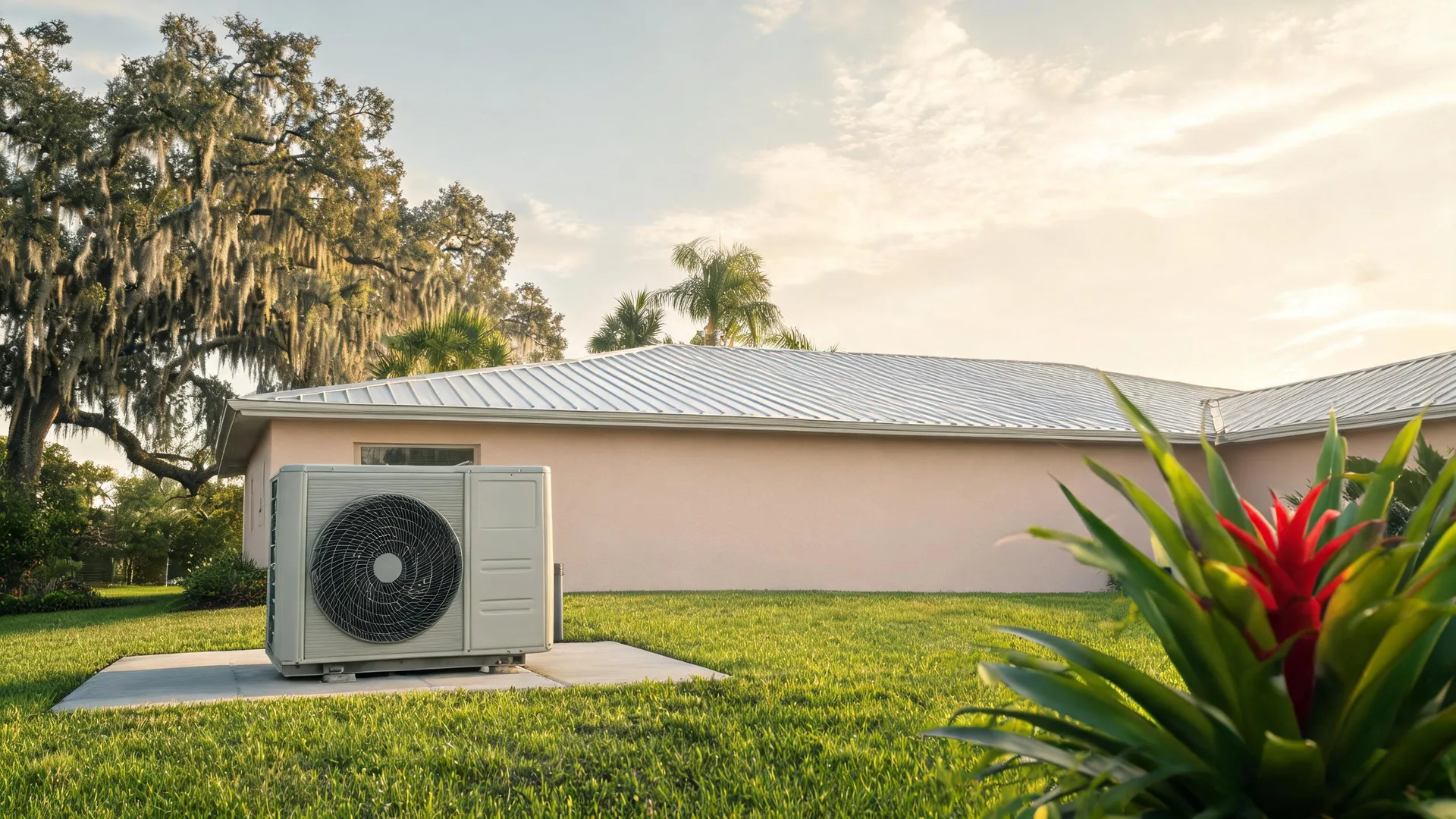
A heat pump here isn't working against the load a lot of other places put on one. Winters are short and mild, and the humid side of zone 3A still means long stretches where the unit just idles. The compressor and the coil both last longer under that kind of use. That doesn't mean skip the details. A unit sized and installed right matters more than usual here, because the county has seen 49 damaging wind events and 18 hail events over the past decade. A reliable, well-matched system is worth more than a few extra efficiency points when the outdoor unit has to sit through weather like that.

The rating describes the equipment, not your bill

SEER2 and HSPF2 come from testing the compressor and coil under set conditions in a lab. What the system actually uses depends on how long it runs, how well the ductwork moves air, and whether the unit is sized to the house. A high rating on a unit that's oversized or poorly installed won't deliver what the label implies.
A higher number buys steadier performance, not a different machine

The gain from a higher rating shows up over a full season of changing loads, not in any one hour. It means the unit holds its efficiency better as conditions shift outside. It doesn't mean the compressor works less or wears less. Installation quality still decides how much of that rating the house actually gets.

Sizing a heat pump comes down to how much heat the house loses, not how big the old equipment was. A load calculation looks at wall and ceiling insulation, window area and orientation, and how much air leaks in and out, then works out how much heating and cooling capacity the house actually needs. Skip that step and you're guessing. Too big and the unit short cycles, blasting the house to temperature and shutting off before it pulls moisture out of the air, which leaves it feeling clammy even when the thermostat reads right. Too small and it runs flat out on the coldest and hottest days without ever catching up. Either way the compressor cycles harder than it should instead of settling into the steady, even run it was built for.

The outdoor unit gets set on a pad or bracket, leveled, and connected to refrigerant lines running to the indoor coil. Before any refrigerant goes in, those lines get pulled down with a vacuum pump to clear out air and moisture, since either one left behind will damage the compressor down the road. The indoor coil usually ties into the existing air handler or furnace cabinet, and the electrical circuit feeding the unit has to match what the new equipment calls for, not just whatever was there before. Once everything is connected, the system gets charged to the refrigerant weight the manufacturer specifies, and the contractor checks airflow at the vents to make sure the ductwork is moving what the unit puts out. The last step is running it through both heating and cooling, confirming it switches between them properly and holds the temperature it's set to.