







A nighttime street scene featuring a row of lit white colonial-style houses with wrap-around porches, flanked by oak trees draped in Spanish moss.

Heat Pump Installation in Barnwell, SC

Tell us about the job

Takes about a minute. No obligation.

New system or replacementHeat PumpBarnwell County, SC
Step 1 of 2

What ZIP code is the job in?

A heat pump that's too big for the house will short cycle, running for a few minutes, shutting off, then starting again before the place actually feels any different. That wears on the compressor and leaves rooms clammy, because the system never runs long enough to pull moisture out of the air. Too small, and it runs nearly nonstop on the coldest and hottest days, struggling to keep up and driving the backup heat strip to kick in more than it should. The right size comes from a load calculation, not a guess based on the old system or the square footage alone. A contractor walks the house, checks the insulation, counts the windows and their exposure, and figures out how much heat the place actually gains in summer and loses in winter. That number, not a rule of thumb, is what decides which unit goes in.

5 months
November through March, your system heats
5 months
May through September, it cools
37°F
the average winter night it heats against
91°F
the average summer afternoon it cools against
Isometric illustration of a cutaway single-story house showing interior ductwork and an air handler connected by lines to an outdoor condenser unit on a pad beside the building.
Your system heats November through March and cools May through September.

NOAA nClimDiv, 1991–2020 normals

Barnwell County splits evenly between homes built before 1983 and after.

A standard load calculation still gets this job right, whether the house is old or new.

Power here runs 14.23 cents a kWh, below the national average, so a heat pump earns its keep on comfort and backup more than on the electric bill

Power costs 14.23 cents a kWh statewide
Climate zone 3A
Cooling runs May through September
Barnwell runs on electric heat alreadyElectricity heats 75.6% of homes in Barnwell County, so a heat pump runs on the fuel most houses here already have.

With power this cheap, don't pick a heat pump chasing the lowest operating cost. Pick one that holds up when the grid doesn't. A variable-speed compressor that steps down gently and keeps a steady temperature is worth more here than another point of efficiency you'll barely feel on the bill. Ask what backup heat the system carries and how it switches over, since that's the part doing the work during a long outage. A longer warranty on the compressor and parts matters more in a place where the system has to run reliably for years, not just cheaply.

Zone 3A sets the minimum. The federal credit rewards going beyond it.

Any heat pump installed here has to hit 14.3 SEER2 and 7.5 HSPF2 at minimum, and the matching air conditioner side has to clear 14.3 SEER2 under 45,000 Btu/h. That's a higher bar than the national minimum, so not every unit on the market qualifies for installation in zone 3A. A federal tax credit is available for equipment that meets the efficiency requirements, which narrows the field further and makes the decision easier, not harder.

Find a contractor
A man in a cap, gray T-shirt and brown work pants carries a worn leather tool bag up wooden porch steps toward a dark paneled front door, with a potted shrub to the left.
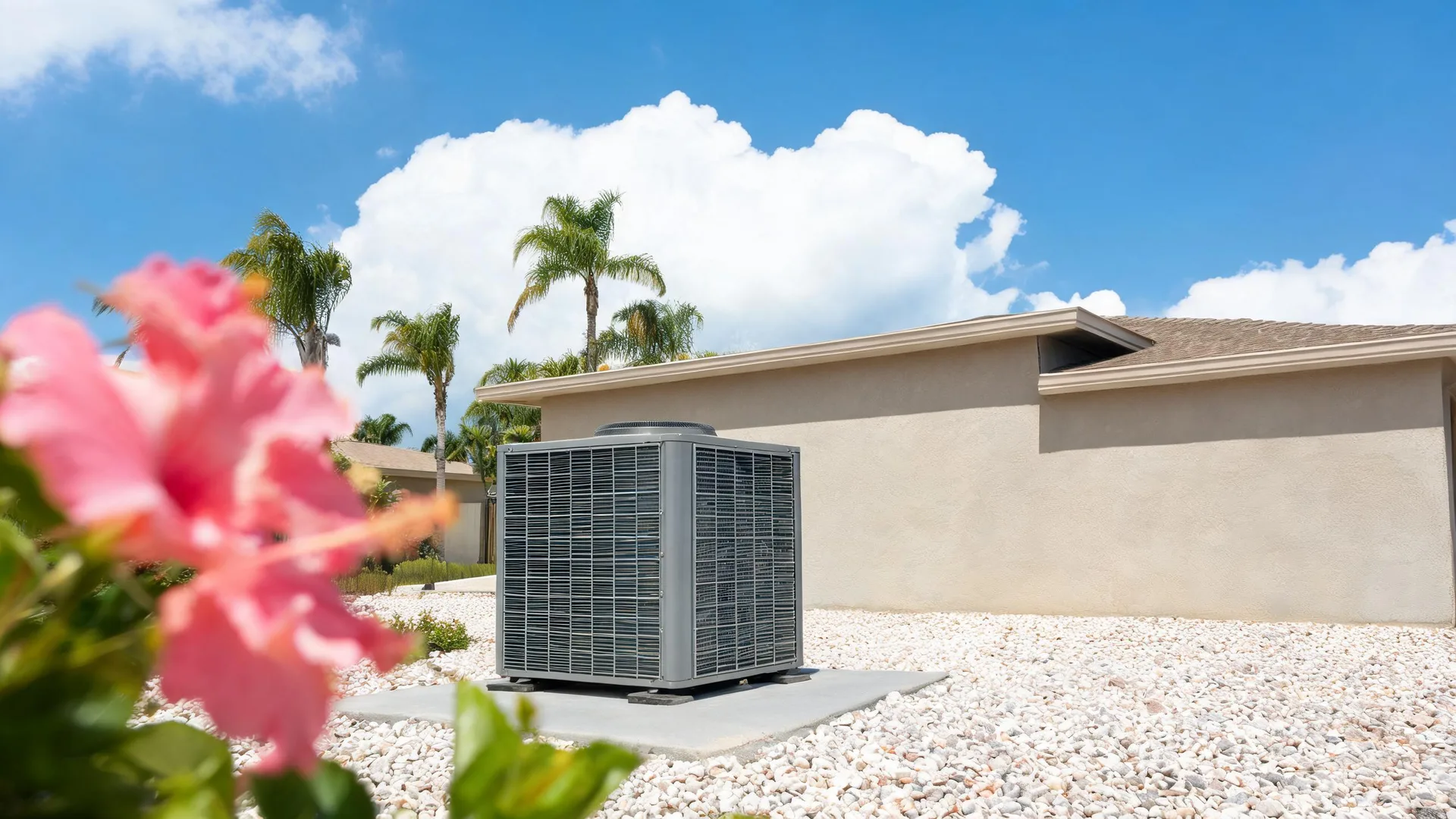
A gray outdoor HVAC unit mounted on a concrete pad beside a house with gray lap siding and a stone foundation.

This one doesn't get an off season

A heat pump doesn't get a season off. It heats in the cold months and cools in the hot ones, so the compressor runs year round instead of sitting idle part of the year like a furnace does. That's more total run hours on one machine, which is why the parts inside it matter more than they would on something that rests part of the year. Ask how the compressor stages down at partial load. A unit that's always kicking on at full power and shutting off again wears faster than one that can ease into a lower stage and stay there. Ask about the defrost cycle too, and how it's controlled, because every defrost cycle is the system working against itself for a few minutes to clear the outdoor coil. A system built for year-round duty should hold up to that without the compressor short cycling or the coil icing over between cycles.

The rating is measured at one condition, not all of them

SEER2 and HSPF2 come from lab tests run at set outdoor temperatures and a steady load. Your house rarely sits at that exact condition. On a mild day the system might beat the number on the label. On the coldest or hottest day it won't touch it, because the rating describes a benchmark, not a promise for every hour of the year.
Units with the same rating can still run differently

The label tells you the ceiling, not how the compressor gets there. A single-stage compressor can carry a high rating and still run full blast, then shut off, then start again. A variable-speed compressor can carry a similar rating and spend most of its time easing along at partial load instead. When you're comparing units, ask how the compressor stages, not just what number is printed on the side.

Installed cost comes down to more than the box on the pad. A ducted system needs ductwork sized to move the right amount of air. If the existing ducts are too small or leaky, bringing them up to par adds work before the heat pump even gets set. The outdoor unit needs a location with clearance on all sides and a line set run to the indoor coil, and a longer or more awkward run costs more than a short, straight one. A heat pump and its backup heat strip draw more than a furnace setup needed, so the panel and breaker may need upgrading to carry the load. A ductless system skips most of that but adds the cost of the indoor heads themselves, and more zones means more heads. None of this shows up on the price tag of the equipment. It shows up on the invoice for putting it in.

Install day starts with the old equipment coming out, and that alone takes a while if the line set or ductwork is being reused rather than replaced. The outdoor pad gets leveled and the new unit set on it. Then the line set gets run between outdoor and indoor coils, pressure tested, and pulled down into a vacuum before any refrigerant goes in. That vacuum step matters more than it looks like from the driveway. Any moisture left in the line turns into acid once the system runs, and that shortens the compressor's life long before it should fail. Electrical work happens alongside that, tying in the circuit and breaker sized for the new unit. Once everything's connected, the system gets charged, started up, and run through its paces. The contractor checks airflow at the vents or heads, checks the temperature split, and makes sure the thermostat is actually talking to the unit the way it should. Before they leave, a good contractor walks through how the system stages, what the backup heat does and when it kicks in, and how to read the thermostat. A heat pump installed right still needs to be run right.