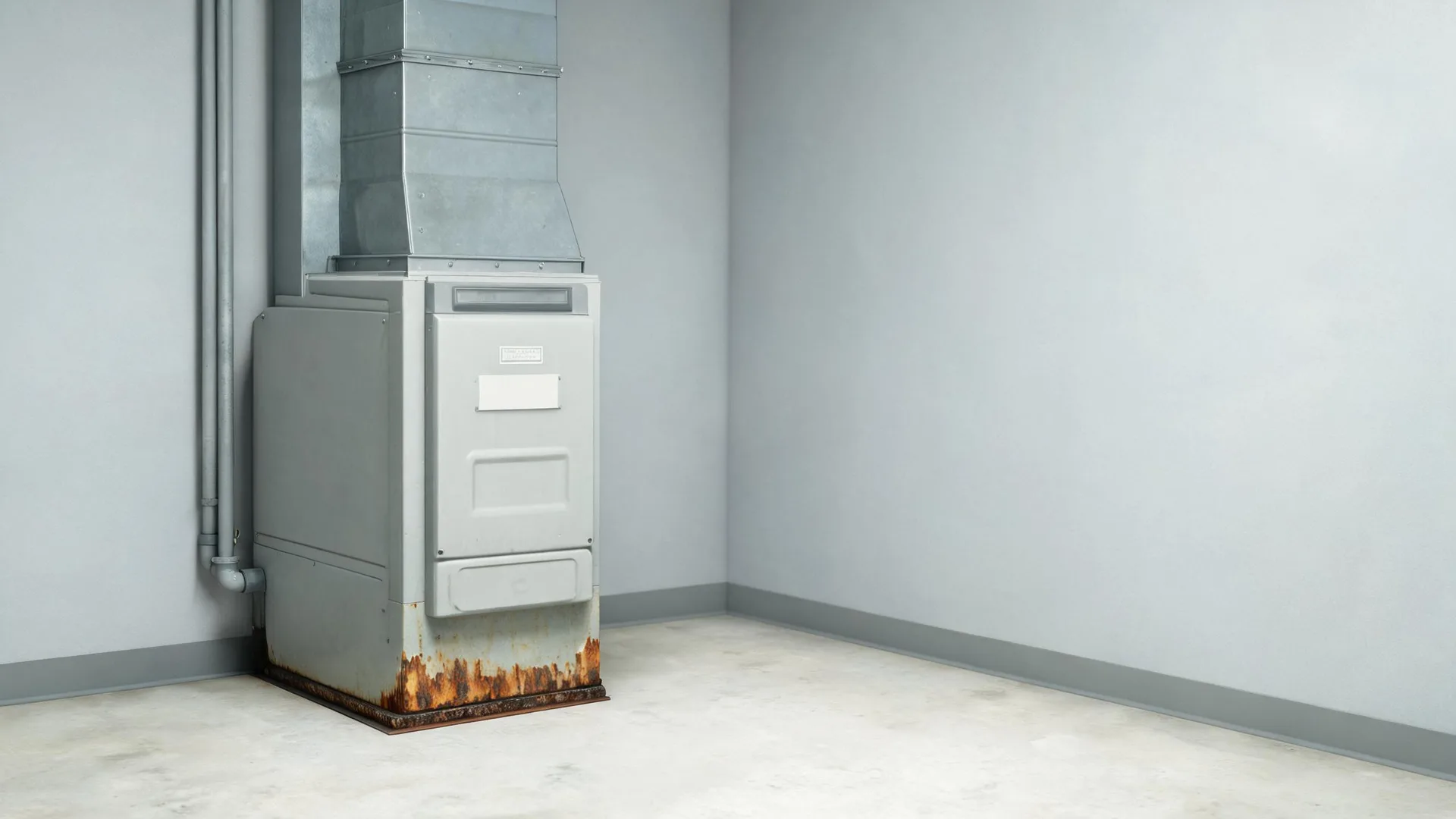
An unfinished basement featuring a grey forced-air furnace with metal ductwork, concrete block walls, exposed wooden joists, and a single hanging bare bulb.

Furnace Repair in Walterboro, SC

Tell us about the job

Takes about a minute. No obligation.

RepairFurnace or heatingColleton County, SC
Step 1 of 2

What ZIP code is the job in?

The igniter wears out first

A furnace's igniter switches on with every heat cycle, and that's the part most likely to fail before anything else. It gets brittle with age and can crack from the stress of heating up and cooling down over and over. When it goes, the furnace runs but never lights, or it tries a few times and gives up.

A dirty flame sensor mimics bigger problems

Soot builds up on the flame sensor over time and keeps it from reading the flame properly, so the furnace shuts the burners off as a safety measure. It looks like the same no-heat problem an igniter failure causes, but cleaning the sensor is a far simpler fix than replacing a part. A tech can tell which one it is in a few minutes.

5 months
November through March, your furnace is on duty
38°F
the average winter night it heats against
2 winter storms
in ten years, the nights a failure hurts most
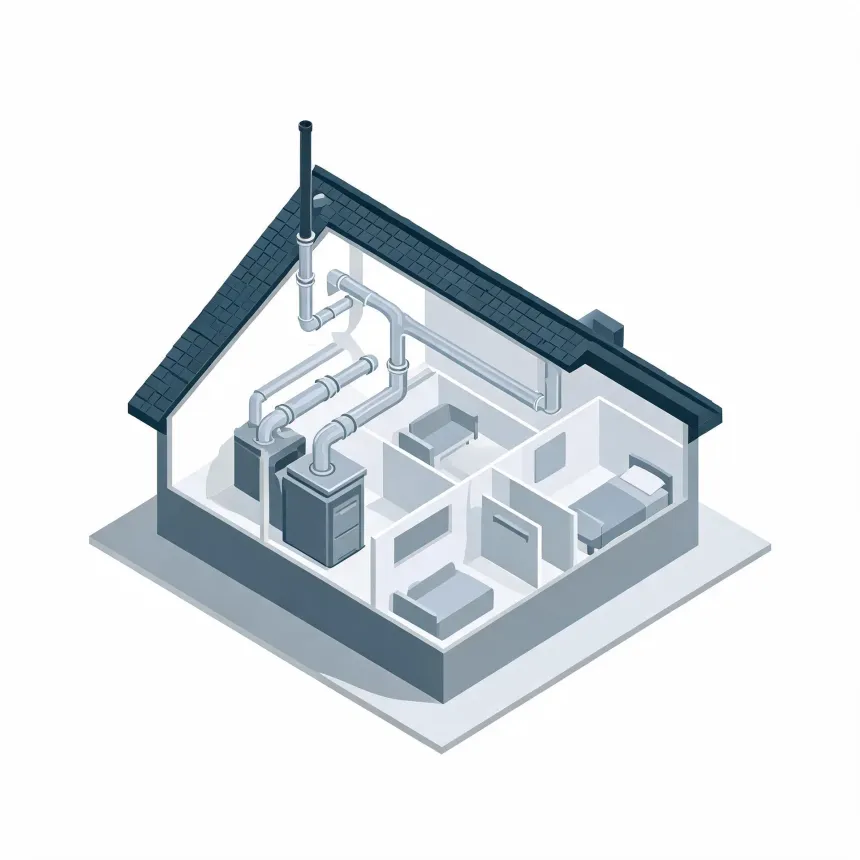
Isometric illustration of a cutaway house showing a furnace unit with ductwork and a flue pipe running through the interior rooms, which contain simple furniture.
Your furnace works hardest from November through February.

NOAA nClimDiv, 1991–2020 normals

Furnaces in Walterboro only run about five months a year, November through March.

A furnace that sits idle most of the year has less wear behind it, so most problems come down to a part worth fixing.

Nothing about Walterboro works a furnace harder than anywhere else

Half the homes here were built by 1987
Heat runs November through March
Winter nights average 38°F

Most of what goes wrong with a furnace here is ordinary. The igniter cracks, the flame sensor needs a wipe down, a flame sensor gets soot on it. None of that has anything to do with Walterboro specifically. Electricity ran $41.71 per million Btu in South Carolina in 2024, so a furnace that's cycling more than it should is worth fixing on cost alone, not just comfort. A tech can usually tell what's wrong in a few minutes and most of the time it's a part, not the whole unit.

Have it checked in October, before the heat runs all winter

October is the month to get a furnace looked at here. Heat starts in November and runs through March, and whatever was already weak tends to give out in those first weeks of harder running. Catching it in October means a tech finds the problem before a cold night does.

Find a contractor
A man in a cap, dark shirt and tan work pants walks up porch steps toward a gray front door, carrying a canvas tool bag, with a potted plant on the porch to the right.
A gas furnace with attached ductwork, gas piping, and condensate lines installed in a concrete-block basement.

Light duty, mild nights

Those five months are mild ones. Overnight lows average 38 degrees through December, January and February, so the furnace is rarely pushed to run flat out even on the nights it's working. A unit with that little strain behind it usually has most of its parts in good shape when one fails. That's the case for calling a tech before you think about replacement.

Check the thermostat before anything else

Make sure it's set to heat and the set temperature is above room temperature. Swap the batteries if it's the kind that takes them. A thermostat with a dead battery or a mode switched to cool will stop a furnace cold, and it's the cheapest thing to rule out first.

Look at the filter and the vents

Pull the filter and hold it up to a light. If you can't see through it, it's choking off airflow and the furnace may be shutting down on a limit switch to protect itself. Walk the house and check that no vents are closed or blocked by furniture. A furnace starved for air can act like it's broken when it isn't.

A furnace that needs attention usually tells you before it quits outright. Short cycling is one of the clearest signs. It fires up, runs for a bit, then shuts off before the house warms, and starts the whole thing over again. That's often a flame sensor losing its read on the flame, or a filter so clogged the furnace trips its limit switch and shuts down to protect itself. Cold air blowing from the vents instead of warm means the burners aren't lighting at all, even though the blower still runs. A furnace that's noisier than usual, with banging, rattling or a screech on startup, is worth a look too. None of this means the whole unit is done. Most of the time it points to one part that's failing, and catching it early keeps that failure from taking anything else with it.

Age is the first thing worth checking before paying for a repair. A furnace that's within its expected lifespan almost always makes sense to fix, even if the repair is the second or third one it's needed. Past that age, the math changes, not because the furnace stops working, but because the parts likely to fail next get more expensive and more frequent. The heat exchanger is the one that matters most. It's the part that can't be reasonably replaced on its own, since swapping it costs close to what a new furnace would, so a crack or failure there usually means replacement rather than repair. Everything else, the igniter, the flame sensor, the blower motor, is a normal wear part that gets fixed on its own without touching the rest of the unit.