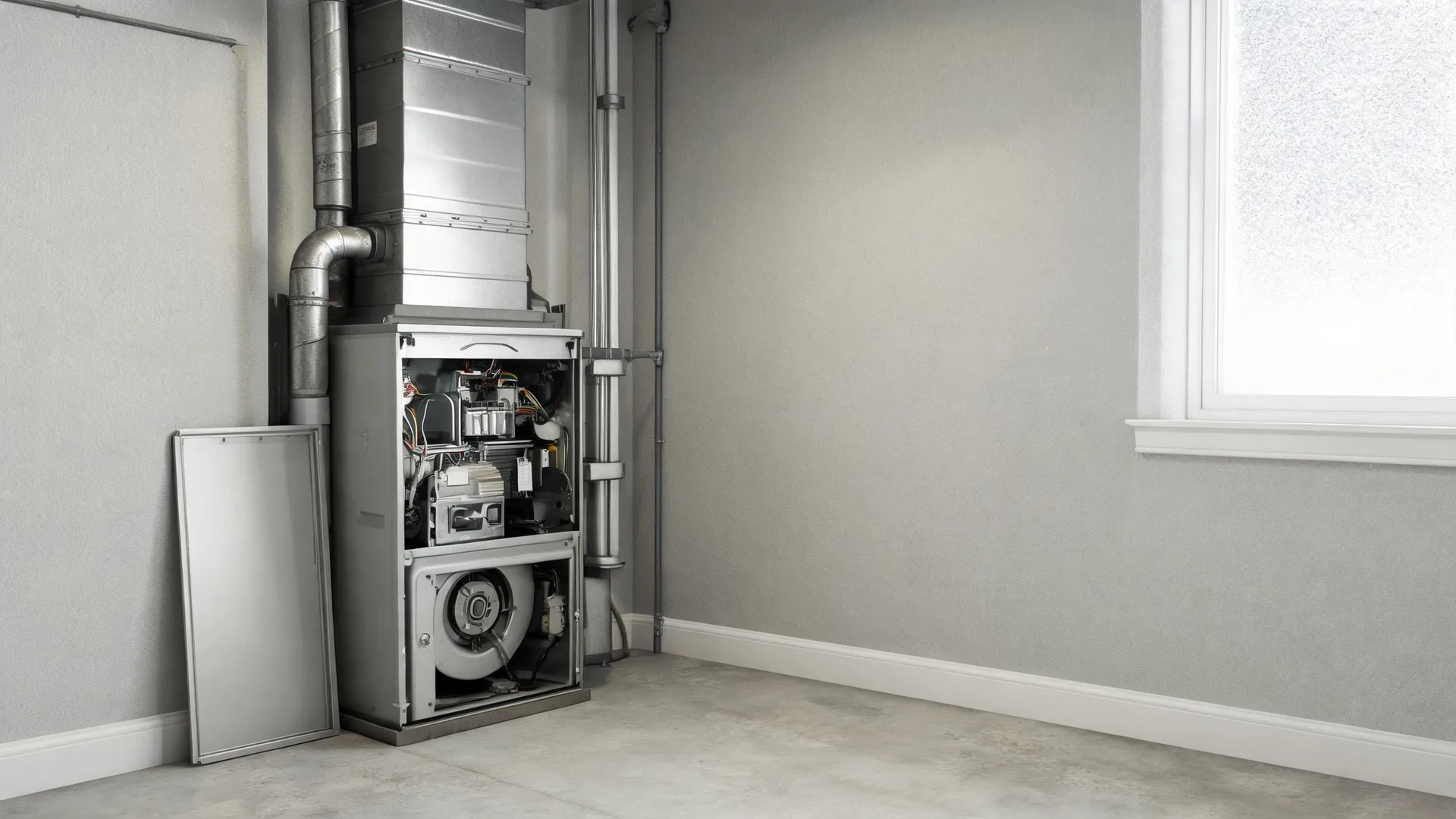
Weather here is hard on outdoor equipment
Spartanburg County recorded 194 severe weather events between 2015 and 2024, including damaging wind, hail, and tornadoes. A furnace's outdoor components sit right in the path of that.
Takes about a minute. No obligation.
Spartanburg County recorded 194 severe weather events between 2015 and 2024, including damaging wind, hail, and tornadoes. A furnace's outdoor components sit right in the path of that.
Hail and wind-blown debris can bend fins or dent a cabinet without stopping a furnace from working that day. If your outdoor unit has been through a storm, have it checked rather than waiting for it to fail.

NOAA nClimDiv, 1991–2020 normals
Furnaces here start up in October and run through April.
Get a furnace checked in September, before it has to carry a full load.



Seven months of heat a season isn't a light load, but overnight lows here only average 33°F in the coldest months. That's not the kind of cold that pushes a furnace to its limit night after night. Most winters, yours is cycling on and off rather than running flat out for hours. So when something goes wrong, the cause is usually age or a part that's worn out, not a system that got run into the ground. That's worth knowing before you decide whether a repair makes sense.
Half the homes in Spartanburg County were built in 1990 or later. If your house falls on that side of the line, your furnace isn't old by default, and a repair is likely to hold.
Find a contractor
If your furnace is original to the house, check the install date on the unit itself or on a sticker inside the cabinet door. A furnace that's a few years old running into a worn igniter or a failed control board is usually worth fixing. Replacement makes more sense once a unit is old enough that one repair tends to lead to the next.
An igniter wears out from repeated heating and cooling every time it fires. A flame sensor collects a film from normal combustion until it can't detect the flame anymore. A draft inducer motor runs every cycle for years and eventually its bearings give out. Each of these is a single, isolated part failing on its own schedule. None of it means the furnace itself is bad.
Short-cycling, where the furnace fires up and shuts off again before it's warmed the house, usually points to a dirty flame sensor, a clogged filter restricting airflow, or a cracked heat exchanger tripping a safety switch. It's rarely random. A tech can usually trace it to one of those within a few minutes of looking.
Before you call, check the filter. Pull it out and hold it up to a light. If you can't see through it, swap it for a new one, since a clogged filter chokes airflow and can cause the exact short-cycling or weak heat you're dealing with. Check your thermostat batteries if it uses them, and make sure it's set to heat, not just on. Look at the furnace itself for a blinking light near the access panel. Most furnaces have a small window showing an LED that blinks in a pattern, and that pattern is a code your manual can translate into the actual fault. Last, check the switch on the furnace and the breaker it runs on. It sounds basic, but a flipped switch or tripped breaker looks exactly like a dead furnace from the thermostat.
A repair is almost always the cheaper first move, and for a lot of furnace problems it's the right one. What changes the math is how many times you've already been down that road. One part failing and getting replaced is normal wear. A second unrelated part failing a year later is still within reason. But if a tech keeps finding something new each visit, that usually means the whole unit is wearing out at once, not that you've got bad luck with parts. A cracked heat exchanger is different from a worn igniter or a failed sensor. It isn't a wear item you replace and move on from. Once it's cracked, the furnace needs to be shut down, not patched. Age matters too, mainly because parts get harder to find as a model gets older. A tech who runs into a backordered or discontinued part will usually just tell you so.