





An unfinished basement featuring a grey forced-air furnace with metal ductwork, concrete block walls, exposed wooden joists, and a single hanging bare bulb.

Furnace Repair in Rock Hill, SC

Tell us about the job

Takes about a minute. No obligation.

RepairFurnace or heatingYork County, SC
Step 1 of 2

What ZIP code is the job in?

A tech starts by asking what the furnace is doing, or not doing, before anything gets opened up. Short cycling, no heat at all, a smell on startup, a sound that wasn't there before, all of it matters and narrows things down fast. From there it's a look at the flame itself, if there is one, since a weak or uneven flame points to something different than no flame at all. The igniter gets checked, along with the flame sensor, since a dirty sensor will shut a furnace down even when everything else is fine. The blower gets a look too, because a furnace that lights but never moves warm air usually has a problem there instead. Once the actual fault is found, the tech can tell you what's failing and what it takes to put it right.

7 months
October through April, your furnace is on duty
33°F
the average winter night it heats against
3 winter storms
in ten years, the nights a failure hurts most
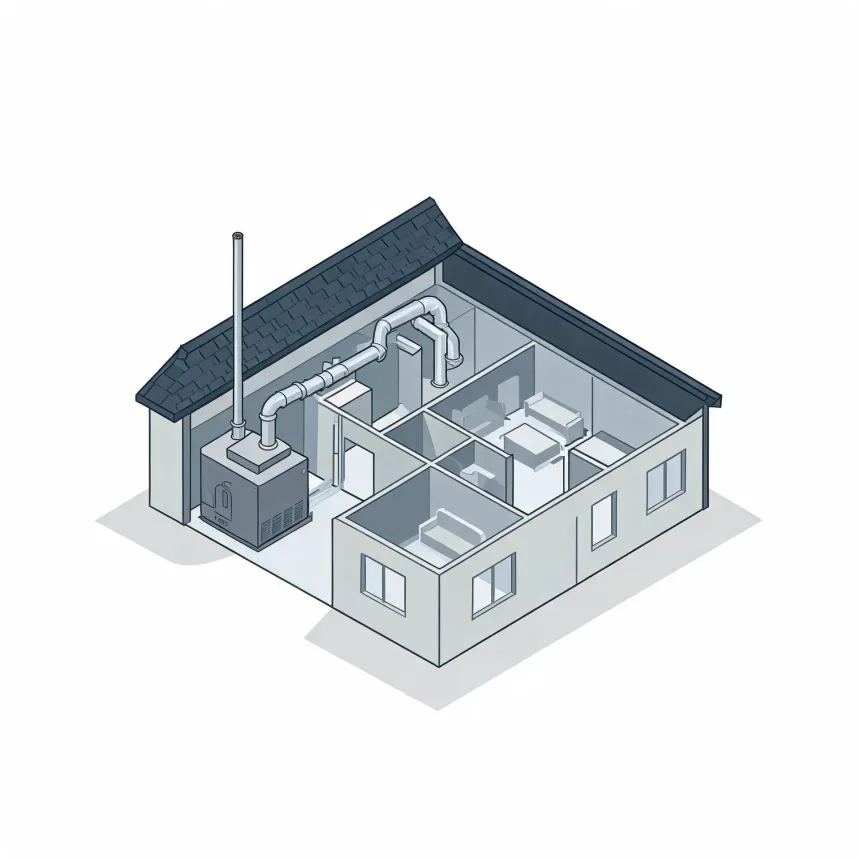
Isometric grayscale illustration of a cutaway single-story house showing interior rooms with furniture, plus an exterior furnace unit with a tall flue pipe and ducting running into the attic space.
Your furnace works hardest from November through March.

NOAA nClimDiv, 1991–2020 normals

A furnace that shuts off before the house warms up is tripping a safety switch, not running a normal cycle.

Ignoring short cycling for long stretches puts real strain on the heat exchanger.

Half the furnaces in York County are younger than you'd think

Half the homes here were built by 2000
Heat runs October through April
Winter nights average 33°F

Nothing about a furnace in Rock Hill asks for anything other than the usual fix. When a system won't light, won't stay lit, or won't push warm air, the cause is almost always one of a short list of parts, and a tech checks that list in order rather than guessing. Electricity here runs $41.71 per million Btu, which is part of why a furnace that's cycling on its heat strips or running an inducer motor that's working too hard shows up on a bill before anyone notices the house feels off. That's reason enough to get a repair looked at early rather than waiting until the furnace quits outright.

Get your furnace checked before October asks more of it

Furnaces here go back on in October, and most of the strain lands on a part that was already weak before it had to carry a full load. September is the month to get a furnace looked at, before that first cold stretch puts seven months of work on it.

Find a contractor
A man seen from behind in a dark long-sleeve shirt, olive work pants and brown boots climbs porch steps toward a gray front door, carrying a waxed canvas tool bag with tools in its outer pockets, beside a potted shrub.
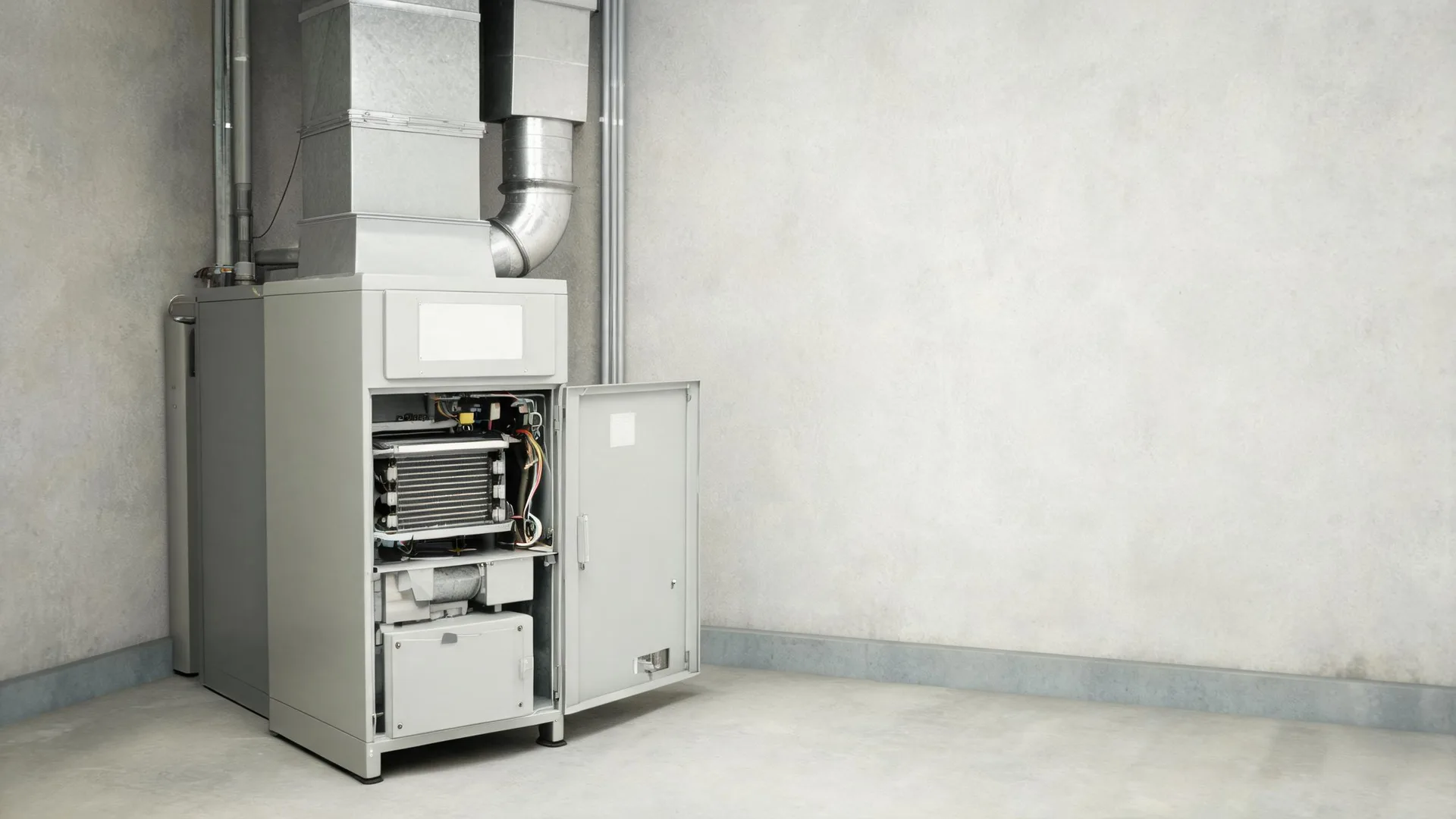
A gray high-efficiency gas furnace installed in an unfinished basement, surrounded by gas lines, a condensate drain, and sheet-metal ductwork.

Seven months of work, not years of strain

Seven months of heat a year, October through April, and nights that average 33 degrees in winter. That's not a hard load. A furnace earns its keep on long runs against deep cold, and that's not what winter here asks of it. So when one acts up, it's rarely because the machine got pushed past what it can handle. More often a part has just gone bad on its own, from age or from sitting idle the rest of the year. That kind of problem is usually a straightforward fix.

Most failures are a few parts, not the whole unit

An igniter wears thin after enough cycles and stops glowing hot enough to catch the gas. A flame sensor coated in a film of carbon can't tell the control board there's a flame, so the furnace shuts itself down as a safety measure. A capacitor that's gone weak will make the blower motor hum or stall instead of spin. These parts fail on their own schedule, not because of how hard the furnace is working.
What that means for the repair

Finding which part failed is most of the job, and it's usually quick because the symptoms point at specific parts. A furnace that won't light at all is a different search than one that lights and then shuts off, or one that runs but never gets warm air moving. Once the failed part is identified, replacing it is routine work, not a sign the whole furnace is on its way out.

A flame sensor coated in carbon doesn't stop a furnace from trying. It keeps relighting, failing, and locking out, over and over, and each failed attempt to catch the flame puts a little more carbon on the sensor it just failed because of. A cracked heat exchanger is worse left alone. The crack doesn't heal, and running the furnace on it keeps flexing metal that's already failed once. A blower motor running on a weak capacitor will keep pulling current trying to spin, which is how a bad capacitor turns into a burned-out motor. None of these get better by giving them more cycles. If the furnace is doing something it wasn't doing before, that's the signal to stop running it and get it looked at, not to wait and see if it sorts itself out.

Age is the real question behind repair or replacement, more than whatever part just failed. A furnace that's still within its expected lifespan is almost always worth fixing. The parts that fail, igniters, sensors, capacitors, are normal wear items, and replacing one doesn't mean more are about to go. A furnace well past that point is a different conversation, because a cracked heat exchanger or a control board failure on an old unit often costs close to what a new system would, and a tech should be upfront about that math rather than replacing a part and sending you on your way. The condition of the heat exchanger matters more than almost anything else. Everything else gets replaced in an afternoon, but a cracked exchanger means the whole furnace needs to go, since that part can't be patched or swapped on its own.