





Two single-story houses, one brick and one with pale siding, both with covered porches, sit behind a mowed lawn and a trimmed hedge, framed by large oak branches draped with Spanish moss under an overcast sky.

Furnace Repair in Orangeburg, SC

Tell us about the job

Takes about a minute. No obligation.

RepairFurnace or heatingOrangeburg County, SC
Step 1 of 2

What ZIP code is the job in?

Before you call anyone, check a few things yourself. Look at the thermostat first. Make sure it's set to heat and the temperature is set above room temperature, since a setting bumped by accident is more common than people think. Next check your breaker panel for a tripped switch and your furnace's own power switch, which looks like a light switch near the unit and is easy to knock off by mistake. If your furnace has a standing pilot, see if the flame is lit. If it uses an igniter instead, you won't be able to check that part yourself. Pull the filter and hold it up to a light. If you can't see light through it, that's worth noting for whoever comes out, since a clogged filter can cause a furnace to shut itself off as a safety measure. If the furnace runs but the air feels cool, don't shut it off, but do call soon rather than waiting it out.

5 months
November through March, your furnace is on duty
37°F
the average winter night it heats against
Isometric cutaway illustration of a single-story house with a dark shingled roof, showing interior rooms with furniture, ductwork, a flue pipe, and a furnace unit.
Your furnace works hardest from November through March.

NOAA nClimDiv, 1991–2020 normals

An old furnace can still be worth repairing if the cabinet, heat exchanger and blower are sound.

If the heat exchanger is cracked, that's the one repair not worth making, and replacement is the honest answer.

Furnace repair calls in Orangeburg climb in November, the first cold month

Heat runs November through March
Winter nights average 37°F
Climate zone 3A

There's nothing about a furnace here that needs a different kind of fix than a furnace anywhere else. What usually goes wrong is an igniter that's failed, a flame sensor that needs cleaning, a blower motor on its way out, or a control board that's stopped doing its job. Those are the calls a furnace repair tech sees most, in Orangeburg or anywhere winters get cold enough to run the heat. Electricity in South Carolina ran $41.71 per million Btu in 2024. That's worth knowing if a contractor brings up electric resistance heat as part of the repair conversation. Past that, the diagnosis is the same one it would be anywhere. Find the failed part, check what's around it, decide if it's worth replacing.

Your furnace hasn't had a hard life here

Five months of heat a year, with overnight lows only averaging 37°F, doesn't put much strain on a furnace. Most of what's wrong with yours probably comes down to age or a part that wore out, not a system that's been worked hard. That usually means repair is worth doing.

Find a contractor
A man in a cap, dark long-sleeved shirt and brown work pants walks up gray porch steps toward a dark blue front door, carrying a worn canvas tool bag filled with hand tools, with a potted shrub to the right.
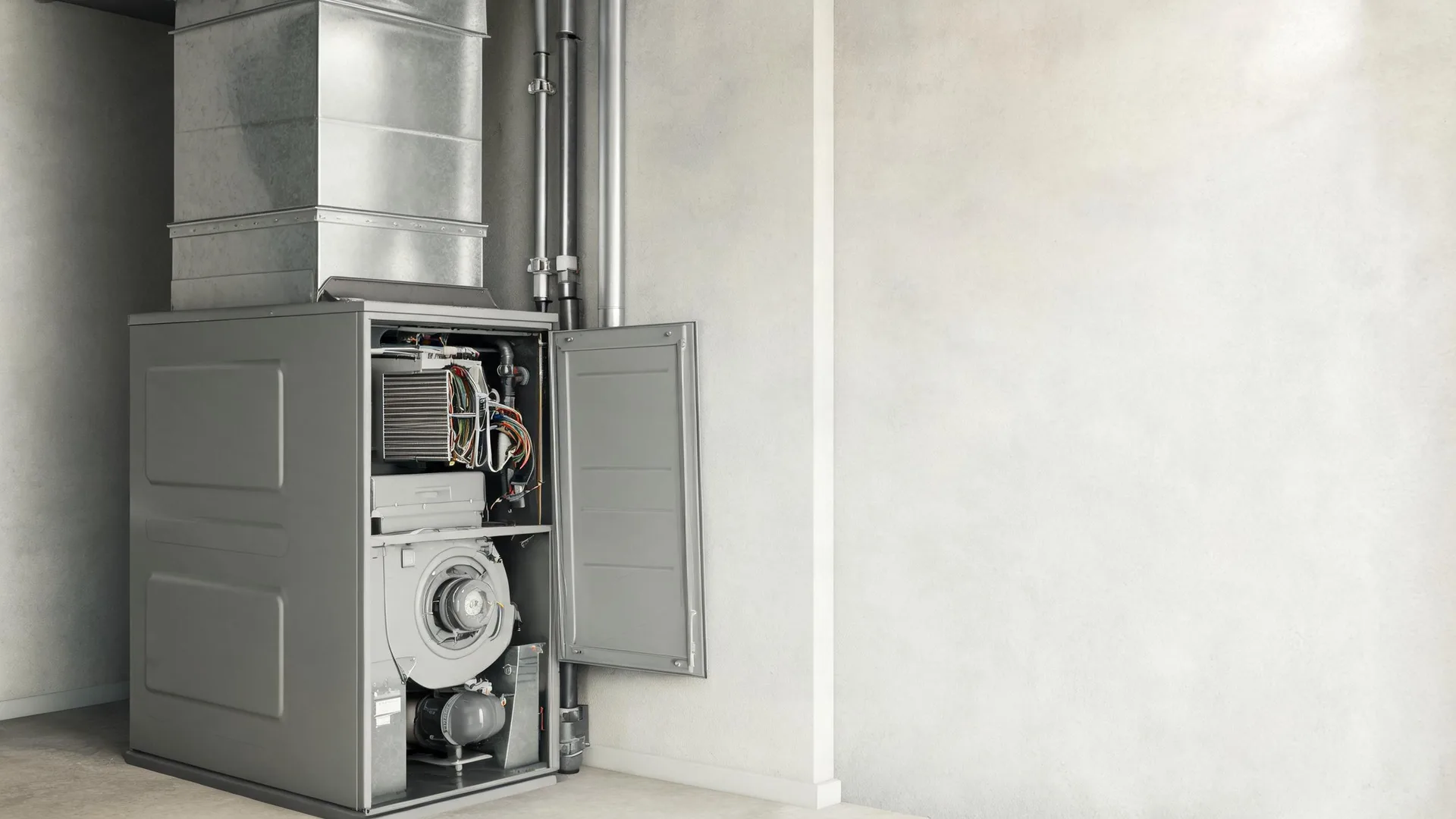
A gray residential gas furnace installed in an unfinished basement, connected to sheet-metal ductwork and PVC pipes.

Most of the year, it's not even running

Five months of work, then it sits the rest of the year. A part that fails after a stretch like that is usually just old or worn, not burned out from overuse. That's why a tech can often tell you on the spot whether it's worth fixing.

Most failures start with ignition

An igniter wears out from being heated and cooled every cycle, the same way a light bulb filament eventually gives out. A flame sensor stops reading the flame once it builds up a coating, and the furnace shuts itself off rather than run without proof of flame. Both are wear items. Neither failing means anything else is wrong with the furnace.
The blower and board fail for different reasons

A blower motor fails from bearings wearing down over years of spinning, or from a capacitor that weakens and can't start the motor properly. A control board fails from age, from a power surge, or from corrosion if moisture has gotten into the cabinet. Knowing which one is out tells a tech whether the fix is quick or whether more of the system needs a look.

A furnace that's struggling doesn't fix itself by staying on. A cracked heat exchanger gets worse under heat cycling, and running it longer raises the risk of exhaust gases ending up where they shouldn't. A failing blower motor can overheat and trip out for good, instead of just slowing down. A dirty flame sensor left alone long enough stops reading the flame at all, so the furnace won't stay lit rather than just needing a cleaning. Even a clogged filter, ignored, can starve the burner of airflow and crack a heat exchanger from the heat having nowhere to go. What would have been a simple swap turns into a bigger repair the longer it's asked to keep running.

A diagnostic visit starts with questions, not tools. The tech wants to know what you noticed and when it started. Short cycling, no heat at all, a smell on startup, a sound that wasn't there before. All of that narrows things down before the cabinet even opens. Then the tech watches a full cycle. Does the igniter glow and light the burners. Does the flame sensor hold that flame. Does the blower come on and move air once things warm up. Each step is a pass or fail check, and a failure at one step usually rules out the others. If power and gas are both reaching the furnace but it still won't fire, the control board comes under suspicion, since that part tells everything else when to run. Once the failed part turns up, a good tech checks what sits around it too. A scorched wire or a rusted bracket nearby can mean a second problem hiding behind the first.