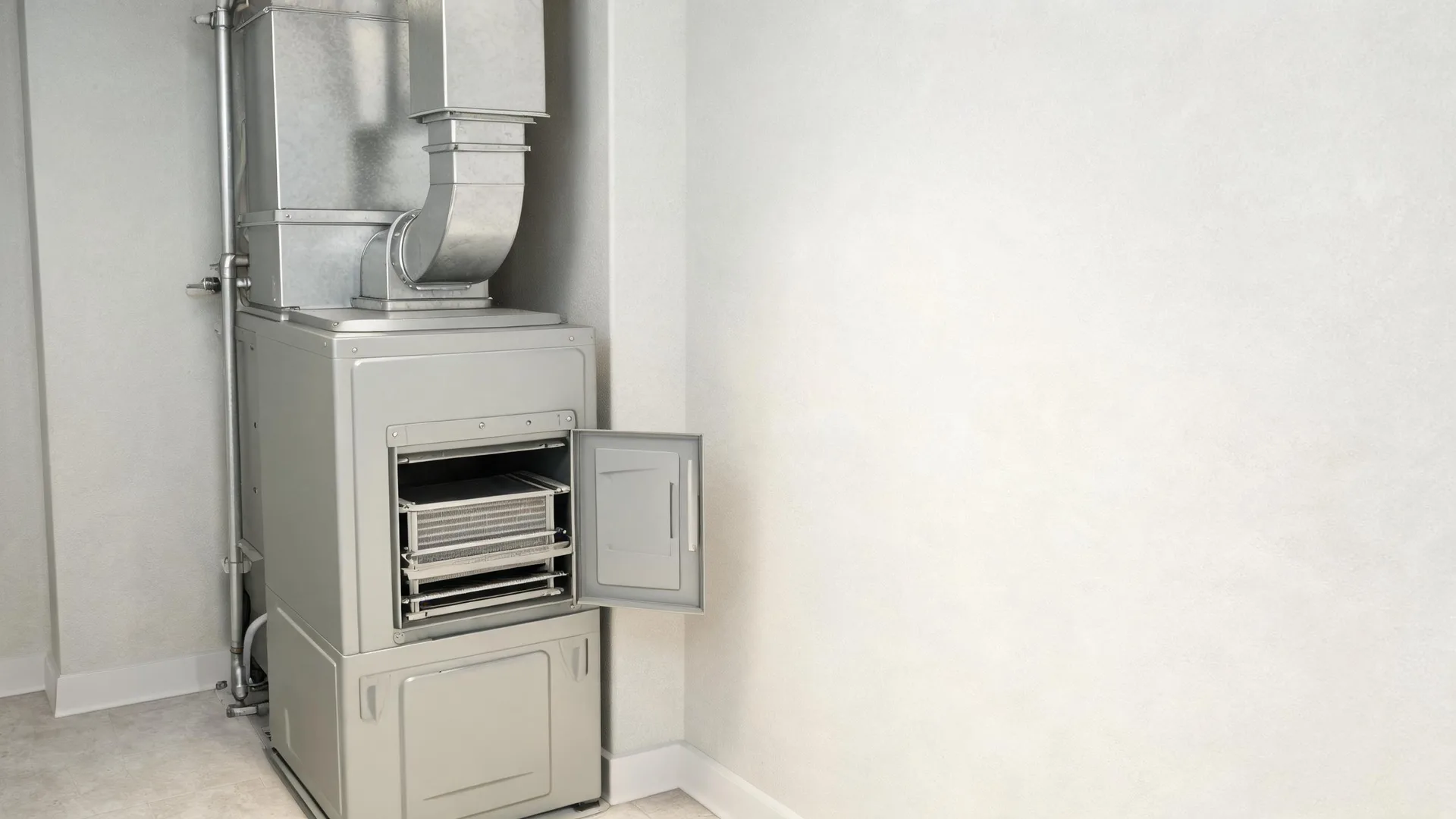
An empty unfinished basement containing a forced-air furnace with overhead ductwork, exposed ceiling joists, and a single hanging light bulb.

Furnace Repair in Newberry, SC

Tell us about the job

Takes about a minute. No obligation.

RepairFurnace or heatingNewberry County, SC
Step 1 of 2

What ZIP code is the job in?

The furnace is telling you something

A furnace that short cycles, blows cool air, or trips its breaker is not being temperamental. Short cycling usually means a flame sensor that cannot hold a signal or a filter choking airflow. Cool air from the vents often points to an igniter on its way out or a limit switch doing its job because the system is overheating inside. A smell of gas or scorched dust the first time it fires after sitting idle is worth noticing too, though it usually clears on its own.

Some signs mean stop and call

A furnace that clicks and won't light, trips its breaker repeatedly, or puts out a burning smell that does not fade needs a technician before it runs again. Banging or booming at startup can mean gas is building up before ignition catches, and that is not something to wait on. A furnace that runs but never gets the house warm, or that cycles on and off every few minutes, can usually wait for a scheduled visit instead of an emergency one.

5 months
November through March, your furnace is on duty
34°F
the average winter night it heats against
4 winter storms
in ten years, the nights a failure hurts most
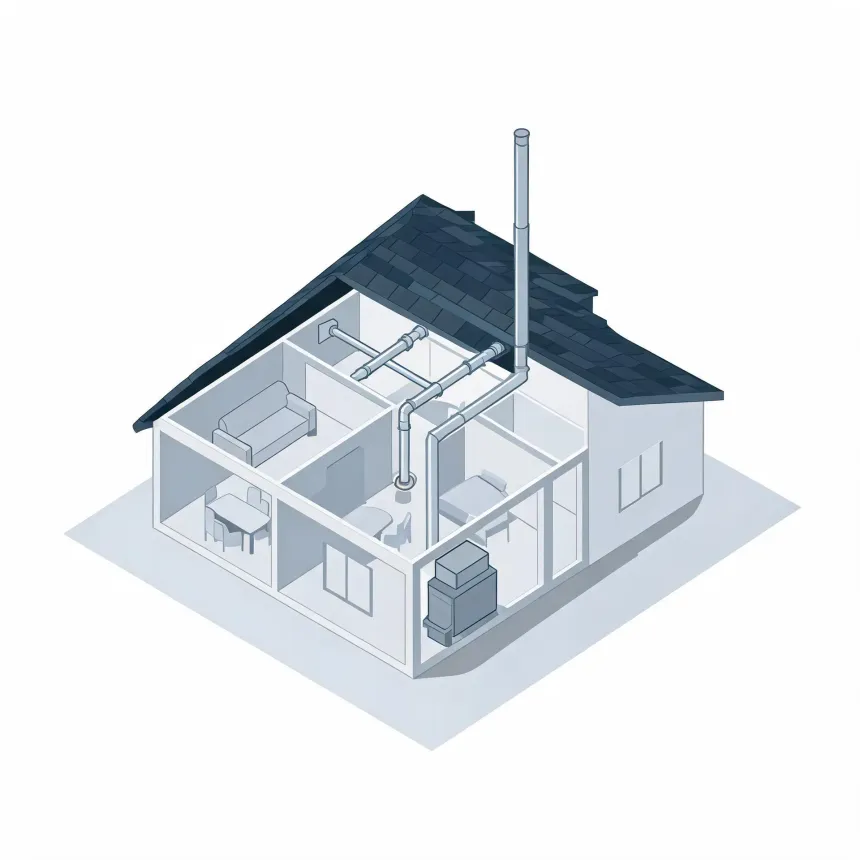
Isometric cutaway illustration of a single-story house showing interior rooms with furniture, ductwork and piping running to a tall vertical flue through the dark shingled roof, and a furnace-like appliance unit on the floor.
Your furnace works hardest from November through March.

NOAA nClimDiv, 1991–2020 normals

Furnaces in Newberry County only have to work about five months a year, November through March.

A furnace that's short-cycling or blowing cool air here has usually been sitting idle more than it's been straining, which is why a repair is worth calling in.

Nothing about a Newberry winter overworks a furnace

Heat runs November through March
Winter nights average 34°F
Climate zone 3A

Half the homes in Newberry County were built in 1981 or earlier. Furnaces that age have usually been swapped out at least once, so an old house doesn't necessarily mean an old system. What matters more is whether the one in your house came with it or was put in later, since that tells you what's actually wearing down inside it. About one in five homes here is a mobile home, and those run on the same kind of furnace trouble as any other. A dirty filter, a weak flame sensor, a switch doing its job. Nothing about the housing stock here points to a different cause than usual.

October is the month to get a furnace checked before it has to run

Heat starts running in November here. Whatever's already wrong with a furnace tends to show up in those first cold weeks, when it's asked to do more than it has in months. Getting it looked at before then means it's working right when it has to.

Find a contractor
A gray high-efficiency gas furnace installed in an unfinished basement, surrounded by gas lines, a condensate drain, and sheet-metal ductwork.

The season asks less of it than most places do

Five months a year, and the overnight low only averages 34 in the coldest stretch. That's not a hard ask for a furnace. A system in decent shape going into November should come through the winter the same way. If one is struggling in January, the cause is more likely a part that was already failing, a filter that never got changed, or a system that's old, not a furnace worn down by the season itself. That's why a repair usually makes sense here instead of a replacement.

Most failures are one part, not the whole system

A flame sensor coated in residue stops reading the flame and shuts the burners down as a safety response. An igniter weakens with age until it can't get hot enough to catch the gas. A pressure switch fails to register the draft it needs to see before it allows ignition. Each of these can stop a furnace cold while the rest of the system is fine.

Airflow problems cause damage that looks like something else

A clogged filter forces the blower to work against resistance it wasn't built for, and heat backs up inside the cabinet instead of moving into the ducts. That trips the limit switch, which is doing exactly what it's supposed to do when it shuts the burners off. Left alone long enough, that same heat buildup can crack a heat exchanger, which turns a filter problem into a much bigger one.

A furnace that's cycling off on its limit switch or glowing an igniter that's clearly struggling will do that same thing over and over if nobody steps in, and each pass puts more stress on the part that's already failing. A cracked heat exchanger gets worse under heat the same way a cracked windshield spreads with every temperature swing. A flame sensor caked with residue only picks up a thinner signal each time it fires, until the day it reads nothing at all and the furnace stops lighting completely. Running a blower against a clogged filter doesn't just starve the rooms of air, it keeps the cabinet hotter than it should be on every single cycle, which is what pushes a limit switch from an occasional trip to a constant one. None of this means shutting the furnace off and waiting. It means the part that's struggling now is the part worth having looked at before it's the part that fails.

A diagnostic visit starts with questions, not tools. A tech wants to know what the furnace was doing before it quit, because short cycling, cool air, a smell or a bang each point somewhere different. Once the panel is off, the tech watches a full cycle start to finish. That means ignition, how strong the flame burns, how the blower responds, whether the system shuts down clean. A multimeter checks the parts that fail without showing it, like a flame sensor or a pressure switch. The filter and the airflow get checked too, since a furnace can pass every other test and still run wrong if it isn't breathing. The point isn't just naming which part quit. It's finding out why that part quit, so the next one doesn't follow it.